
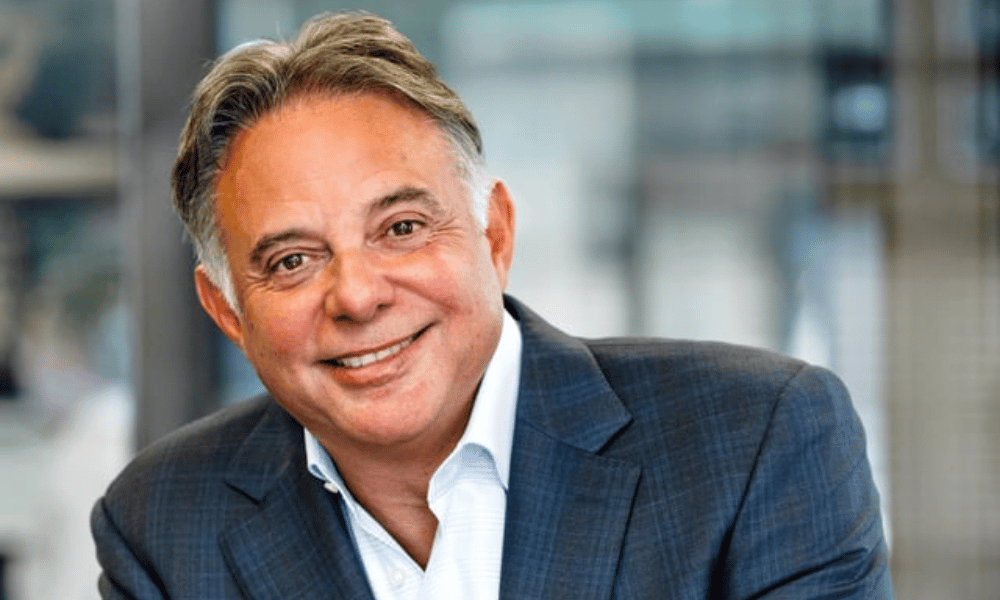
The Great Wealth Transfer is reshaping the financial advice industry, but Charles Massimo, Senior Vice President and Financial Advisor at Wealth Enhancement in New York, says advisors are focused on the wrong problem.
Moving money efficiently, he argues, is the easy part. The harder challenge and the one most families never tackle, is transferring the judgment, values, and sense of purpose that give wealth its meaning.
Massimo, whose team stewards more than $1 billion for high-net-worth families and who recently published a book called The Kindness Portfolio: Investing with Heart in a World of Numbers, spoke with InvestmentNews about the forces reshaping generational wealth planning and why silence is the most expensive habit a wealthy family can have.
When asked what advisors and families consistently underestimate in wealth transfer, Massimo's said the dollars are the easy part.
"We know how to move money efficiently – that's plumbing, and any competent advisor can do it. What families underestimate is that you can transfer the assets flawlessly and still transfer nothing that matters,” he says. “The real risk is that heirs inherit the money without inheriting the meaning behind it. Nobody ever sat them down and explained what the money is for and what it was built to protect, who it was built to serve, what the family actually believes.”
Massimo says this means that the wealth arrives, but the judgment and the sense of stewardship don't come with it and that's when you see fortunes evaporate in a generation and “families come apart.”
That conviction underpins The Kindness Portfolio, which argues that stewardship and kindness aren't soft additions to a financial plan, they are the competitive advantage that determines whether money holds a family together or pulls it apart. For financial advisors working with affluent clients navigating succession, that reframe has real practice implications.
Massimo is direct about what "preparing heirs" actually means in practice.
"It looks a lot less like a signing ceremony and a lot more like parenting. The families who prepare heirs well almost never do it with a document. They do it with reps,” he says. “You give the next generation something real to be responsible for while the stakes are still low enough to survive a mistake – let them steer a modest managed account, hand them the family's charitable giving for a year, put them across the table in an actual planning meeting. Then you watch. I've learned more about whether a 30-year-old is ready by watching them give away ten thousand dollars thoughtfully than I'll ever learn from a will or a résumé."
Readiness, he says, is not a switch that flips at inheritance. It is earned in small failures nobody got hurt by. He is equally blunt about sequencing and says most advisors complete the estate plan before addressing family dynamics, which he argues that is backwards.
"Finishing the estate plan first and then asking about the family is like building the house and then asking the family how they want to live in it. The estate plan is the mechanics – the trusts, the titling, the tax strategy. All of it answers how,” he says. “But if you never asked why, you've engineered a very sophisticated machine with no idea what it's supposed to do. The purpose conversation should come first, because it's what the plan is meant to serve."
To illustrate the difference between a plan that holds and one that collapses, Massimo describes two client families.
The first one got it right; a family with a child with special needs. Because the stakes were so personal and so permanent, they couldn't afford to be vague.
“We built a special needs trust, and around it we built years of family conversation about who does what, what a good life meant for that child, and how the siblings would share the responsibility. Nothing was a surprise. When the parents passed, the plan didn't just hold up legally – the family held together, because they'd rehearsed the hard parts while everyone could still talk," Massimo says.
The second family looked perfect on paper with substantial assets, airtight documents, and a top-tier attorney. But the parents treated money as a taboo subject. Their children discovered the estate plan and each other's roles simultaneously in a conference room, after the second parent had died.
"Old sibling rivalries came roaring back. They spent more fighting over the estate than the youngest child's trust was worth. Same dollars. Same quality of documents. The difference was entirely human – one family talked, and one didn't," says Massimo.
After years of working with affluent families through the full arc of wealth transition, Massimo has distilled the most common failures into three patterns, none of which require more money or better lawyers to fix:
"First, they keep the plan a secret. The parents know everything; the kids know nothing. A document tells heirs what happens. Only the parents can tell them why. Second, they perfect the transfer and forget the recipient. Families will spend a fortune shaving the tax bill and not one hour asking whether their kids are actually ready to hold what's coming. Third, they let the crisis set the timeline. A death, a diagnosis, a divorce – that's what usually forces the conversation, and by then you're not planning, you're doing damage control. The common thread is that somebody has to be willing to raise the hard subject, and the family almost never volunteers. That's the job. I'd rather lose a comfortable meeting than lose a family."
Massimo is the father of two sons with autism and his personal experience as a caregiver has sharpened his instincts for the right way to work with families.
"When you're caring for someone you love, you learn very fast that the hardest moments in a family's life aren't financial, they're human,” he says. “The spreadsheet doesn't comfort anyone at two in the morning. I stopped seeing myself as someone who manages a portfolio and started seeing myself as someone who helps a family through the transitions where the money and the emotion collide. Clients don't remember the basis points. They remember who stood next to them when it was hard. That's the whole business, as far as I'm concerned."
For wealth management professionals building deeper client relationships in the wealth transfer era, Massimo offers one foundational question: ask clients what the money is actually for and don't accept a number as an answer.
"A number is a score; it's not a purpose. Push past it. 'For' is a person, a value, a life you're trying to make possible,” he says. “When you make a client actually finish that sentence, the entire conversation changes – and so does the plan you build. We're in the middle of the largest handoff of wealth in history, people are living longer than any plan ever assumed, and this rising generation has watched money tear families apart. They're hungry for wealth to mean something, not just compound."

Six-figure losses, social media lures and impostor schemes are draining older clients’ savings, report to Congress shows

William Tunink, an industry veteran, was indicted for running a Ponzi scheme this month in Des Moines.

Broker-dealers will soon share targeted returns under SEC-approved Rule 2210 changes, but one securities lawyer warns the regimes aren’t identical.

Insurers ranking independent broker-dealers ahead of RIAs for near-term growth as fee-only fiduciaries still find annuities a hard fit

Most voters 50-plus in swing districts favor candidates backing a caregiver tax credit, as caregiving drains retirement savings
Knighthead Life entered the market with a competitive MYGA. A strong launch earned advisor confidence and paved the way for FIAs.
As AI makes financial information more accessible than ever, Lana Hock explains why human judgment, trust, and empathy remain the qualities clients value most in a financial advisor

