
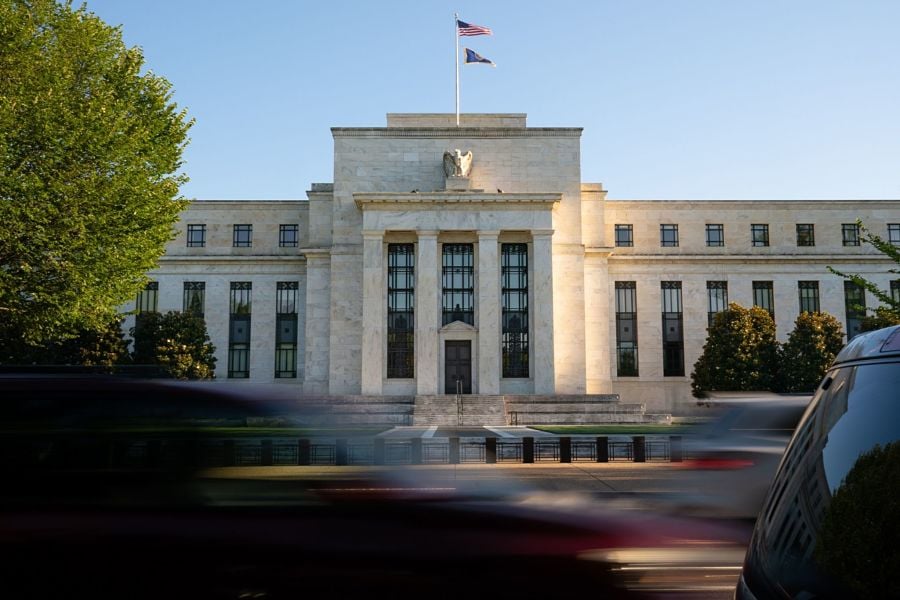
The Federal Reserve plans to make climate change a major part of its Wall Street oversight by creating a new committee that will identify and respond to dangers a warming planet poses to the financial system.
The Financial Stability Climate Committee will be “charged with developing and implementing a program to assess and address climate-related risks to financial stability,” Fed Governor Lael Brainard said in a speech Tuesday. The central bank is investing in research and modeling to get a handle on how climate events can threaten firms and the broader economy, something she conceded might be challenging.
The committee will coordinate with the multi-agency Financial Stability Oversight Council, which is responsible for heading off emerging risks that could start another financial crisis.
“Climate change can be seen as similar to other financial stability shocks emanating from outside the financial system, such as COVID-19, which are difficult to predict with precision,” Brainard said in remarks delivered online at a conference hosted by Ceres.
Fed Chairman Jerome Powell also addressed global warming during a Tuesday hearing before the House Financial Services Committee.
“It clearly can have long-term implications for our economy, for our financial system and for the people who we all serve,” Powell told lawmakers. “Our obligation is to try and understand that,” he said, adding that the biggest banks are already “very active in trying to understand how climate change would affect their business over the long sweep of time.”
Brainard said it’s particularly challenging to prepare for climate “tipping points” that can disrupt weather patterns, water supplies and the habitability of large regions. That means “even well-informed investors could underestimate the likelihood of large shocks related to climate change, resulting in systematic mispricing of risk,” she said.
The new committee will join another recently established panel at the central bank, the Supervision Climate Committee, which focuses more directly on climate matters affecting the individual institutions the Fed oversees. The agency also recently joined the Network of Central Banks and Supervisors for Greening the Financial System.
The Fed isn’t alone in its response. Since the start of the Biden administration, the Securities and Exchange Commission and the Commodity Futures Trading Commission have also established new units to focus on climate change. The heads of both financial regulators are members of FSOC.
”It’s time to act, and we really have to start acting collectively,” CFTC Acting Chairman Rostin Behnam said at the Ceres event.

Elsewhere, a Commonwealth team in Massachusetts converts to Cetera, while Janney draws four former Wells Fargo advisors to its Radnor, Pennsylvania office.

Clients say he copied the boss on his emails - and now they can't touch their cash.

He wired millions to his own accounts and told investors the fund was winning.

The partnership arrives as most small business owners near retirement age still don't have a formal succession plan in place.

A spokesperson for the estate planning fintech cited AI's reshaping of the industry as Trust & Will restructures its business.
Dan Biagini of American Equity says the steady decline of pensions, longer lifespans and a reset in interest rates are rewriting how advisors build retirement income
Direct indexing is on pace to outgrow ETFs and mutual funds. Northern Trust's Ken Lassner explains why the advisors who get it wish they had started sooner.

