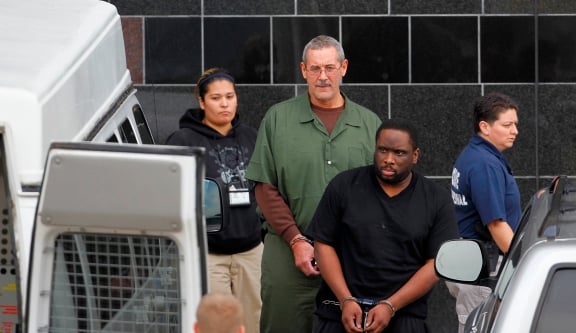
A jury in Houston found R. Allen Stanford guilty of 13 counts of fraud related to the sale of bogus certificate of deposits. The financier faces up to 20 years in jail for each count.
R. Allen Stanford was convicted of fraud in what prosecutors said was a $7 billion scheme involving bogus certificates of deposit at his Antigua-based bank.
A federal jury in Houston today found the financier guilty of all but one of the 14 counts against him, including wire and mail fraud and obstructing a federal regulatory investigation. Stanford, 61, faces as long as 20 years in prison for each fraud count.
Stanford, who was ranked 205 on Forbes magazine's 2008 list of the richest Americans with a net worth of $2.2 billion, has been jailed since being indicted in June 2009 after prosecutors said he might try to flee. A second trial with the same jury will be held later today to determine the amount Stanford must forfeit. Prosecutors are seeking about $300 million in assets.
The founder of Stanford Financial Group, based in Houston, denied accusations by prosecutors and the U.S. Securities and Exchange Commission that he cheated investors through CDs issued by Stanford International Bank Ltd.
The jury of eight men and four women began deliberating Feb. 29 before reaching today's verdict after a five-week trial. While a defense lawyer told jurors in an opening statement on Jan. 24 that they would hear from Stanford, he was never called to the witness stand.
Stanford was found not guilty of a single wire fraud count related to bribing an official with Super Bowl tickets.
Head Injuries
Stanford, who sustained head injuries in a 2009 inmate assault at a jail in Houston, developed an addiction to prescription anti-anxiety drugs and spent almost nine months at a federal prison hospital in North Carolina. His lawyers tried unsuccessfully in December to delay his trial, arguing he was suicidal and may never sufficiently recover from the beating to face a jury. U.S. District Judge David Hittner declared Stanford legally competent and ordered the trial to go ahead.
The government presented testimony at trial from investors who bought the allegedly fraudulent CDs as well as from the executives who helped sell them.
The witnesses included government officials and former Stanford Group Co. Chief Financial Officer James M. Davis, who pleaded guilty to fraud-related charges in 2009 and testified for five days against Stanford. Davis, whose relationship with Stanford traces back to when they were Baylor University roommates, told the jury he knew the boss was committing fraud and didn't stop it.
Cricket Tournaments
Prosecutors told the jury in their closing argument that Stanford wasted investor money on failing businesses, yachts and cricket tournaments. They said he secretly borrowed as much as $2 billion from his bank and sought to build an island resort for billionaires.
“The truth is that he flushed it away,” said Justice Department lawyer William Stellmach. “He told depositors he was using their money in one way and the truth was completely different.”
By 2008, the bank owed investors $7 billion that didn't exist, Stellmach said.
“Stanford had been digging that hole for years with his lavish lifestyles and loser companies,” he said.
Stanford's defense lawyers argued that his banking disclosures complied with internationally accepted accounting standards. They also contended he had sufficient assets in an array of private enterprises to repay all investors. They said Stanford was consolidating these companies onto the bank's balance sheets when the SEC sued him for fraud and seized his businesses in February 2009.
Absentee Visionary
The defense presented former Stanford employees who said they saw no evidence of fraud at the company. Some offered testimony in support of the defense's contention that Stanford was an absentee visionary who left the details of running his operation to Davis.
Robert Scardino, one of Stanford's attorneys, used part of his closing argument to criticize the prosecution and challenge Davis's credibility.
“The key witness in their case has got to be one of the biggest liars you ever heard about or read about,” Scardino said of Davis. He told the jury that to believe the government's case against Stanford, “you have to believe Davis.”
Stanford was declared indigent and given a taxpayer- financed defense because all of his assets were frozen by court order after the SEC sued him.
Waited in Jail
The federal judge in Dallas overseeing the SEC case appointed a receiver in 2009 to marshal and liquidate Stanford's holdings to repay investors. While Stanford waited in jail for his criminal trial to begin, the receiver sold his businesses, boats, six airplanes and stakes in a boutique hotel and golf course.
Stanford also lost the honorary knighthood given to him by the Antiguan government for his economic development efforts there. Antigua's parliament stripped him of the title in November 2009.
--Bloomberg News--