For the moment, Washington is assuming its usual posture – conflict – regarding Bush-administration tax cuts.
Both parties are wrestling over the
scheduling of show votes that they believe will help them frame the debate in their favor for this fall's election.
Over the next few weeks, the Senate is likely to conduct roll calls on President Barack Obama's plan to extend the Bush tax breaks for a year only for households earning less than $250,000 and on a competing Republican proposal that would grant the one-year extension to all income levels.
Each of those tallies will fail to achieve the 60 votes necessary to break a Senate filibuster. The House is likely to approve a measure reflecting the GOP approach. But it has no chance in the Democratic-majority Senate.
These votes won't result in new tax policy. They're intended to provide ammunition for the campaign trail.
After the smoke clears on Nov. 6, however, one House Republican freshman sees Democrats and Republicans coming together on at least one point regardless of which party does better at the polls – the need to overhaul the tax code.
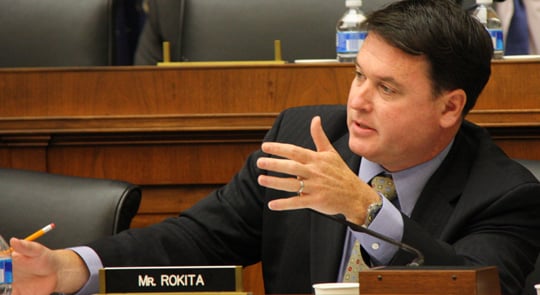
“Whatever the makeup [of Congress] is, there is a fundamental, real desire on both sides for tax reform,” said
Rep. Todd Rokita, R-Ind. “Around here, that is a good foundation. I'm optimistic.”
Mr. Rokita is one of three GOP freshman members of the House Steering Committee, which works with House leadership to set the chamber's legislative agenda. The 87 House freshmen have achieved some success in forcing House Speaker John Boehner to resist compromises on tax increases when negotiating with the White House.
Although fiercely partisan, Mr. Rokita gave credit to Mr. Obama for extending the Bush tax cuts for two years back in 2010. It's a move that softens the sharp edge House freshmen can project on tax policy.
“We agree with extending what are the Bush-Obama tax cuts now,” Mr. Rokita said. “We quibble on whether they should be extended for everyone or whether we should get into class warfare…on people making more than $250,000.”
Mr. Obama is portraying his approach as a reasonable effort to ensure the wealthy pay their fair share of taxes.
“I'm not proposing anything radical here,” Mr. Obama said on July 9. “I just believe that anybody making over $250,000 a year should go back to the income tax rates we were paying under [President] Bill Clinton – back when our economy created nearly 23 million new jobs, the biggest budget surplus in history, and plenty of millionaires to boot.”
House Republicans aren't going to cede the fairness issue to Mr. Obama. They will offer a resolution in coming weeks that focuses on eliminating special carve-outs, credits and other loopholes that allow some taxpayers and corporations to avoid paying taxes.
“We want to get rid of the unfairness [in the tax code],” Mr. Rokita said.
Even with Republicans claiming their share of the fairness issue and giving Mr. Obama rhetorical nods, there's still a large gap between the parties when it comes to tax policy – a chasm that will make fundamental tax reform difficult, even if both parties agree that it should be attempted.
For instance, Mr. Rokita said that money is “property” and that the government's ability to take it away through taxation should be limited.
“If you're someone who earned your property, and you're already paying because of the progressivity of the tax code, that's enough,” Mr. Rokita said.