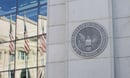
The Securities and Exchange Commission last week charged
Bank of America Corp. with misleading investors about billions of dollars in bonuses that were paid to Merrill Lynch & Co. Inc. executives just before BofA acquired the New York brokerage house in January.
BofA of Charlotte, N.C., last Tuesday agreed to settle the SEC charges and pay a penalty of $33 million without admitting or denying the allegations.
The settlement is subject to court approval. To that point, New York federal judge Jed S. Rakoff declined to grant the settlement pending a hearing set for today.
In proxy materials soliciting the votes of shareholders on the proposed $50 billion acquisition of Merrill, BofA stated that Merrill had agreed that it wouldn't pay yearend performance bonuses or other discretionary compensation to its executives prior to the closing of the merger without the bank's consent.
“In fact, contrary to the representation in the merger agreement, [BofA] had agreed that Merrill could pay up to $5.8 billion — nearly 12% of the total consideration to be exchanged in the merger — in discretionary yearend and other bonuses to Merrill executives for 2008,” the SEC said in a complaint it filed in the U.S. District Court for the Southern District of New York in Manhattan.
BofA's agreement to allow Merrill to pay the discretionary bonuses was in a separate document that was omitted from the proxy statement sent to 283,000 shareholders of both companies in November, the SEC said in its complaint.
Merrill ended up paying $3.6 billion in bonuses to its executives despite a record loss of $27.6 billion last year, the SEC complaint said.
Although none of Merrill's top five executives received a bonus for 2008, other employees received their bonuses on Dec. 31, 2008, the day before the merger with BofA closed, the SEC said in the complaint.
“As Merrill was on the brink of bankruptcy and posting record losses, [BofA] agreed to allow Merrill to pay its executives billions of dollars in bonuses,” David Rosenfeld, associate director of the SEC's New York regional office, said in a statement.
Shareholders weren't told about the agreement at the time they voted on the merger, he said.
“Companies must give shareholders all material information about corporate transactions they are asked to approve,” Robert Khuzami, director of enforcement at the SEC, said in the statement.
The settlement “represents a constructive conclusion to this issue,” and it allows the firm to focus on enhancing stockholder value, company spokesman Scott Silvestri wrote in an e-mail.
BofA's purchase of Merrill, which was negotiated after the collapse of Lehman Brothers Holdings Inc. of New York in September, was the subject of congressional hearings that focused on whether former Treasury Secretary Henry Paulson and
Federal Reserve Board Chairman Ben Bernanke put undue pressure on BofA to complete the purchase after large losses at Merrill became public.
Rep. Darrell Isa, R-Calif., the ranking minority member of the House Committee on Oversight and Government Reform, issued a statement saying that his committee would continue investigating the merger.
E-mail Sara Hansard at [email protected].