Former
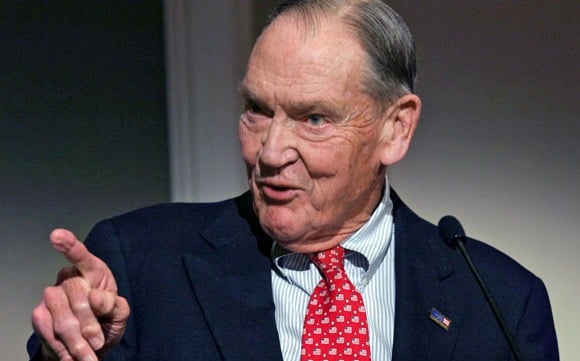
Federal Reserve Chairman Paul Volcker, mutual fund pioneer John Bogle and former Securities and Exchange Commission Chairman Arthur Levitt will be among those lending their signatures to an effort to revive stalled federal regulations that would strengthen investment-advice rules.
On Sept. 11, the
Institute for the Fiduciary Standard will present a “Fiduciary Declaration” to SEC Chairman Mary Schapiro urging the agency to move forward with a rule that would impose universal fiduciary duty on retail investment advice.
The Dodd-Frank financial reform law gave the SEC the authority to promulgate a fiduciary duty regulation for retail investment advice. The SEC delivered a report to Congress in January 2011 recommending such a rule but has not issued a proposal.
“Right now, it seems to be a good time to remind the key parties of the importance of the fiduciary standard and that there are actions that can be taken to go forward with it,” said Knut Rostad, president of the Institute for the Fiduciary Standard and the compliance officer at Rembert Pendleton Jackson LLC.
The group did not release the declaration, which also could prod the Department of Labor to repropose a rule that would expand the definition of “fiduciary” for anyone providing investment advice to retirement plans. The original proposal was withdrawn after meeting stiff resistance from the financial industry.
The SEC has indicated that it will not proceed with its fiduciary duty rule until it conducts a cost-benefit analysis. The agency has developed an outline of elements of a potential rule — similar to a concept release — that would serve as a foundation for a data request for the impact assessment. SEC commissioners have not yet approved it for public release.
The SEC and the DOL must increase advice standards to restore investor confidence in the markets, according to Mr. Rostad. Under fiduciary duty, an adviser must act in a client's best interest.
“We are beyond a normal pendulum swing in distrust,” Mr. Rostad said. “We should be talking about investor disgust as much as investor mistrust. That piece of it sometimes does not get the right amount of attention.”
The Securities Industry and Financial Markets Association supports universal fiduciary duty but is wary of Mr. Rostad's September initiative, which it sees as an effort to force the fiduciary requirement in the Investment Adviser Act of 1940 on brokers. They currently meet a less stringent suitability standard when selling financial products.
“That's the seemingly simple solution,” Kevin Carroll, SIFMA managing director and associate general counsel, said of extending the 1940 law. “That's good for investment advisers. It just doesn't work for brokers.”
SIFMA submitted a fiduciary framework to the SEC last year that it hopes will help guide agency in writing a universal fiduciary standard. The Consumer Federation of America filed its own
fiduciary outline earlier this year.
Sorting through the competing ideas could be slowing down the SEC.
“The SEC understands that it has to take a careful, deliberative approach to establishing a universal fiduciary standard that preserves the choice and access [to advice] that current brokerage customers enjoy and expect to continue to enjoy,” Mr. Carroll said. “The devil is in the details. That's why, I suspect, it's taken longer than anyone reasonably anticipated.”
The National Association of Insurance and Financial Advisors also is concerned about how a universal standard of care would affect the registered representatives who make up much of its membership.
“It seems a vocal group of people has reiterated their support for a universal fiduciary, but very few of them are saying what that would mean in practice,” NAIFA president Robert Miller said in a statement. “Throughout this entire process, NAIFA's concern has always been what the impact will be on mid-market investors. NAIFA supports the SEC in their effort to conduct a thorough cost-benefit analysis to determine the potential impact on middle-market investors and the economy if a uniform fiduciary duty were to be imposed.”
The regulatory pace will probably provide lots of time for the debate to continue even after September.
“Given where we are in the calendar and the election, the reality is that [a fiduciary rule] is not likely to happen this year,” Mr. Rostad said. “We will be in a position of starting over next year, possibly with a new [SEC] chairman and new commissioners.”