
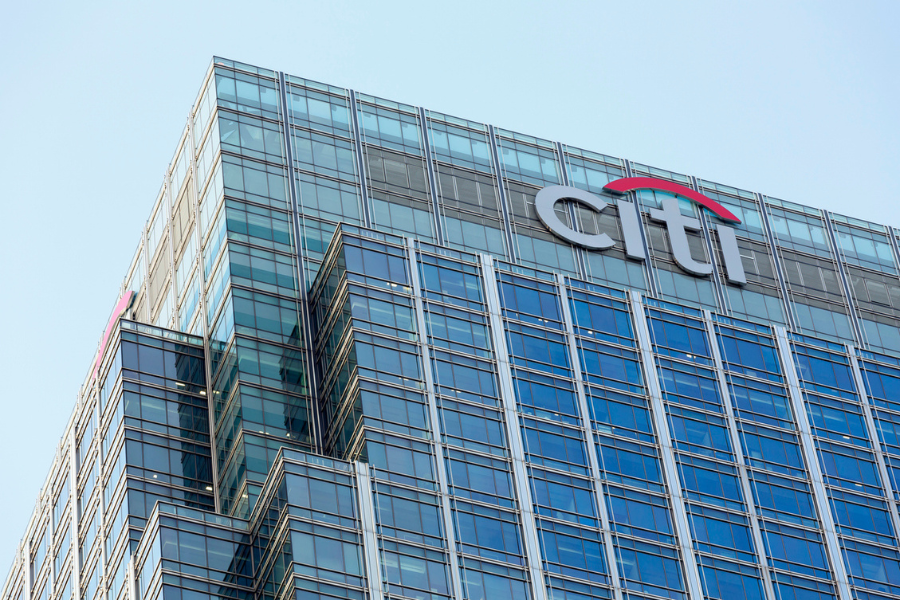
Citigroup shares fell 1.3% after hours Wednesday after it was handed a combined $135.6 million in financial penalties by the Federal Reserve Board and the Office of the Comptroller of the Currency for violating enforcement requirements.
In 2020, Citi was told by the two organizations to fix problems with its data quality management and risk management with the Fed Board issuing a Consent Order against Citigroup Inc. and the OCC taking similar action against Citibank.
Four years on and not enough has been done to remediate the problems identified in the enforcement actions, triggering the additional action.
“Citigroup has made insufficient progress remediating its problems with data quality management and failed to implement compensating controls to manage its ongoing risk. The Board continues to monitor Citigroup's actions to comply with the 2020 action, which remains in effect,” said the Fed Board, which determined that a $60.6 million fine was appropriate for the violation.
Acting Comptroller of the Currency Michael J. Hsu said that Citibank must fully address the issues raised in 2020 in a “timely manner” and noted that the latest action is an amendment to the previous Consent Order, which remains in force.
“While the bank’s board and management have made meaningful progress overall, including taking necessary steps to simplify the bank, certain persistent weaknesses remain, in particular with regard to data,” he said. “[Wednesday’s] amendment requires the bank to refocus its efforts on taking necessary corrective actions and ensuring appropriate resources are allocated for this purpose.”
The OCC assessed that a civil penalty of $75 million should be paid as a result of the amendment.
In a statement, Citigroup CEO Jane Fraser acknowledged that the firm had not made enough progress in certain areas identified by the 2020 action, although she said it had made “good progress in simplifying our firm and addressing Consent Orders.” She added that focus and investment was being intensified and the areas requirement improvement would get where they needed to be as part of the firm’s “transformation.”
“As we’ve said from the beginning of this multi-year effort, we’re committed to spending what is necessary to address our consent orders, as our agreement with the OCC demonstrates. We’re confident that we have the financial resources to support both our Transformation and investment in our businesses as well as meet our strategic and financial goals, including the capital distribution we described in late June. We’ve always said that progress wouldn’t be linear, and we have no doubt that we will be successful in getting our firm where it needs to be in terms of our Transformation,” Fraser stated.

When advisors have tech to handle meeting prep and organization, it frees up time they can reinvest more thoughtfully into helping clients.

LPL Financial and Raymond James also add independent advisors from Osaic and Edward Jones in Michigan and Arizona.

The SEC-registered RIA advises on more than $1 billion in client assets, with no advisory fee through 2027 and no human financial advisors.

95.8% of house trades were winners. For clients? The SEC says just 14.9%.

The complaint says Duolingo added friction on purpose, then lied about it.
Knighthead Life entered the market with a competitive MYGA. A strong launch earned advisor confidence and paved the way for FIAs.
As AI makes financial information more accessible than ever, Lana Hock explains why human judgment, trust, and empathy remain the qualities clients value most in a financial advisor

