
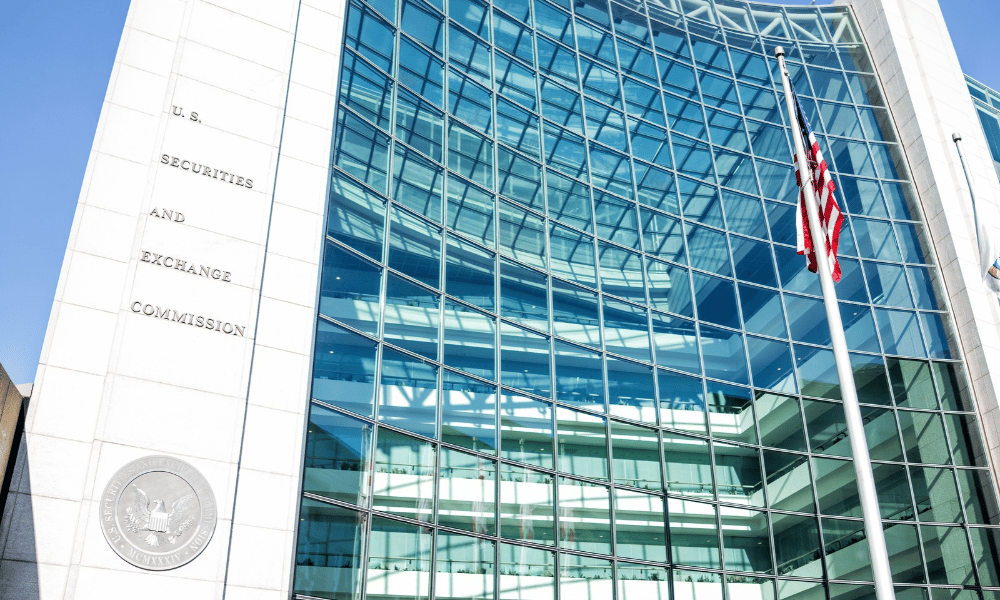
A federal court permanently enjoined an EDGAR filing agent employee from securities violations after he admitted to trading on confidential pre-publication data.
On November 9, 2026, a US district judge in the Eastern District of New York entered a final judgment by consent barring the defendant from future violations of federal securities anti-fraud and tender offer provisions. The Securities and Exchange Commission (SEC) had brought the civil action alongside a parallel criminal prosecution.
The defendant worked for an EDGAR filing agent - a firm that files documents with the SEC’s EDGAR system on behalf of public companies. That role gave him access to corporate disclosures before the market saw them. Between approximately January and June 2025, he used that access to trade securities with a co-defendant, according to court records.
At an October 21, 2025 plea hearing in the parallel criminal case, the defendant told the court that he “knowingly participated in a scheme with another individual with the intent to defraud,” using confidential information from his employer to “purchase stocks and then sell it at a gain in price.” He said he knew he “had the duty to keep it confidential.”
He pleaded guilty to “conspiracy to commit insider trading” in violation of 18 U.S.C. Sections 1349 and 3551 et seq.
The civil judgment permanently enjoins him from violating Section 10(b) of the Securities Exchange Act and Rule 10b-5 - the main anti-fraud provisions - as well as Section 14(e) and Rule 14e-3, which cover trading around tender offers. The tender-offer injunction indicates that some of the confidential information involved pending tender offers, one of the most sensitive categories of material nonpublic information.
The court ordered disgorgement of $500,619 and prejudgment interest of $8,832, totaling $509,451. That obligation was deemed satisfied by forfeiture and restitution orders entered in the criminal case. The criminal plea agreement separately set a forfeiture money judgment of $554,397.
The defendant faced a maximum prison sentence of 20 years. The government’s estimated advisory sentencing guidelines range was 37 to 46 months, based on an offense level of 21 and Criminal History Category I. Sentencing was set for March 4, 2026.
MNPI risk does not stop at advisory firms or investment banks. Third-party service providers - filing agents, printers, data vendors, legal counsel - sit on the same confidential material, sometimes with less institutional oversight. The SEC’s pursuit of both civil and criminal tracks against someone in that chain signals the regulator’s willingness to reach beyond the trading desk.
The defendant consented to the judgment, waived findings of fact, and waived his right to appeal. The court retains jurisdiction to enforce the terms.

Meanwhile, Spartan’s owner and former CEO John Lowry was suspended from the securities industry for two years.

Merrill recruits from UBS, Morgan Stanley and Edward Jones as an Oklahoma credit union moves its $430M wealth program to Ameriprise

Bay Area and South Carolina advisory teams, including a breakaway group from Raymond James, mark the latest wins for two fast-growing wealth management platforms

Mercer taps two psychologists to help ultra-wealthy families with succession as half of family offices lack a complete plan

Higher financing costs, slower exits, and growing pressure on asset owners have created opportunities for value investors.
Advisors are broadening the conversation beyond savings to help clients prepare for the realities of longer lives
Growing wealth, evolving priorities, and untapped opportunities are reshaping how women approach long-term investing.
