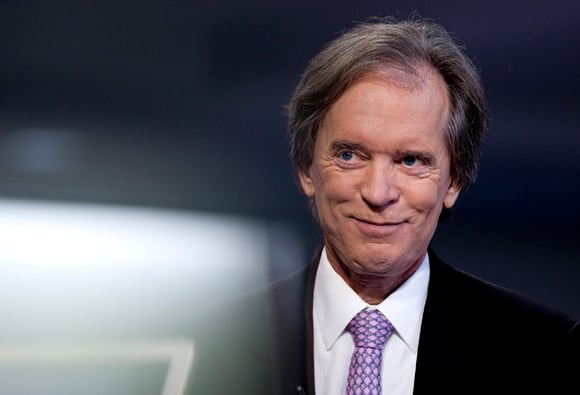
Bill Gross of Pacific Investment Management Co. said governments should be focusing on creating growth rather than reducing debt after a report showed employment in the U.S. stagnated in August.
“To do it right now is almost suicidal,” Gross, manager of the world's biggest bond fund, said in a radio interview on “Bloomberg Surveillance” with Tom Keene and Ken Prewitt.
Payrolls were unchanged last month, the weakest reading since September 2010, after an 85,000 gain in July that was less than initially estimated, Labor Department data showed today in Washington. The median forecast in a Bloomberg News survey called for a rise of 65,000. Hourly earnings and hours worked both declined. The August data included a 48,000 drop in information industry jobs, mostly reflecting striking Verizon Communications Inc. workers.
The economy expanded at a 1 percent pace in the second quarter following a 0.4 percent gain in the first three months of the year, the Commerce Department reported last month. Consumer spending grew 0.4 percent, the smallest increase since the last three months of 2009.
The $245 billion Total Return Fund managed by Gross has lost 0.4 percent in the past month, underperforming almost 90 percent of its peers, according to Bloomberg data. The fund's 4.07 percent return this year is worse than about two-thirds of competitors, the data show. Gross has outperformed 98 percent of his rival fund over the past five years.
Treasuries have returned 7.5 percent since February, when Gross eliminated the Total Return Fund's holding of U.S. government securities. He boosted Treasuries to 10 percent of assets in July from 8 percent in June, the Newport Beach, California-based firm said on its website last month.
Gross said in a Financial Times interview that was published this week that it was a “mistake to bet so heavily against the price of U.S. government debt.”
U.S. government bonds have returned 2.8 percent in August, the most since December 2008, as investors bet on slower growth and sought a refuge from global financial market turmoil, according to a
Bank of America Merrill Lynch index.
--Bloomberg News--