
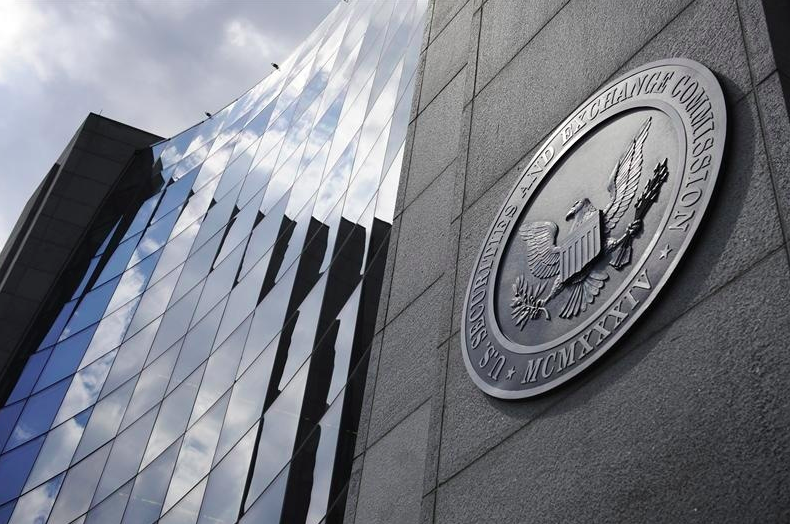
The US Securities and Exchange Commission's newly installed enforcement director has put the private funds industry on notice, signaling that regulators are closely watching for misconduct around fees, valuations, conflicts of interest, and liquidity — including within the fast-growing but increasingly stressed private credit market.
David Woodcock laid out his enforcement priorities Wednesday at the MFA Legal & Compliance conference in New York, offering the clearest public picture yet of where the agency intends to focus its firepower under Chairman Paul Atkins.
Woodcock took over as director of the SEC's Division of Enforcement last month, following the abrupt departure of Margaret Ryan after just over six months at the post.
"We are attuned to potential risks relating to liquidity, fees, valuations, and conflicts of interest — not only at the private fund adviser level but throughout the distribution chain," Woodcock said. "Firms must ensure their representatives understand the products they sell and the investment profiles, risk tolerance, and liquidity needs of their clients."
The remarks carry particular weight given rising anxiety across Wall Street about the private credit sector, which has expanded aggressively in recent years. Concerns have mounted over AI-related credit exposure, fund outflows, and the prospect of broader credit stress rippling through portfolios.
Standing at the podium, Woodcock took the opportunity to remind the audience of "prior banking regulatory decisions that constricted financing for small and growing businesses, which created the opening – and need – for private credit to expand rapidly.
"There are stresses in some portfolios and developments playing out more broadly across this sector, and we are monitoring the situation," he added.
Woodcock framed his broader enforcement agenda as a deliberate reset. The agency, he said, is shifting away from the volume-driven approach that defined the Gensler era toward a more targeted model focused on demonstrable investor harm.
"This Commission has deliberately shifted toward an emphasis on quality over quantity, and I fully support that direction," Woodcock said. "Our focus is, and will remain, on protecting investors and safeguarding markets from real harm."
That shift is visible in the numbers. According to a deep dive by The Brattle Group, the SEC filed 506 total enforcement actions in fiscal year 2025 – a 13% decline from the 583 actions filed in FY 2024. The agency has not yet released its official FY 2025 enforcement statistics, a delay attributed in part to the lengthy government shutdown earlier this year.
For financial advisors recommending private fund products to clients, the message from Woodcock is unambiguous: disclosures must be complete, conflicts must be disclosed, and client suitability cannot be an afterthought.
A report from law firm Morgan Lewis examining SEC enforcement trends for private funds offers a detailed look at the cases that defined the past year. In 2025, it noted that enforcement actions against private fund managers centered on fiduciary duty breaches, misleading disclosures, improper fee practices, and individual executive accountability. Conflicts of interest remained a recurring flashpoint.
In one notable settled case from January 2025, the SEC charged two private fund managers and their owner for improperly charging expenses to client funds over nearly five years — expenses that included outsourced financial services, public relations, and legal fees — while failing to disclose the resulting conflicts. The fund managers and their sole owner agreed to a cease-and-desist order and paid a combined civil penalty of $250,000.
Individual accountability was also a prominent theme throughout the year. In a high-profile August 2025 case, the SEC charged an individual and his entities for allegedly running two Ponzi-like schemes that impacted veterans, raising more than $275 million from more than 250 investors. In a related complaint, the SEC separately charged a portfolio manager for investing a client fund in the scheme while concealing his personal financial conflicts – including millions of dollars of personal investments in the alleged fraud.
"This is the type of case we expect to see more of given this Commission's focus on fraud and the protection of retail investors," the Morgan Lewis report stated.
One structural development adding urgency to the SEC's enforcement posture is the accelerating push to open private fund markets to retail investors – a trend the Atkins-led Commission has actively encouraged.
Last August, President Trump signed an executive order directing the Department of Labor to issue guidance supporting alternative investments in 401(k) plans, while also directing the SEC to facilitate retail access to private funds by reconsidering accredited investor and qualified purchaser definitions. Earlier that summer, the SEC's Division of Investment Management signaled it would no longer enforce longstanding restrictions that had blocked retail investors from certain closed-end funds investing in private markets.
The Morgan Lewis report warns that broader retail access to private funds is likely to invite correspondingly greater examination and enforcement scrutiny. Financial advisors who recommend these products to retail clients can expect the SEC to probe whether those clients received adequate disclosures, whether recommendations were genuinely in the client's best interest, and whether any misleading statements were made.
For advisors navigating this environment, understanding the SEC's evolving exam priorities is no longer optional. The Division of Examinations' report on its fiscal year 2026 priorities, released last November, flagged particular attention to private credit, funds with extended investment lock-up periods, advisers newly entering the private fund space, and advisers serving both private fund and separately managed account clients simultaneously.
"In the investment adviser space, the Enforcement Division will remain active," Woodcock said, signalling the division's continued focus on "matters involving misappropriated client assets, inadequate safeguarding of assets; misleading strategy disclosures; [and] undisclosed fees and expenses," among others.

As Robinhood and Schwab roll out AI agents and assistants, a new survey finds advisors still edge out chatbots in terms of client trust.

See which platforms and providers earned 5-Star recognition this year

Meanwhile, a multigenerational Cambridge team has hopped to LPL in Michigan, and Cetera's run of Commonwealth recruitment continues in New Jersey.

TIAA survey finds 53% of Americans worry about running out of money, as AI and medical advances scramble retirement income planning.

Two wirehouse veterans choose advisor-owned model as independents target ultra-high-net-worth clients beyond portfolio management.
As AI makes financial information more accessible than ever, Lana Hock explains why human judgment, trust, and empathy remain the qualities clients value most in a financial advisor
Northern Trust’s Ken Lassner shows advisors how to convert volatility into after-tax portfolio gains

