
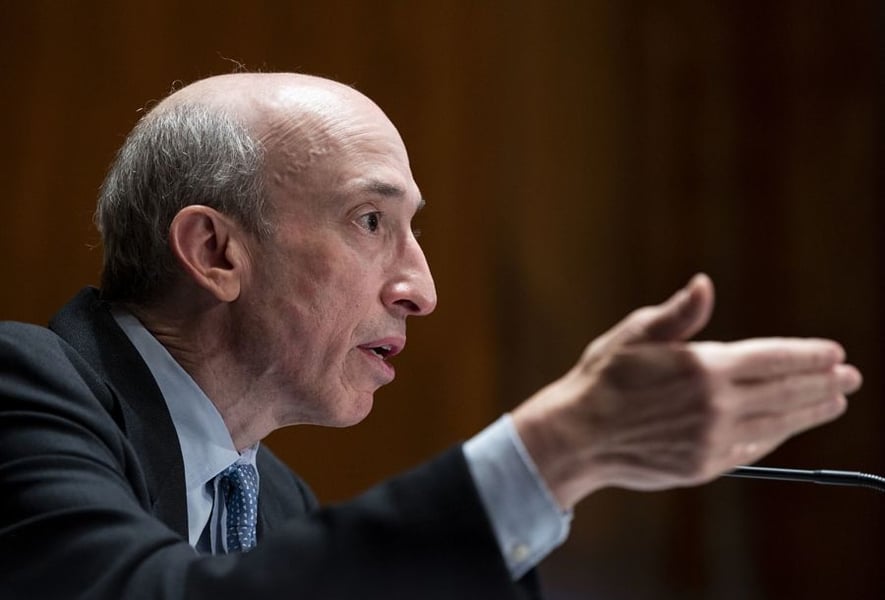
A recent SEC vote to approve a spot bitcoin ETF was both typical – in that the agency split, 3-2, on a controversial decision, and extraordinary – in that the three "yeas" consisted of SEC Chair Gary Gensler and the two Republican commissioners.
But rather than representing a tectonic shift in the politics of regulation, the alignment of the five-member SEC on the bitcoin decision signals that the stark divisions that have characterized major rulemaking under Gensler will continue as the Securities and Exchange Commission wrestles with explosive pending regulations. That effort will unfold, however, with the looming threat of lawsuits by opponents and court decisions like the one that drove the bitcoin ETF outcome.
SEC proposals on financial advisors’ conflicts related to artificial intelligence and predictive data analytics, advisor custody of client funds, swing pricing for mutual funds and climate disclosure are among major pending regulations that have drawn widespread resistance.
Usually, opponents of SEC proposals can find allies in the two SEC Republican commissioners, Hester Peirce and Mark Uyeda. In the 3-2 votes cast so far on proposals and final rules, it’s been Gensler and the two Democratic commissioners, Caroline Crenshaw and Jaime Lizarraga, as "yeas" and Peirce and Uyeda as "nays."
The bitcoin vote was different. For the first time in his nearly three-year tenure, Gensler sided with the two Republicans to approve 11 spot bitcoin ETFs. The alignment was startling but not a harbinger of Gensler’s shifting to the right in oversight.
“This vote is not going to usher in a new era of strange alliances on votes on rulemakings or other applications to list and trade products,” said Kurt Wolfe, counsel at Quinn Emanuel Urquhart & Sullivan.
Gensler’s statement seems to indicate that he was at best reluctant – perhaps dragged kicking and screaming – to cast his vote in favor of the bitcoin ETF. He felt constrained by a Washington, D.C., federal appeals court ruling that the SEC had failed to explain its reasoning adequately in a prior rejection of a Grayscale bitcoin ETF.
“I feel the most sustainable path forward is to approve the listing and trading of these spot bitcoin ETP shares,” Gensler said in a statement. He went on to say that the SEC’s approval comes with several investor protections and reiterated the risks associated with crypto assets, a view shared by many financial advisors.
“Maybe it was better to capitulate now than to wage a losing war,” Wolfe said.
Will the threat of legal challenges affect rulemaking on some of the major controversial potential final rules ahead? It’s hard to say for certain. What we can see is that Gensler’s ambitious regulatory agenda hasn't changed in any significant way despite growing pressure from financial industry detractors who are poised to file lawsuits against final rules.
In addition to the stability of Gensler’s agenda, there has been a lack of exemptive orders or no-action letters that signal a significant shift in the SEC’s direction on significant policy matters.
“All signs indicate it will be business as usual,” said Val Dahiya, a partner at Morrison Foerster and a former branch chief for the SEC's division of trading and markets. Gensler “is proceeding with his vision. They’re going to let this play out in the courts.”
As Grayscale’s successful challenge of the SEC’s previous disapproval of a bitcoin ETF illustrates, courts could be inclined to side with the SEC’s industry opponents.
“The theoretical check and balance seems to be becoming a more practical check and balance on the authority of the SEC,” said Brian McCabe, partner at Ropes & Gray. “I suspect the Democratic commissioners are going to be a little more cautious about making sure they have built the best record in support of the conclusions they reach” on rulemakings.
Investor protection advocates question whether Gensler needed to abandon his opposition to a bitcoin ETF. They suggest that there was a path for him to continue the SEC’s ban on the products, as Crenshaw and Lizarraga voted to do.
“In this case, the agency may have blinked in the face of a legal threat,” said Mark Hays, senior policy analyst at Americans for Financial Reform. “We believe they still had options. The agency always has to decide which hills are worth dying on when it come to their legal strategy.”
That’s the atmosphere that will surround Gensler and his colleagues in the coming months as they shape many controversial proposals into final rules. He's a savvy regulator who knows how to navigate political and legal minefields.
“You have to look hard at the rules and determine if there’s a version of the proposal that either will not get challenged or if challenged will survive,” Wolfe said.
Gensler was forced into a position he didn’t like on the bitcoin ETF. He’ll likely figure out how to land in a place where he’s more comfortable next time.

A Nationwide survey finds 47% of GLP-1 users have never discussed the drugs’ financial impact with an advisor, even as many dip into savings.

The hundreds of millions of dollars from a sale of Inspired Healthcare properties does not mean an immediate windfall for investors.

Its SEC filings said one thing - a congressional probe said another.

Sham agreements allegedly padded revenue by 345%.

"Most pre-retirees are uncomfortable making key retirement income decisions without an advisor's help," said Chris Bailey of Cerulli.
Knighthead Life entered the market with a competitive MYGA. A strong launch earned advisor confidence and paved the way for FIAs.
As AI makes financial information more accessible than ever, Lana Hock explains why human judgment, trust, and empathy remain the qualities clients value most in a financial advisor

