
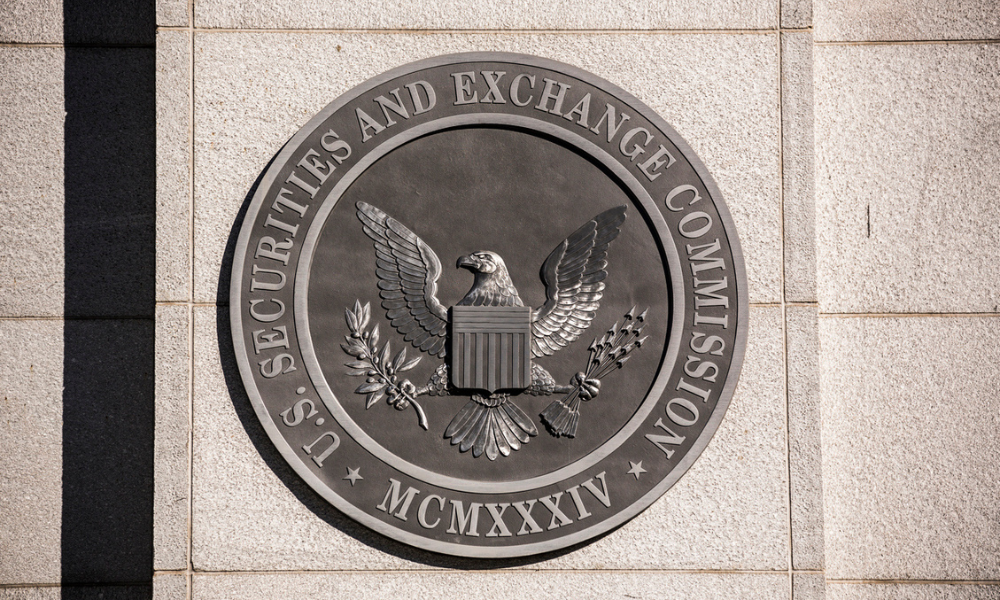
European Central Bank President Christine Lagarde proposed granting more powers to the European Union’s securities watchdog, turning it into the regional equivalent of the US Securities & Exchange Commission.
Supervision of capital markets “remains largely at the national level,” Lagarde said in a speech at a conference on Friday. A European agency with “a broad mandate including direct supervision,” could help address that problem.
“Creating a European SEC, for example by extending the powers of ESMA, could be the answer” she said, referring to the European Securities & Markets Authority.
The EU is working to forge closer ties between its financial markets and make it easier for investors to deploy capital to finance the overhaul of the region’s economy. While Paris-based ESMA has spearheaded the implementation of certain projects including the bloc’s Mifid rules, it lacks the broad enforcement powers of other European authorities such as the ECB’s bank supervision arm.
Lagarde cited the challenges of deglobalization, demographics and decarbonization and compared the funding needs to the investments in US railroads in the 18th century, which outstripped banks’ lending capacity. Drawing another comparison to US history, Lagarde said the creation of the SEC in the 1930s “played a pivotal role in suppressing state efforts to fragment securities markets.”
The EU will also need a “single rulebook” for its financial markets, she said. Combined with a unified watchdog, “that would empower private entities to expand their ambitions in fostering high-growth private investments.”

Just how much does it cost for a financial advice exec to stay out of prison?

The advisor both prices FSK's private loans and gets paid on those prices, the suit claims

The proposal would end decades of paper-first delivery rules, but keeps a paper opt-out and draws early praise from fund and annuity industry groups.

The Trump accounts are “generationally changing” and bring financial literacy to youth, said IRS chief Frank Bisignano.

The Kansas-based RIA giant's latest purchase extends a run of specialized acquisitions that has defined its growth strategy through 2026.
Northern Trust’s Ken Lassner shows advisors how to convert volatility into after-tax portfolio gains
Dan Biagini of American Equity says the steady decline of pensions, longer lifespans and a reset in interest rates are rewriting how advisors build retirement income

