
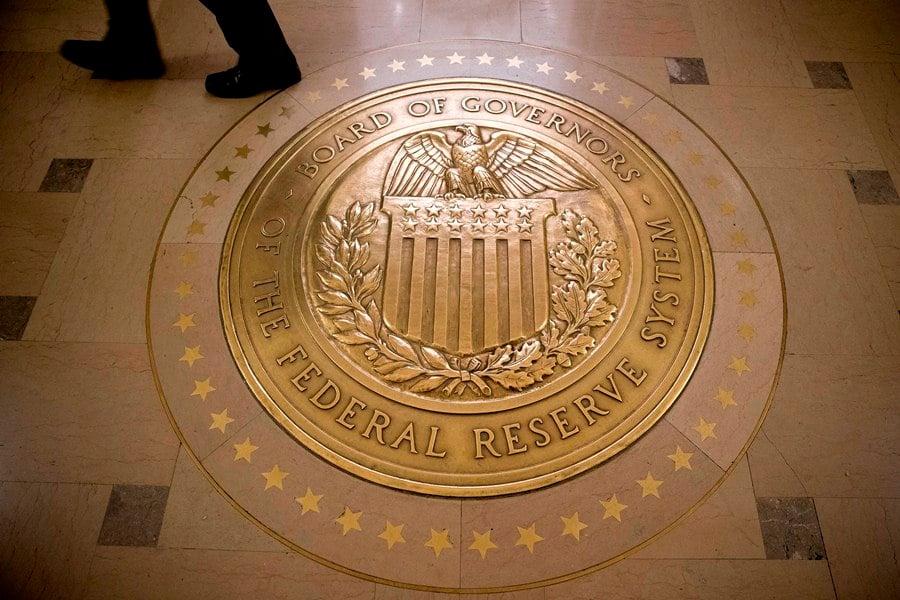
The Federal Reserve on Thursday announced another series of sweeping steps to provide as much as $2.3 trillion in additional aid during the coronavirus pandemic, including starting programs to aid small and midsize businesses as well as state and local governments.
“Our country’s highest priority must be to address this public health crisis, providing care for the ill and limiting the further spread of the virus,” Fed Chair Jerome Powell said in a statement. “The Fed’s role is to provide as much relief and stability as we can during this period of constrained economic activity, and our actions today will help ensure that the eventual recovery is as vigorous as possible.”
Highlights
• A Municipal Liquidity Facility will offer as much as $500 billion in lending to states and municipalities, by directly purchasing that amount of short-term notes from states as well as large counties and cities
• The Main Street Lending Program will “ensure credit flows to small and mid-sized businesses with the purchase of up to $600 billion in loans”
• Expanding the size and scope of the Primary and Secondary Market Corporate Credit Facilities and the Term Asset-Backed Securities Loan Facility to support as much as $850 billion in credit
• Starting the Paycheck Protection Program Liquidity Facility, “supplying liquidity to participating financial institutions through term financing backed by PPP loans to small businesses”
Data released at the same time Thursday as the Fed's announcement showed that Americans applied for unemployment benefits in massive numbers for a third straight week, bringing the three-week total to almost 17 million during the virus shutdown.
A total of 6.61 million people filed jobless claims in the week ended April 4, according to Labor Department figures, as more states ordered residents to stay home and overwhelmed unemployment offices continue to work through applications. The figure compared with a median forecast of 5.5 million, and the prior week’s upwardly revised 6.87 million.
The Bloomberg dollar index dropped while U.S. stock futures and Treasury yields pared their declines after the simultaneous announcement of the Fed’s new facilities and jobless claims data.
The Fed laid out details of the heavily anticipated Main Street Lending Facility, which will deliver funding to companies much bigger than those yet eligible for help. Eligible borrowers can have up to 10,000 employees or up to $2.5 billion in annual revenue. Loan sizes will range from $1 million to $150 million.
Borrowers will be subject to restrictions imposed by Congress in the Cares Act on employee retention, distribution of dividends and other factors. The program will be backstopped by $75 billion from the Treasury to absorb losses. Banks that handle the loans will be required to retain a 5% interest in each loan, with the facility purchasing the remainder.
The Fed also said it will continue to closely monitor conditions in the primary and secondary markets for municipal securities and will evaluate whether additional measures are needed to support the flow of credit and liquidity to state and local governments.

The quality of AI ROI measurement depends on pre-deployment decisions around business outcomes, leadership alignment, and establishing trusted information, among other factors.

A state-by-state analysis of retail investor behavior reveals AI-powered research tools are reshaping how clients approach investment decisions.

LPL picks up $1.1B from Wells Fargo's independent channel as the wirehouse gains a $410M family team from UBS.

Most Americans want to age at home but few have a financial plan to pay for it, according to new research.

Halbert Hargrove senior wealth advisor weighs in on the products' guaranteed income upside, the operational drag and his wish list for carriers.
Knighthead Life entered the market with a competitive MYGA. A strong launch earned advisor confidence and paved the way for FIAs.
As AI makes financial information more accessible than ever, Lana Hock explains why human judgment, trust, and empathy remain the qualities clients value most in a financial advisor

