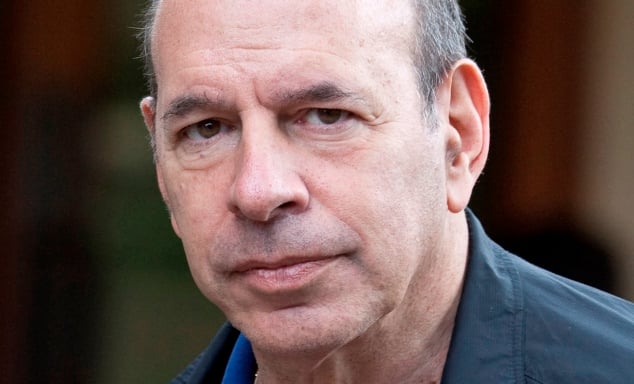

Financial adviser to the stars gets long run in prison

Financial adviser to the stars gets long run in prison
Kenneth I. Starr sentenced to more than seven years in jail for fraud; clients included Sylvester Stallone, Wesley Snipes
MAY 27, 2010
Kenneth I. Starr, the money manager whose clients included actors Sylvester Stallone and Wesley Snipes, was sentenced to 7 1/2 years in prison after pleading guilty to defrauding nine celebrities out of $33.3 million. The sentence issued yesterday by U.S. District Judge Shira Scheindlin in Manhattan fell between Starr's request for 60 months and prosecutors' recommendation that he be sentenced within the non-binding federal guideline range of 121 months to 151 months. She also ordered Starr to pay forfeitures and restitution of $29.1 million. “I stand before you a contrite man and an ashamed man,” Starr, 67, told Scheindlin. “I have no one to blame but myself.” Starr was originally accused of defrauding at least 11 of his celebrity clients, including heiress Rachel “Bunny” Mellon, out of $59 million. Starr's lawyer, Flora Edwards, and the government agreed yesterday that, for sentencing purposes, the amount lost in the fraud was $33.3 million. Edwards asked for a lenient sentence, telling Scheindlin that all of the defrauded clients were “incredibly wealthy” and that none of them were left financially destitute as a result of the crime.

‘Exploited Trust'

“They gave him their trust and he exploited it, not once, but again and again,” Assistant U.S. Attorney Michael Bosworth told the judge. Scheindlin said she gave Starr credit for his donations to charity and work with nonprofit organizations. She said Starr's fraud may have been motivated, in part, by “infatuation with his young, fourth wife,” Diane Passage, a former stripper. Starr was arrested in May and charged with 23 criminal counts. He pleaded guilty Sept. 10 to one count each of wire fraud, investment-adviser fraud and money laundering. As part of a plea deal with the government, Starr agreed to forfeit his $7.5 million apartment on Manhattan's Upper East Side. In addition to the prison sentence, Scheindlin ordered that Starr serve three years of supervised release. The case is U.S. v. Starr, 1:10-cr-520, U.S. District Court, Southern District of New York (Manhattan). --Bloomberg

Latest News

Advisor moves: LPL recruitment momentum continues with $815M Northwestern Mutual team

Meanwhile, Raymond James and Tritonpoint Partners separately welcomed father-son teams, including a breakaway from UBS in Missouri.

SEC chief Atkins signals caution on prediction market ETFs amid broader rethink of novel fund structures

Paul Atkins has asked staff to solicit public comment on novel ETFs, pausing the clock on as many as 24 filings linked to the booming event contracts market.

Private capital's $1 trillion bet on the American retirement account

From 401(k)s to retail funds, Deloitte sees private equity and credit crossing into mainstream investing on two fronts at once.

Advisor moves: Wells Fargo Advisors pulls in $9.6b in fresh talent during first half of May

Big-name defections from Morgan Stanley, UBS, and Merrill Lynch headline a busy two weeks of recruiting for the wirehouse.

Why uncertainty is making behavioral coaching more valuable than ever

Markets have always been unpredictable. What has changed is the amount of information investors are trying to process and the growing role advisors play in helping clients avoid emotional decisions

SPONSORED Are hedge funds the missing ingredient?

Wellington explores how multi strategy hedge funds may enhance diversification

SPONSORED Beyond wealth management: Why the future of advice is becoming more human

As technical expertise becomes increasingly commoditized, advisors who can integrate strategy, relationships, and specialized expertise into a cohesive client experience will define the next era of wealth management