
We’re not saying we’re in the same league as, say, Nostradamus when it comes to predicting the future, but the team at InvestmentNews has a pretty good idea of what advisors should be on the lookout for in 2023.
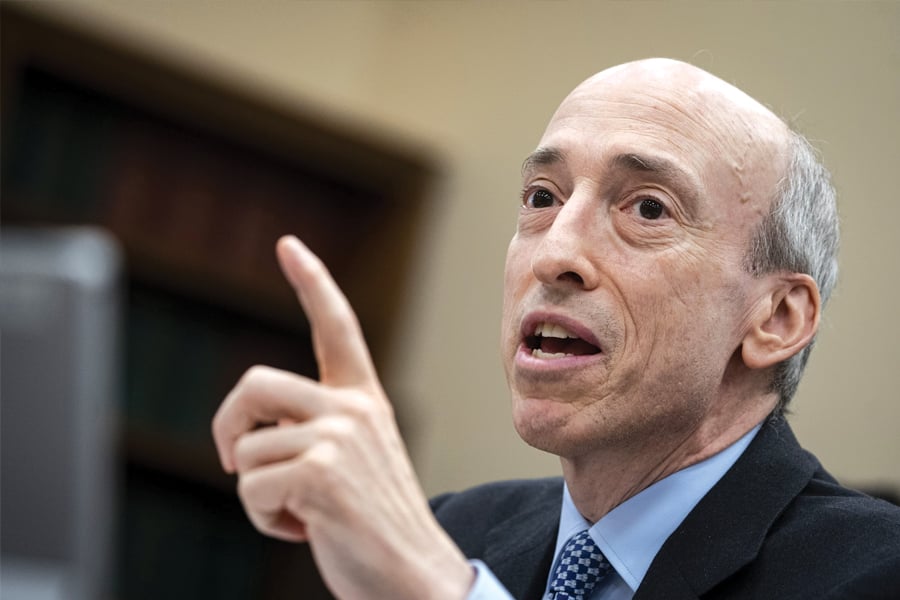
More than two hours of often tough questioning — especially by Republicans — before the Senate Banking Committee in September gave SEC Chairman Gary Gensler a preview of the political winds that will blow even stronger around him around in the new year.
Gensler exuded confidence that he would be able to handle the political pressure. He was chairman of the Commodity Futures Trading Commission after the financial crisis, when it tackled swaps regulation. He was a senior advisor to then-Sen. Paul Sarbanes when the legislator wrote what became the Sarbanes-Oxley Act, which has governed corporate disclosure. He was a Treasury official in the Clinton Administration.
“It’s not my first rodeo,” Gensler told reporters after the Senate hearing. “I’ve worked with members of the House and Senate across the aisles. I’ve worked with every configuration.”
The Securities and Exchange Commission leader will be tested in 2023 by another challenging political matrix. In the midterm elections a few weeks after the Senate hearing, Republicans took the House, as expected, but by a much smaller margin — five seats — than anticipated. Democrats unexpectedly maintained control of the Senate.
Republicans are already indicating they’ll make the most of their House control and the committee chairmanships it brings.
The House GOP will strongly question every SEC move. The go-to assertion will be that the SEC has failed to do its homework on rule proposals. For instance, Rep. Patrick McHenry, last year’s ranking member of the House Financial Services Committee, blasted the SEC’s proposed reforms on brokerages’ practice of payment for order flow.
“It’s not my first rodeo.”
Gary Gensler, SEC Chair
“The SEC has no legitimate cause for such fundamental changes to the structure of our equity markets,” McHenry said in a statement. “In fact, our equity markets appear to be working very well for everyday investors as their participation continues to increase. Chair Gensler has again failed to meaningfully analyze the real costs these proposals will impose on market participants, especially everyday investors.”
A bill introduced in December by Rep. Bill Huizenga, R-Mich., and a subcommittee chair last year on the House financial committee, would codify the SEC’s materiality standard. The legislation would “prohibit the SEC from expanding beyond … the authority granted to it by Congress.” Huizenga likely will reintroduce the bill early in the new Congress in January.
The idea of the SEC exceeding its congressional authority will be a go-to GOP attack, with the party referring to a Supreme Court ruling last year that held that regulators must have a mandate from Congress to pursue major regulation.
In September, Gensler called the political push and pull “part of what makes our democracy so vibrant.”
That’s a magnanimous philosophy. But in the day-to-day battles, Gensler will need to draw on every ounce of his political savvy to keep his SEC agenda on track.
To read more articles in this series:

Retiring RIA seller David Laidlaw alleges the Carnegie valued his stake on $11.7 million EBITA while pitching potential buyers on $21.3 million.

New tool gives RIAs and family offices AI help vetting private market deals, with some users reportedly halving review time.

Investors got projected returns dressed up as real ones, SEC says

Parents must still act to get the $1,000 federal seed and employer contributions, giving financial advisors a role in the rollout.

FINRA booted Rudy Anguiano from the industry for “conversion - the intentional and unauthorized taking of another person’s property.”
As AI makes financial information more accessible than ever, Lana Hock explains why human judgment, trust, and empathy remain the qualities clients value most in a financial advisor
Northern Trust’s Ken Lassner shows advisors how to convert volatility into after-tax portfolio gains

