The war over a Labor Department proposal that would raise investment advice standards for retirement accounts is being waged from opposite sides of Pennsylvania Avenue.
At the west end of the famous thoroughfare in Washington is the White House, where President Barack Obama has been at the forefront pushing for the rule since it was introduced last year.
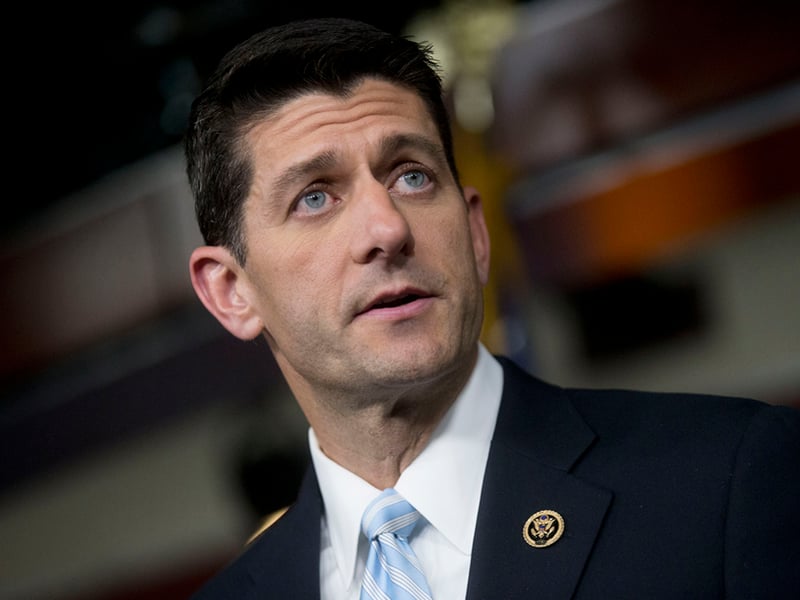
Over the last few weeks, the highest-profile opponent of the rule has emerged from the U.S. Capitol at the east end of the street, House Speaker Paul D. Ryan, R-Wisc. Since Feb. 22, Mr. Ryan's staff has blogged about or Mr. Ryan himself has spoken out against the rule five times.
In the latest barrage, an aide to Mr. Ryan, Julia Slingsby,
posted a March 7 blog item on Mr. Ryan's website entitled “Obamacare for
financial planning.”
“Like Obamacare, the fiduciary rule requires an enormous amount of paperwork and makes recordkeeping more expensive,” Ms. Slingsby wrote. “Like Obamacare, it will result in higher costs and fewer options for small businesses trying to get up and running.”
One explanation for the uptick in opposition from Mr. Ryan's office is that the final rule likely will be released publicly later this month or in April. Two bills that would halt the rule were approved by House committees last month and are
headed toward a floor vote. Another measure that would stop the regulation was approved last year.
“When this rule comes down, we will be ready to do what we can to protect the savings of hardworking Americans,” Mr. Ryan said in a March 3 press conference.
Mr. Ryan's arguments against the rule echo those of the financial industry, which has said it is too complex and costly and would force brokers to abandon savers with small accounts. The Obama administration asserts that the rule would protect workers and retirees from conflicted financial advice that increases investment fees and erodes savings.
The fact that Mr. Ryan is charging into the debate alters the terrain.
“It signals the importance of the issue for the Republicans and for the industry,” said Dan Barry, a senior Washington analyst for Bloomberg Intelligence. “What we're seeing here is positioning for the final battle over the fiduciary rule. It's going to be no-holds-barred.”
Since he
was elected speaker last fall, Mr. Ryan has pushed his Republican colleagues to develop a set of policies that will define the party for the 2016 election. The DOL rule has made its way into that discussion.
“House Republicans are working on a bold agenda for 2017 and part of that agenda is reducing regulatory burdens,” Mr. Ryan's spokesman Doug Andres wrote in an email. “The administration's fiduciary rule is a prime example of an intrusive federal regulation that needs to be rolled back.”
Money is an important element in campaigns, and Mr. Ryan receives a large amount from Wall Street.
Of the $4.6 million he has raised for his personal campaign, $419,812 has come from the securities and investment sector and $212,725 from the insurance industry, according to the
Center for Responsive Politics. The financial industry is the largest contributor to his $1.6 million leadership political action committee, and insurance is the third largest.
But one lobbyist who is an advocate for the DOL rule said Mr. Ryan would naturally oppose it based on his political philosophy.
“He believes as a matter of policy this is where he should be on this issue,” said the advocate, who asked not to be identified. The financial industry “is pushing him to where he would largely be anyway.”