Muni adviser reform fast-tracked after committee consensus reached; possible blueprint for SRO proposal
On Wednesday, the House is scheduled to vote on a measure that would limit the scope of a regulation that would require municipal advisers to register with the Securities and Exchange Commission.
The muni bill has been put on what's called the “suspension calendar.” In this case, “suspension” is a good thing. It means that the legislation is essentially on a fast track. The measure has been scheduled for quick floor action in anticipation of a vote that will be two-thirds or more favorable.
What's remarkable is that this is a bill that is designed to shape a regulation emanating from the Dodd-Frank financial reform law. Dodd-Frank sought to make the activities of municipal advisers more transparent by putting them under the oversight of the Securities and Exchange Commission for the first time.
By working out their differences over how to guide the SEC in writing the muni adviser rule, lawmakers demonstrated how legislation that would establish a self-regulatory organization for advisers might finally move forward — and how far it has to go to reach that point.
The House vote on the muni bill later this week also gives a glimmer of hope to a potential SEC rule that would require brokers to meet the same fiduciary-duty standard that governs advisers when providing retail investment advice.
On the muni bill, lawmakers were concerned that the SEC's proposed rule went too far and swept too many professionals into the “adviser” category.
Rep. Robert Dold, R-Ill., a member of the House Financial Services Committee, responded by writing the bill that the House will approve on Wednesday. His partner in the process was Rep. Gwen Moore, D-Wisc., a fellow committee member.
Rather than just stopping with one Democrat and declaring that the bill was bipartisan, Mr. Dold and Ms. Moore worked to get more Democrats on the bill. One of the key changes they made was to reinsert the requirement that municipal advisers had to adhere to the federal fiduciary-duty standard.
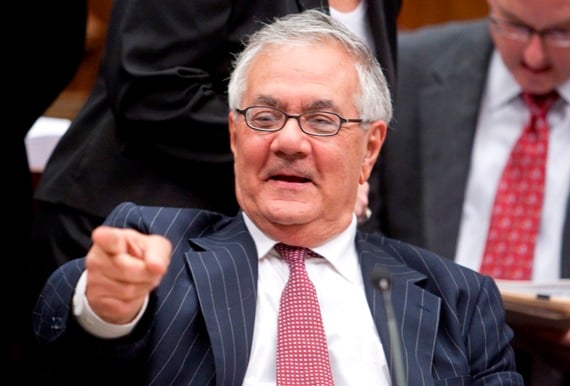
That change helped ensure that all Democrats, including the Rep. Barney Frank, D-Mass., ranking member of the House Financial Services Committee, backed the bill. It was approved by a voice vote. “Everyone stayed at the table until the end and negotiated in good faith,” Ms. Moore said of her Democratic and Republican colleagues.
Rep. Maxine Waters, D-Calif. and a member of the House Financial Services Committee, hopes the muni bill will set a precedent.
“We can work in a cooperative way to address concerns when refining the Dodd-Frank Act,” Ms. Waters said. “And this is an example of that.”
The SRO bill is the counterpoint to the muni adviser bill. It likely will not even get a committee vote, let alone House floor action.
Lobbyists indicate that up to 12 Republican members of the House Financial Services Committee have qualms about the standards-of-care measure, which was introduced by Chairman Spencer Bachus, R-Ala. Only one Democrat so far — Mr. Bachus' co-author, Rep. Carolyn McCarthy — is on the bill.
Mr. Bachus says he wants to achieve “consensus” before moving forward. He's not even within shouting distance of the consensus that was reached on the muni adviser bill.
Stopping the SRO bill gives some comfort to investment advisers, who have strongly opposed it. The muni bill, on the other hand, may brighten their outlook on the stalled universal fiduciary duty rule.
“Fiduciary is still an important foundation for a number of members of Congress,” said Duane Thompson, senior policy analyst for fi360.
The muni bill, however, didn't satisfy all advocates.
“By exempting broker-dealers who act as underwriters and offer advice in connection with and related to their underwriting activities, the legislation recreates with regard to municipal advisers exactly the problem we are trying to solve with regard to broker-dealers in their dealings with retail clients,” Barbara Roper, director of investor protection at the Consumer Federation of America, wrote in a comment to a recent InvestmentNews story online.
But at least the lawmakers were unanimous.