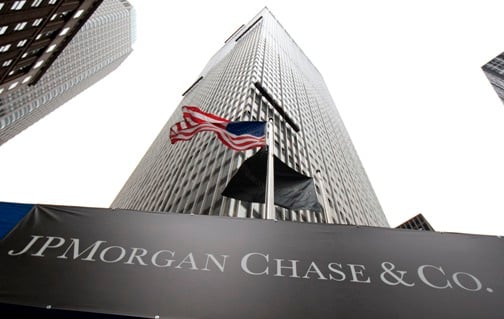
JPMorgan sued for $6.4B over Madoff fraud

JPMorgan sued for $6.4B over Madoff fraud
JPMorgan Chase & Co., Bernard Madoff's “primary banker,” was sued for $6.4 billion by the trustee liquidating the imprisoned con man's former firm.
DEC 11, 2010
JPMorgan Chase & Co., Bernard Madoff’s “primary banker,” was sued for $6.4 billion by the trustee liquidating the imprisoned con man’s former firm. Irving H. Picard, the lawyer appointed as trustee by a New York bankruptcy court, said in a statement that he sued JPMorgan today over claims the bank aided and abetted Madoff’s fraud. Picard said his suit seeks $1 billion in fees and $5.4 billion in damages. “JPMorgan was willfully blind to the fraud, even after learning about numerous red flags surrounding Madoff,” David J. Sheehan,” counsel to Picard, said in the statement. “JPMC was at the very center of that fraud, and thoroughly complicit in it.” Any money recovered from JPMorgan will be returned to Madoff’s victims on a pro rata basis, Picard said. “JPMorgan did not know about or in any way assist in the fraud orchestrated by Bernard Madoff,” the bank said today in a statement. JPMorgan, the second-biggest U.S. bank, called Picard’s claims “irresponsible and over-reaching.” The bank, based in New York, said it has assisted Picard in his investigation of Madoff’s firm. The lawsuit was filed under seal in U.S. Bankruptcy Court in Manhattan, according to Picard’s statement. JPMorgan “has designated virtually all of their information as confidential,” Picard said. “We intend to move to have the complaint made public as soon as possible.” Second-Biggest The suit is the second-biggest filed by Picard in the Madoff bankruptcy, after a $7.2 billion claim he filed against investor Jeffry Picower in May 2009. Picower died in October 2009. On Nov. 23, Picard sued UBS AG for at least $2 billion, claiming the Swiss wealth-management firm also helped Madoff in his fraud. UBS said it bears no responsibility for Madoff’s crimes. Madoff, 72, is serving a 150-year sentence after admitting he directed the biggest Ponzi scheme in history. At the time of his arrest in December 2002, Madoff’s account statements reflected 4,900 accounts with $65 billion in nonexistent investments. Investors lost about $20 billion in principal. --Bloomberg

Latest News

Edward Jones facing more race bias claims in new lawsuit

A private partnership, Edward Jones is a giant in the retail brokerage industry with more than 20,000 financial advisors.

Advisor moves: LPL recruitment momentum continues with $815M Northwestern Mutual team

Meanwhile, Raymond James and Tritonpoint Partners separately welcomed father-son teams, including a breakaway from UBS in Missouri.

SEC chief Atkins signals caution on prediction market ETFs amid broader rethink of novel fund structures

Paul Atkins has asked staff to solicit public comment on novel ETFs, pausing the clock on as many as 24 filings linked to the booming event contracts market.

Private capital's $1 trillion bet on the American retirement account

From 401(k)s to retail funds, Deloitte sees private equity and credit crossing into mainstream investing on two fronts at once.

Advisor moves: Wells Fargo Advisors pulls in $9.6b in fresh talent during first half of May

Big-name defections from Morgan Stanley, UBS, and Merrill Lynch headline a busy two weeks of recruiting for the wirehouse.

SPONSORED Are hedge funds the missing ingredient?

Wellington explores how multi strategy hedge funds may enhance diversification

SPONSORED Beyond wealth management: Why the future of advice is becoming more human

As technical expertise becomes increasingly commoditized, advisors who can integrate strategy, relationships, and specialized expertise into a cohesive client experience will define the next era of wealth management