
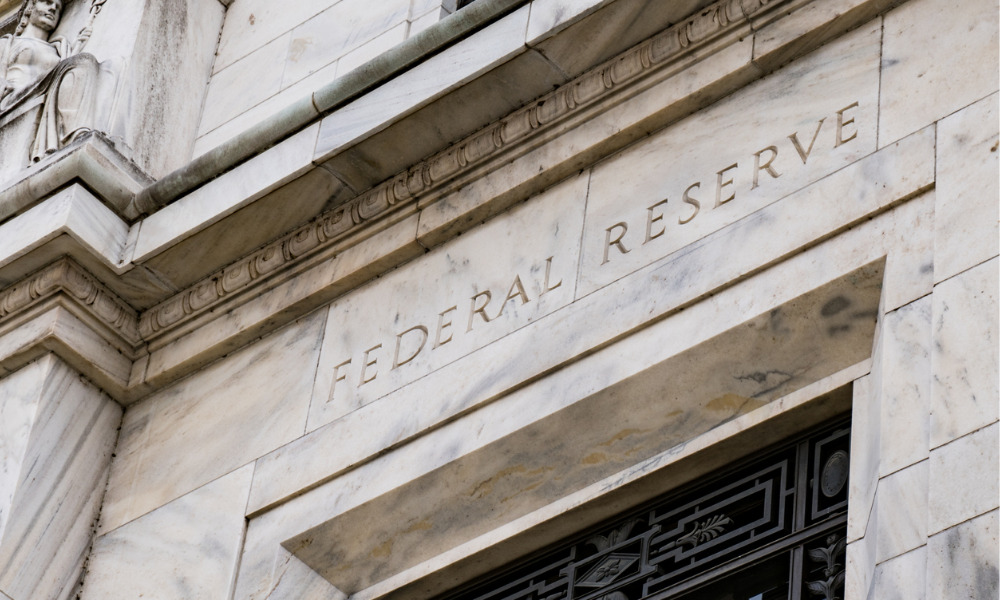
Kevin Warsh, President Donald Trump's nominee to lead the Federal Reserve, used his Senate confirmation hearing Tuesday to argue for sweeping changes to how the central bank manages inflation and its balance sheet – while Democrats on the panel pressed him over his plan to unload more than $100 million in personal holdings if confirmed.
Warsh, a former Fed governor and ex-Morgan Stanley investment banker, told members of the Senate Committee on Banking, Housing, and Urban Affairs that the Fed has yet to fully reckon with policy failures from the pandemic era.
"After Covid, when prices went up to the tune of 25-to-35% for virtually all deciles of the American people, that's an indication that the Fed missed its mark," Warsh said, according to reporting by CNBC. "We are still dealing with the legacy of the policy errors in 2021 and 2022."
He argued that correcting course requires more than incremental adjustments. "I think that means a regime change in the conduct of policy," Warsh said. "I think that means a different, new inflation framework."
He has also previously advocated for reducing the Fed's balance sheet, contending that doing so could create room to lower interest rates for households and small and midsize businesses.
Democratic senators focused much of their attention on Warsh's financial profile. His financial disclosures released last week showed a wealth portfolio exceeding $100 million, with investments spanning private funds and dozens of companies.
Among the holdings are stakes in crypto-related ventures including Solana, Lemon Cash and Flashnet – positions that would likely conflict with existing Fed ethics rules, which prohibit officials from holding large cryptocurrency positions, according to Reuters. Several disclosures listed investments without providing detailed figures.
Warsh has pledged to sell off any holdings barred under Fed ethics rules, but minority members of the banking committee said that pledge raises more questions than it answers.
"Without transparent information on his holdings and divestitures, there is no way for the public to have confidence that Mr. Warsh is making decisions based on what is in the best interest of our economy, instead of his own bottom line or the interests of his Wall Street billionaire associates," the Democratic members wrote in a report released Monday, as covered on Reuters and other news outlets.
The report also raised concerns about Warsh's financial ties to billionaire investor Stanley Druckenmiller, noting that the bulk of Warsh's assets are connected to Druckenmiller and suggesting he could end up being a buyer when Warsh moves to divest. Neither Warsh nor Druckenmiller's representatives responded publicly to the characterization ahead of the hearing.
Warsh also addressed the topic of Fed independence, pushing back on concerns that the Trump administration has sought to pressure the central bank. Trump has repeatedly called on Fed chair Jerome Powell to cut interest rates, threatened to remove him, and has moved to fire Fed governor Lisa Cook.
In prepared opening remarks, Warsh said he does not believe "the operational independence of monetary policy is particularly threatened when elected officials – presidents, senators, or members of the House – state their views on interest rates." Critics argue that framing understates the degree to which the executive branch has sought to influence monetary policy decisions.
Whether Warsh would resist similar pressure, or weigh in on the administration's bid to remove Cook, remained an open question heading into the hearing. For what it's worth, he told senators on Capitol Hill that he would not be a "sock puppet" for Trump.
The stakes involved in his confirmation are significant. If he ultimately becomes Fed chair, he will inherit an economy still navigating sticky inflation and an outsized central bank balance sheet – and will face early tests over how independently the institution can operate amid continued political scrutiny.

Retiring RIA seller David Laidlaw alleges the Carnegie valued his stake on $11.7 million EBITA while pitching potential buyers on $21.3 million.

New tool gives RIAs and family offices AI help vetting private market deals, with some users reportedly halving review time.

Investors got projected returns dressed up as real ones, SEC says

Parents must still act to get the $1,000 federal seed and employer contributions, giving financial advisors a role in the rollout.

FINRA booted Rudy Anguiano from the industry for “conversion - the intentional and unauthorized taking of another person’s property.”
As AI makes financial information more accessible than ever, Lana Hock explains why human judgment, trust, and empathy remain the qualities clients value most in a financial advisor
Northern Trust’s Ken Lassner shows advisors how to convert volatility into after-tax portfolio gains

