Labor Department proposes controversial fiduciary rule

Labor Department proposes controversial fiduciary rule
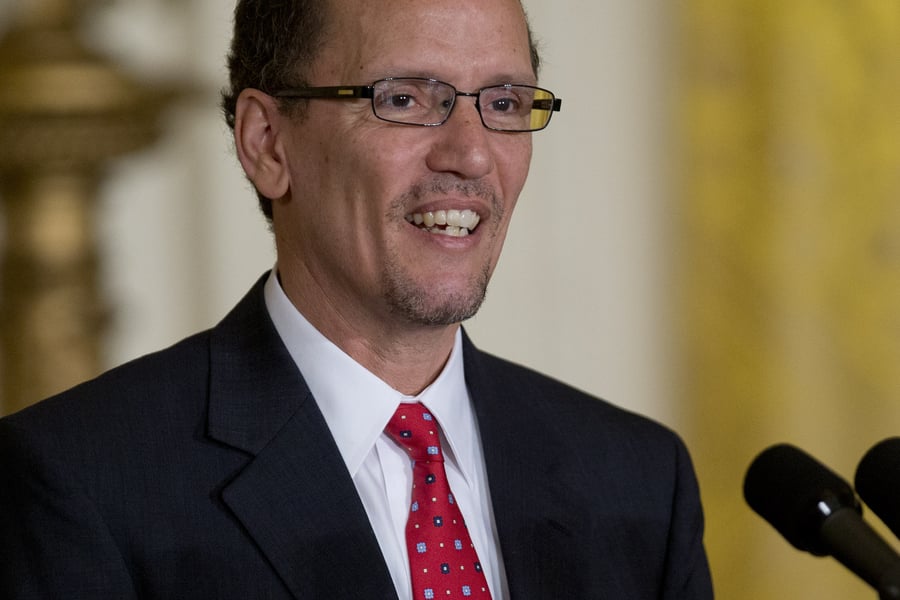
The Department of Labor, led by Secretary Thomas Perez, proposed a highly anticipated and controversial rule Tuesday that would require brokers working with retirement accounts to act in the best interest of clients.
APR 14, 2015
The Department of Labor proposed a highly anticipated and controversial rule Tuesday that would require brokers working with retirement accounts to act in the best interest of clients. The higher standard for brokers is at the heart of a regulation that seeks to limit conflicts of interest for retirement advice. The rule was approved by the Office of Management and Budget after a 50-day review, which is more than one month faster than the process was expected to take. The rule would establish a best-interest contract exemption that would legally require brokers to act in their clients' best interest and disclose any conflicts, but would allow firms to set their own compensation models. Brokers could charge for their services in a variety of ways, including through commissions, revenue sharing and 12b-1 fees.

What the proposal means to financial advisers?
• Anyone who gets paid for providing individualized advice to a plan sponsor, a participant in a retirement plan or an IRA owner for consideration in making a retirement investment decision is a fiduciary. Doesn't matter if you call yourself a broker, a registered investment adviser, an insurance agent or any other kind of adviser.
• Plan sponsors and providers can continue educating investors in workplace plans and IRAs without being fiduciaries.
• A fiduciary adviser must provide the client with advice that's impartial and in his/her best interest.
• The DOL created a new kind of prohibited transaction exemption, slugged the “best interest contract exemption.” Firms and the individual adviser who operate under this exemption may receive commissions and revenue sharing, but they must commit to putting the client's best interests first and disclose potential conflicts. Hidden fees must also be prominently disclosed.
“Advisers can have considerable flexibility in how they get paid as long as they put their clients' best interest above their self interest,” DOL Secretary Thomas Perez said on a conference call with reporters Tuesday. “The rule is intended to provide guardrails but not straightjackets.” A fact-sheet on the proposal was provided by the DOL, along with a bevy of links related to the rule. The rule will now have a 75-day comment period after it is published in the Federal Register. The DOL will then host a public hearing within 30 days of the comment period ending and take more comments after the public hearing transcript is published. After the DOL gathers feedback, it could modify the measure and then propose a final rule. It's not clear whether the process will be completed during the Obama administration. The regulation was put on a fast track by President Barack Obama, when he endorsed it in late February as a key part of his effort to promote “middle-class economics.” The White House Council of Economic Advisers released a report that month that said conflicted retirement-savings advice costs investors up to $17 billion annually. "As I called for in February, today's proposal updates the rules to crack down on these conflicts of interest in retirement advice that are costing working and middle-class families billions of dollars every year," Mr. Obama said in a statement Tuesday. "A central goal of middle-class economics is helping responsible American families retire with security and dignity after a lifetime of hard work, and today's action by the Department of Labor is an important step toward that goal." Originally proposed in 2010, the rule was withdrawn in 2011 after fierce protest from the financial industry, which asserted that it would significantly raise regulatory and liability costs for brokers and force them to abandon middle-income clients with modest investable assets. The Securities Industry and Financial Markets Association countered the White House report underpinning the proposed rule with two reports: one saying its economic analysis was faulty and another saying that the administration overlooked an array of existing investor protections.

Latest News

SEC to lose Hester Peirce, deepening a commissioner crisis

The "Crypto Mom" departure would leave the SEC commission with just two members and no Democratic commissioners on the panel.

Florida B-D, RIA owner pitches bold long-term plan to sell to advisors

IFP Securities’ owner, Bill Hamm, has a long-term plan for the firm and its 279 financial advisors.

Fintech bytes: Vanilla, Wealth.com forge new estate planning partnerships

Meanwhile, a Osaic and Envestnet ink a new adaptive wealthtech partnership to better support the firm's 10,000-plus advisors, and RIA-focused VastAdvisor unveils native integrations with leading CRMs.

Fiduciary failure: Ex-advisor who sold practice fined after clients lost millions

A former Alabama investment advisor and ex-Kestra rep has been permanently barred and penalized after clients he promised to protect got caught in a $2.6 million fraud.

Why the evolution of ETFs is changing the due diligence equation

As more active strategies get packaged into the ETF wrapper, advisors and investors have to look beyond expense ratios as the benchmark for value.

SPONSORED Are hedge funds the missing ingredient?

Wellington explores how multi strategy hedge funds may enhance diversification

SPONSORED Beyond wealth management: Why the future of advice is becoming more human

As technical expertise becomes increasingly commoditized, advisors who can integrate strategy, relationships, and specialized expertise into a cohesive client experience will define the next era of wealth management