
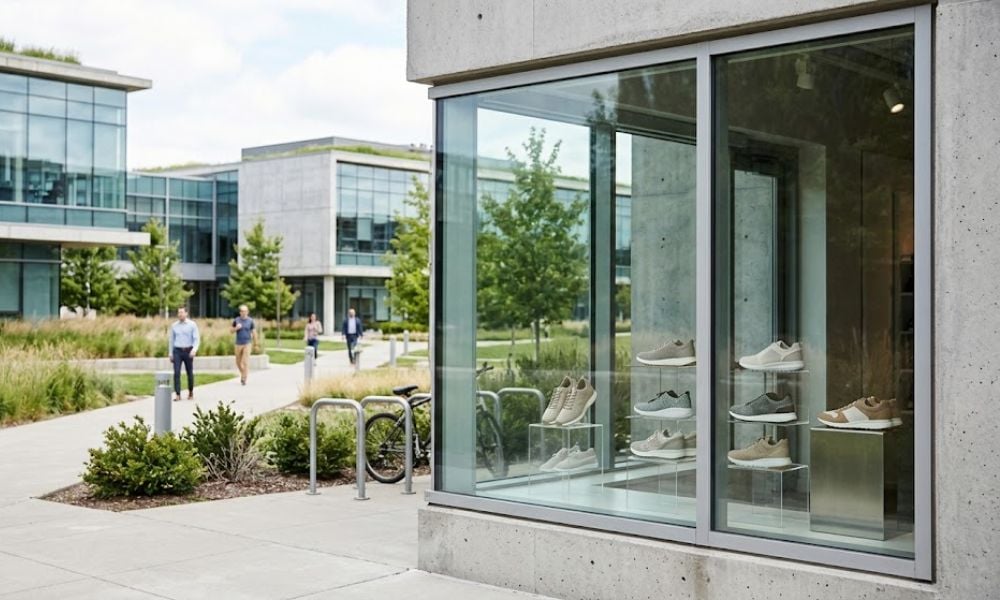
A class action alleges Skechers' founders manipulated the company's own financial projections to push through a $9.4 billion buyout.
The complaint, filed October 21 in US District Court for the Central District of California, accuses Skechers U.S.A.'s most senior executives of orchestrating what it calls a "securities fraud" in connection with the company's take-private acquisition by private equity firm 3G Capital Partners. The deal closed on September 12, 2025.
At the center of the case is a two-tier payout structure that, according to the filing, gave insiders a far better deal than the investing public.
Public shareholders received $63 per share in cash. But the complaint alleges the company's founding family - its CEO and chairman, and its president, who co-founded Skechers in 1992 and controlled it through a stock structure that gave their shares ten times the voting power of ordinary stock - had access to a different option. They could take $57 in cash per share plus one equity unit in the new private entity, with an expected buy-in price of $29 per unit, for a nominal total of $86 per share.
The founding family elected that option on all of their holdings, according to the complaint, collecting "over $1 billion in upfront cash compensation" while retaining more than 18 million ownership units in the post-deal company. Both founders kept their executive roles after the transaction.
To make $63 look fair, the complaint alleges, the company's senior officers revised Skechers' internal financial projections downward three separate times between April 23 and April 27, 2025 - after 3G Capital had already locked in its final offer. Each revision, the filing says, pushed the figures further below the forecasts Skechers had been using before the buyout talks.
The company's financial advisor, Greenhill & Co., then used the lowest set of projections to run a valuation model that landed on a midpoint of approximately $59.91 per share, according to the complaint. That made the $63 offer look like a premium. The filing alleges Greenhill had earlier calculated higher valuation ranges based on a prior set of projections, but those were never shared with public shareholders.
The complaint describes Greenhill as "complicit in the fraudulent scheme" and alleges it "knowingly used the lowered projections in its fairness evaluation of the Take-Private." Greenhill and its lead banker on the deal are both named as defendants.
Tariffs play a central role in the alleged scheme. On April 24, 2025, Skechers withdrew its 2025 financial guidance, blaming "macroeconomic uncertainty stemming from global trade policies" - the escalating US-China trade war.
But the complaint alleges this public explanation did not match what was happening behind the scenes. According to the filing, the company's senior officers had "privately assured 3G Capital that the tariffs would have minimal impact on Skechers' future operational and revenue growth." Those assurances went to 3G Capital's own investment committee, the complaint says, but never reached public shareholders.
Skechers stock dropped after the guidance withdrawal, falling from a closing price of $50.49 on April 24 to $47.79 the following day - a 5.35% decline, according to the complaint.
The filing also raises questions about the deal's oversight. The independent committee of outside directors tasked with reviewing the transaction was only formed on April 30, 2025 - four days before the board voted to approve it. By that point, the complaint says, the company's senior officers and 3G Capital "had negotiated all essential terms of the Take-Private, including price." The committee did not explore alternative bids, according to the filing.
Another allegation: the complaint says the founding family "decided to engage with 3G on an exclusive basis with respect to a transaction" as early as December 2024, effectively blocking competing buyers. That arrangement was not disclosed to shareholders, the complaint alleges.
The lawsuit brings claims under federal securities law, on behalf of investors who sold Skechers Class A common stock between April 24, 2025, and the September 12, 2025, merger close. Skechers' stock was delisted from the New York Stock Exchange after the deal closed.
The allegations in this complaint have not been tested, and no court has ruled on the merits of any claim.

According to a federal charges Bradley Heppner, 60, received more than $150 million in payments through funneling money from GWG Holdings to a shell company.
A $1B fund allegedly skimmed 30% off the top, then swapped cash for locked-up stock.

TCI Wealth Advisors also has also tapped JIFFYAI to unify onboarding and servicing, while TradePMR adds ICE market data to its Fusion advisor platform

Also, CAPTRUST adds a $300 million planning team from Sanctuary in its home market of Raleigh, and Sequoia Financial Group buys a Boulder family office.

New nonvoting shares would let the Meta CEO cover eyed Proposition 40 tax without losing control, in exchange for an eight-year residency pledge
Knighthead Life entered the market with a competitive MYGA. A strong launch earned advisor confidence and paved the way for FIAs.
As AI makes financial information more accessible than ever, Lana Hock explains why human judgment, trust, and empathy remain the qualities clients value most in a financial advisor

