
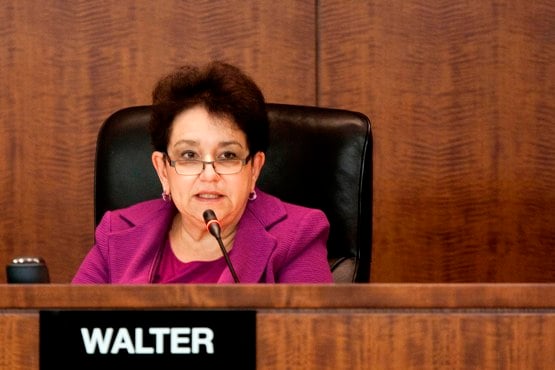
The Securities and Exchange Commission may have a new chairman. But it looks as if the commission is still facing some of the old issues that bedeviled Mary Schapiro. In her first public appearance as SEC chairman Friday, Elisse Walter indicated that little near-term action would be forthcoming on two major issues: finalizing a rule that allows advertising of private-placement investments to the public and a potential rule that would raise investment advice standards for brokers. On the private-placement advertising rule, Ms. Walter said that the commission would consider beefing up investor safeguards but she declined to give a timeline for when the regulation would be finalized. “We are looking very hard at how we move forward,” Ms. Walter told a meeting of the Investor Advisory Committee at SEC headquarters in Washington. In comments to the panel later, Ms. Walter also indicated that there is no consensus among the four SEC commissioners on a potential rule that would raise investment advice standards for brokers. The private-placement solicitation provision is one of several in a bill signed into law last spring that the commission has fallen behind in implementing. The measure — known as the JOBS Act — eases securities registration requirements for startup firms. The advisory committee, a group of 21 financial markets professionals and advocates created by the Dodd-Frank financial reform law to suggest regulatory priorities, is seen as a means of promoting the interests of retail investors. The panel made seven recommendations to the SEC in October to modify the rule, including one that suggested strengthening requirements by which stock issuers would verify that they are selling to accredited investors. “I deeply appreciate the effort and the thought and thoughtfulness that went into crafting the recommendations,” Ms. Walter said at the meeting. “In addition, your ability to work together and produce recommendations that are unanimously suggested by the committee is heartening to me and serves as an example to us all.” While the advisory panel urged the SEC to proceed carefully with the rule, congressional Republicans are prodding it to finalize the rule that was proposed in August. They point out that the bill, seen as a means of creating jobs, passed with overwhelming congressional majorities. Although the SEC is tardy on the JOBS Act rules, Ms. Walter said it is not ignoring Congress. “Once a statute is passed, we will carry it out,” Ms. Walter said. “It is not our job to undo congressional determinations.” Ms. Walter, formerly a member of the commission, was designated as chairman by President Barack Obama following the Dec. 14 departure of Mary Schapiro. It's not clear whether she will be nominated for the permanent position. Ms. Schapiro's seat on the five-member commission has not been filled. The private-placement advertising rule will be one of Ms. Walter's biggest challenges. “Chairman Walter is in the hot seat,” said Barbara Roper, director of investor protection at the Consumer Federation of America and a member of the Investor Advisory Committee. “She's going to make someone really angry, no matter what she does.” But if Ms. Walter threads the needle, it would start her chairmanship off strongly. “It would be a huge coup for Chairman Walter … if she could find that middle ground,” Ms. Roper said. It may be even more difficult for Ms. Walter to find consensus — or at least three votes — for a rule requiring that anyone providing retail investment advice act in the best interest of a client. Brokers currently meet a less stringent suitability standard when selling investment products. Dodd-Frank gave the SEC the authority to promulgate a fiduciary-duty rule and harmonize investment adviser and broker regulations. But it is not mandatory, and the agency hasn't yet taken action. “I firmly believe that the retail investor should be able to walk into [the office of a] financial professional and be treated in a way so that whatever is recommended to them — whether it's a product or a strategy — is in the best interest of that person,” Ms. Walter said. But the politics of fiduciary duty will be difficult to sort out. “Each commissioner has a slightly different understanding on whether there is an issue here that needs to be addressed and the best way to address it,” Ms. Roper said.

Focus Partners Wealth’s Jeffrey Levine says a Democratic House or Senate would make new legislation on Trump Accounts much harder to pass

Docupace also rebuilt its wealth operations platform around a single client record, while Focus Financial picks Nevis to bring AI to its advisors.

Consolidators handled 53% of deals through September as smaller sellers stalled amid market volatility, DeVoe & Company finds.

Shook Research has a new name and brand, Veritant, and will continue its coveted rankings of financial advisors.

Principals reportedly took millions more in pay than disclosed
Knighthead Life entered the market with a competitive MYGA. A strong launch earned advisor confidence and paved the way for FIAs.
As AI makes financial information more accessible than ever, Lana Hock explains why human judgment, trust, and empathy remain the qualities clients value most in a financial advisor

