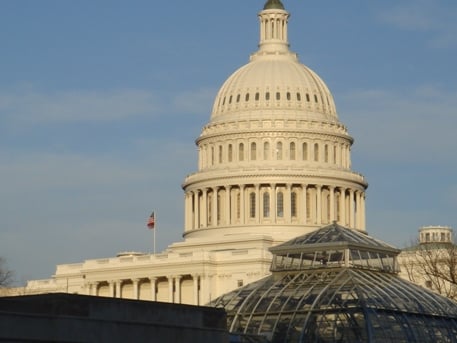
For now, it's unlikely that the Senate will consider any amendments that are not already in the pipeline for floor action.
After more than two weeks of debate on a comprehensive financial-regulatory-reform bill, it looks as if the Senate will not act on fiduciary-standards amendments.
The Senate voted on Thursday to end debate on the financial reform measure, 60-40, after having failed by three votes on Wednesday to achieve the 60 needed to overcome a filibuster.
The Senate could wrap up work on the bill within a couple days and then cast a final vote on the legislation. It is unlikely to act on any amendments that are not already in the pipeline for floor consideration.
That would mean that there would be no vote on an amendment by Sens. Robert Menendez, D-New Jersey, and Daniel Akaka, D-Hawaii, that would require broker-dealers and insurance agents to act in the best interests of their clients and disclose conflicts of interest. That's the same standard that applies to investment advisers.
Observers said that Menendez and Akaka may have backed off a vote because they did not have enough support to ensure approval of their amendment. That tactic might strengthen their position in House-Senate negotiations over a final bill because the Senate would not have gone on record as opposing the proposal.
“Not having a vote actually increases the chances that something more like the House bill could prevail in conference,” said David Tittsworth, executive director of the Investment Adviser Association.
The Menendez-Akaka amendment, which is almost identical to language in the House financial-reform bill, has become the focal point of a battle between fiduciary supporters and opponents.
The Senate version contains a provision that calls for a Securities and Exchange Commission study of the differences between the fiduciary standard and the suitability standard, which applies to broker dealers. After the study, the SEC could proceed to rulemaking. By contrast, the House version would direct the SEC to write rules immediately.
Other fiduciary proposals — by Sens. Arlen Specter, D-Pa., Ted Kaufman, D-Del., Barbara Boxer, D-Calif., and Susan Collins, R-Maine — also have failed to breakthrough the logjam of hundreds of amendments to the 1,596-page bill.
Outside the financial advisory industry, little attention has been paid to the issue of whether to impose a universal fiduciary standard on brokers and advisers. The various amendments addressing it don't figure into the equation of what the Senate needs to do between now and the vote on final passage.
“It doesn't appear to be a priority at this point,” said Dan Barry, director of government relations at the Financial Planning Association. “There are a lot of competing proposals trying to find their way to the floor and not enough time to consider them all.”
The Senate has voted on 29 amendments since May 5, most of them dealing with high-profile controversies like the so-called too-big-to-fail problem, a consumer protection agency and credit ratings firms. Senators on both sides of the aisle were left unsatisfied that amendments they had championed never came to a vote. In addition, the contentious issue of derivatives had yet to be resolved.
Nevertheless, the lack of vote on the Menendez/Akaka amendment in the Senate could work out for those back Mr. Akaka intends to continue pushing for the fiduciary standard, according to an aide.
“Regardless of how it happens procedurally, as long as it is in the final bill, Sen. Akaka will be happy,” said Jesse Broder Van Dyke, deputy communications director for Mr. Akaka.