House Republicans are jaw-boning as effectively as using the legislative process to apply pressure to the Securities and Exchange Commission.
An example occurred on Tuesday, when a
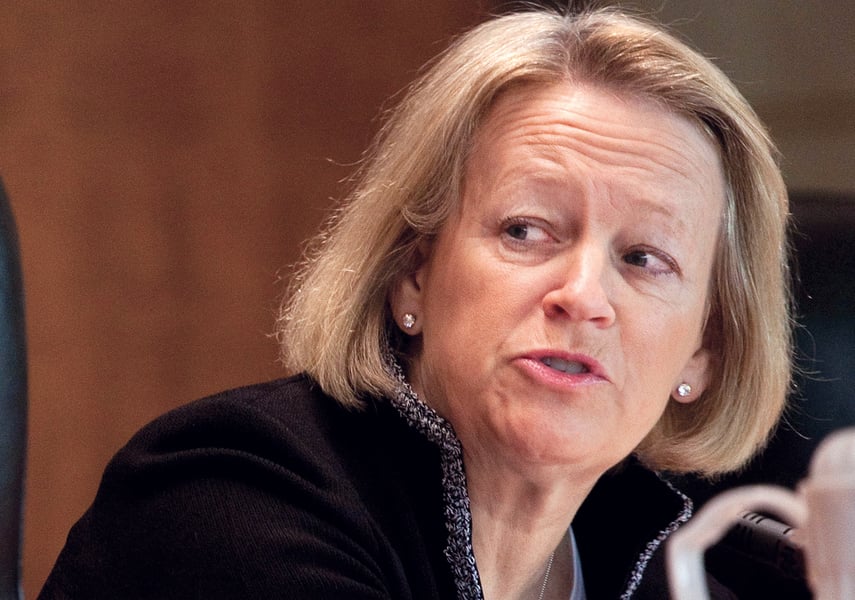
House Oversight and Government Reform subcommittee brought SEC Chairman Mary Schapiro up to Capitol Hill to testify about the agency's efforts to justify regulations through cost-benefit analysis.
The GOP has harangued the SEC about cost-benefit analysis ever since taking over the House in January 2011.
Republican lawmakers are taking advantage of their majority status to use a forum like the oversight panel, which has no direct jurisdiction over the SEC, to advance their narrative that the SEC is implementing financial reform law without regard to the burden it's imposing on the financial services industry.
In her
appearance, Ms. Schapiro demonstrated that the SEC is listening to the lawmakers – as well as the Government Accountability Office and its own inspector general – when it comes to improving its cost-benefit analysis process.
She said that under her direction, the agency has issued a memorandum to staff requiring that the Division of Risk, Strategy and Financial Innovation – which is responsible for cost-benefit calculations – be involved in the rulemaking process from the beginning so that economic analyses can be integrated in a regulatory proposal rather than tacked on at the end.
“Economists must play a central role in rulemaking – whether in identifying concerns or issues that may justify regulatory action or analyzing the likely economic consequences of competing approaches – and the staff's current guidance emphasizes that significant role,” Ms. Schapiro said in prepared testimony. “Overall, the guidance should result in the public, Commission and staff being better informed about rules' likely economic consequences and in more clear and comprehensive economic analyses.”
The SEC has delayed proposing a rule that would impose a universal fiduciary duty on retail investment advice because it is first going to conduct a cost-benefit analysis. This slowdown can be attributed in part to a court ruling last summer that vacated an SEC regulation on proxy access due to what the court called insufficient economic analysis.
In doing the fiduciary cost-benefit analysis first, the agency also is responding to consistent pressure from House and Senate Republicans. Neither chamber has yet passed a bill on the topic – and the Democratic-led Senate probably never will. The GOP advances have been made purely by moral suasion.
Another example of the GOP public-relations campaign against regulators is the
Dodd-Frank Burden Tracker that the House Financial Services Committee launched on Tuesday.
In their online compilation, the House finance panel Republicans assert that only 185 of 400 Dodd-Frank rules have been written in almost two years and that it will take firms 24,035,801 hours annually to comply with those first 185.
Democrats counter that the Dodd-Frank bill is protecting investors – a benefit that far outweighs the cost of a financial collapse like the one the country experienced in 2008. Ms. Schapiro also can turn to Senate Democrats for a sympathetic ear – and action – when the agency needs allies.
But as long as the Republicans maintain control of the House, they'll keep the pressure on the SEC legislatively and through the congressional version of the bully pulpit.