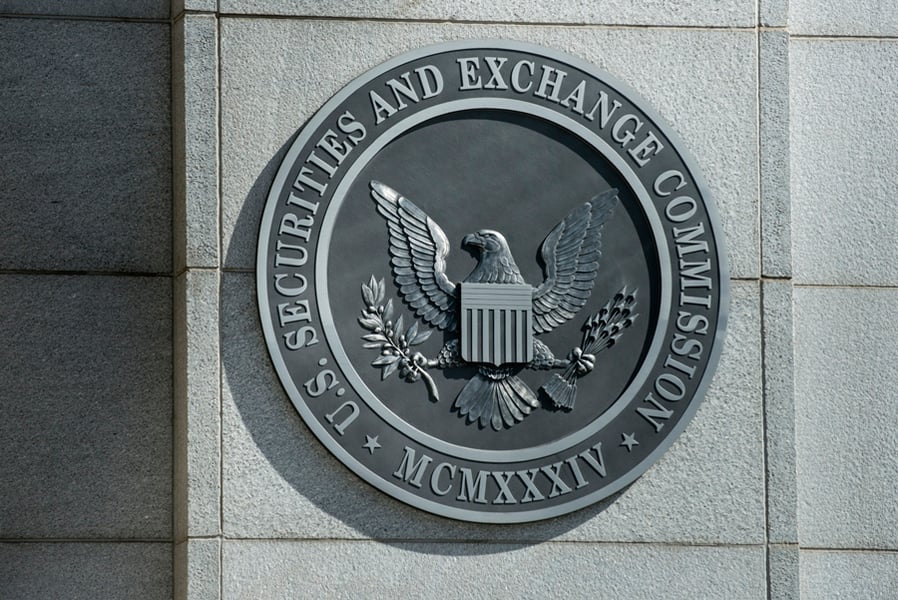
Commonwealth Financial Network has been charged by the SEC with failing to disclose material conflicts of interest related to revenue sharing.
The
Securities and Exchange Commission complaint said that since at least 2007 Commonwealth had a revenue-sharing agreement with clearing broker
National Financial Services, an affiliate of
Fidelity Investments that Commonwealth required most of its adviser clients to use for trades in their accounts.
Under the terms of the agreement,
Commonwealth received a portion of the money that some mutual fund companies paid to NFS to trade on the platform, if the money was invested in certain fund share classes.
The SEC is claiming a breach of fiduciary duty on behalf of Commonwealth for failing to tell its clients that they could have invested in less-expensive share classes.
Commonwealth, which has $85 billion worth of advisory assets under management, offers investment advisory services through approximately 2,300 investment adviser representatives and through three Preferred Portfolio Services programs called PPS Custom, PPS Select, and PPS Direct.
The complaint states that between July 2014 and December 2018, Commonwealth received more than $100 million in revenue sharing from NFS related to client investments in certain fund share classes.
Commonwealth has contracted with NFS for clearing services since at least 1998. According to the complaint, "Commonwealth requires substantially all of its PPS advisory clients to select NFS as the clearing broker for PPS investment accounts."
Since at least March 2007, the complaint states, the clearing agreement between Commonwealth and NFS has provided that NFS will share the recurring mutual fund revenue fee with Commonwealth based on Commonwealth's client assets invested in certain no-transaction-fee mutual fund share classes.
"A significant exception is that there is no revenue sharing for Commonwealth assets invested in Fidelity mutual funds," the claim states.
In one example cited in the SEC claim, Commonwealth reps had the choice of three different share classes with expense ratios ranging from 79 basis points that paid Commonwealth revenue sharing of 30 basis points, a share class charging 55 basis points that paid Commonwealth 8 basis points, and a share class charging 45 basis points that did not pay revenue sharing.
According to the SEC, in 2016 Commonwealth had approximately $174 million in client assets invested in the most expensive of the three share classes, resulting in approximately $515,000 in revenue sharing payments to Commonwealth.
In an email, Commonwealth wrote: "While the enforcement action proposed by the Securities and Exchange Commission is a pending legal matter, Commonwealth Financial Network vehemently denies the allegations and believes they are categorically without merit. We are confident we have operated both appropriately and justly and will vigorously defend our actions in this matter."
NFS and Fidelity did not respond to a request for comment for this story.
"This is just really, really bad, and if it turns out they failed to disclose these back-end commissions I wouldn't be surprised if the SEC throws the book at Commonwealth," said securities attorney Adam Gana, who is not involved in this case.
"This kind of stuff is so bad for clients," he added. "It's something that Congress tried to fix with Dodd-Frank, and it's something the fiduciary rule and best interest is trying to fix now."