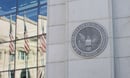
At the beginning of the year, after it missed cues for seemingly everything from the massive Madoff Ponzi scheme to the credit crisis, the Securities and Exchange Commission was being written off as all but dead.
Many in the financial services industry feared that much of the SEC's power would be usurped by the proposed Consumer Financial Protection Agency — part of the regulatory reform plan that President Obama announced June 17.
As it turns out, the Obama administration plan would give the SEC more clout, not less.
“I think that for the SEC, news of my demise has been overrated,” said Laura Corsell, a partner with Philadelphia law firm Montgomery McCracken Walker & Rhoads LLP.
The SEC stands to reap a 7% increase — to more than $1 billion — under the budget that the administration has proposed for the fiscal year that begins Oct. 1, noted Ms. Corsell, who worked in the SEC's Investment Management and Enforcement divisions and now is chairwoman of Montgomery McCracken's investment management group.
“They apologized for the Madoff thing. They took it on the chin,” Ms. Corsell said.
“Their willingness to not get defensive and to say, "We're low on resources but we needed to have done a better job anyway,' speaks in their favor,” she said.
CRITICAL SUPPORT
The SEC has retained critical support among lawmakers who oversee financial services issues, Ms. Corsell said.
“They have a Democratic executive and a Congress that will be more, rather than less, supportive of regulation,” she said.
“They have come out ahead,” said John Coffee, a professor at Columbia University Law School in New York. He sees three areas where the SEC stands to gain significant new power under the regulatory reform plan that Congress is beginning to consider.
• The SEC would get new powers for regulating securities-related over-the-counter derivatives, a market with an estimated notional value of $48.4 trillion. The
Commodity Futures Trading Commission would regulate the larger interest-rate, foreign-exchange-contract and commodity-related derivatives.
• The SEC would get increased responsibility for regulating executive compensation, as well as new authority to bring regulations of broker-dealers and investment advisers into line.
• It would receive authority to ban mandatory arbitration clauses in contracts between brokers or investment advisers and retail clients.
The SEC also would be among the regulatory agencies that would advise the
Federal Reserve Board on systemic risk issues involving financial institutions that could hurt the economy if they failed.
Most important, in keeping its authority to regulate investments, the SEC appears to have dodged a bullet. Under the Obama administration plan, the Consumer Financial Protection Agency would primarily regulate consumer products such as credit cards and mortgages.
“The SEC's role is going to be extremely important under the new plan,” said Joseph Borg, director of the Alabama Securities Commission in Birmingham.
“They will still be the primary regulator over the securities markets, but they will have to share authority with the Fed” with regard to systemic risk supervision, Mr. Borg said. However, the SEC lost its primary role in risk supervision when Wall Street investment banks either went out of business or became bank holding companies last year.
Although the SEC has lost primary authority for supervising systemic risk at major financial companies, it is likely to beef up its policing operations.
“The SEC is going to be much more specialized on enforcement and investor protection,” Mr. Coffee predicted.
That may mean that the SEC will come under more pressure to refocus its resources from relatively small enforcement issues to more significant fraud cases and the top executives that are responsible for them, said Peter Chepucavage, general counsel of Plexus Consulting LLC in Washington, which provides compliance consulting services for small brokerage and investment advisory firms. He also is founder of the International Association of Small Broker-Dealers and Advisors, headquartered at his office.
“Mary Schapiro has only been in office for a short time period, but she is under tremendous pressure to produce a big case,” Mr. Chepucavage said of the SEC chairman.
Rep. Paul Kanjorski, D-Pa., chairman of the House Financial Services Subcommittee on Capital Markets, Insurance and Government-Sponsored Enterprises, is applying part of that pressure.
He has sent several requests to SEC Inspector General David Kotz to report to Congress on why the commission failed to detect the $60 billion Ponzi scheme orchestrated by Bernard L. Madoff Investment Securities LLC of New York, along with recommendations on how to improve the agency's enforcement operations. Those reports are due Aug. 31 and Sept. 30.
At the same time, the SEC is under pressure to improve supervision of investment advisory firms. In a June 18 speech to the New York Financial Writers' Association, Ms. Schapiro noted that about a third of the 26 actions the SEC has brought against Ponzi-type schemes since she took over in January have involved investment advisers held to fiduciary standards, meaning that they are supposed to act in the best interests of customers and get informed consent from clients when their conflicts can't be avoided.
Although she called for applying fiduciary standards to all financial services providers that offer personalized investment advice about securities, she added: “We cannot build an effective regulatory regime around the fiduciary standard of conduct alone.” The regulatory structure for broker-dealers and investment advisers needs to be “harmonized,” Ms. Schapiro said.
SELF-FUNDING PLAN
One method for providing more resources for that effort is being advanced by commission member Luis Aguilar. Rather than bring investment advisers under a separate self-regulatory organization, which could be the
Financial Industry Regulatory Authority Inc. of New York and Washington, he is calling for self-funding by investment advisers for oversight and regulation within the SEC itself.
That would provide the SEC with the resources it needs to supervise the more than 11,000 advisory firms that are under its jurisdiction, Mr. Aguilar argued.
“The SEC has 70 years of experience regulating investment advisers under a principles-based regime, not the rule-based regime that's applied to the broker-dealer industry by Finra,” he said.
Further, self-funding of advisory regulation within the SEC “makes better sense than creating a brand-new SRO from whole cloth,” Mr. Aguilar said.
E-mail Sara Hansard at [email protected].