
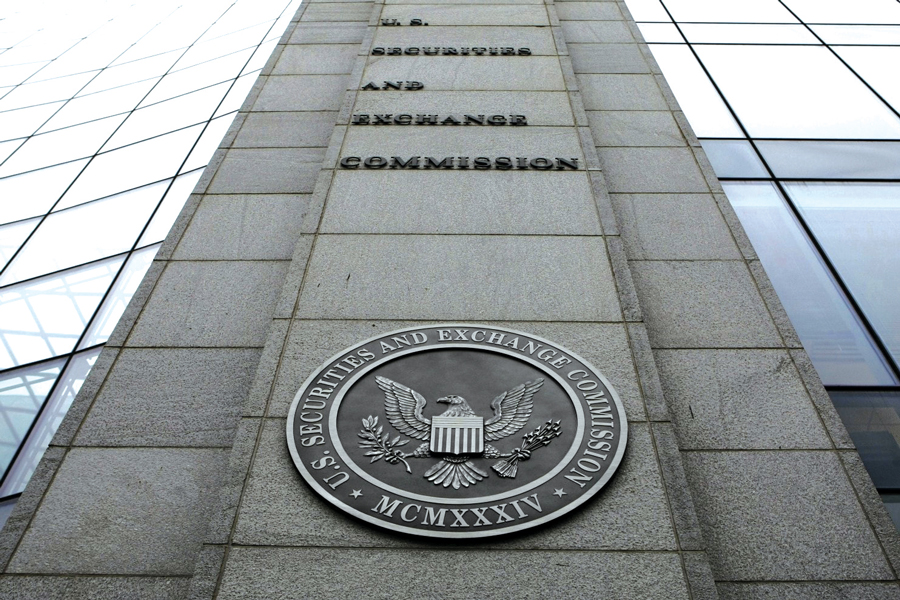
The Securities and Exchange Commission has approved a set of cost-cutting measures for the Consolidated Audit Trail, the massive trade-tracking database at the center of a years-long dispute between regulators and the financial industry.
The decision comes just months after a federal appeals court struck down a proposed funding model for the system previously put forward by the SEC, leaving the future of its financing in question.
The new SEC order handed down Tuesday grants conditional exemptive relief to the self-regulatory organizations that operate the Consolidated Audit Trail, or CAT, allowing them to scale back certain requirements and reduce operating expenses. The CAT, which was designed to help regulators monitor trading activity across US equities and options markets, has faced mounting criticism over its ballooning costs and privacy concerns.
When the CAT was first approved in 2016, annual operating costs were projected to reach as much as $55 million. But by last year, those costs were projected to total more than $248 million.
The latest measures are expected to bring expenses down by an additional $20 million to $27 million, pushing the 2025 forecast to roughly $196 million.
In a separate statement on Tuesday, SEC Chairman Paul Atkins acknowledged the rapid cost escalation, noting that “the costs of operating the CAT have ballooned beyond belief.”
“Both the Commission and the participants that operate the CAT need to take very seriously their roles in reducing these seemingly endless cost increases," he said. "CAT must be more efficient and cost-effective, especially after the recent decision by the US Court of Appeals for the Eleventh Circuit that vacated the 2023 Funding Model Order governing the CAT.”
The CAT has been a flashpoint for controversy since its inception. Broker-dealers and asset managers have long argued that they are being asked to shoulder an unfair share of the costs, while privacy advocates have raised alarms about the scope of data collection. A lawsuit filed in Texas last year accused the SEC of overstepping its authority and enabling “dystopian surveillance” of American investors.
A turning point in the legal battle came in July, when the US Court of Appeals for the Eleventh Circuit found that the SEC’s approach to funding the CAT – allowing exchanges to pass all costs to broker-dealers – was inconsistent with earlier rules and relied on outdated cost projections. The decision forced the SEC to revisit its funding strategy, and industry groups have continued to push for greater transparency and a fairer allocation of expenses.
Under the new order, CAT operators will be permitted to:
Cease creating interim lifecycle linkages unless specifically requested by regulators,
Ease requirements for re-processing late records,
Discontinue certain online query tool functions,
Delete CAT data older than five years and move data older than three years to less expensive storage.
The SEC said these changes would not compromise the system’s core regulatory functions. “The conditional exemptive relief granted herein is appropriate in the public interest and consistent with the protection of investors,” the agency stated in its order.
Jamie Selway, director of the SEC’s division of trading and markets, described the move as “an overdue journey to reform and rationalize the CAT.” He said the division would continue to work with industry participants to identify further cost reductions.
With the funding model now in limbo, the SEC is undertaking a comprehensive review of the CAT’s costs and operations. Chairman Atkins emphasized that the latest relief is “just the start,” and signaled that more changes could be on the way.

New BCG research names financial services among the world's most AI-exposed industries and the US as a top-tier AI economy.

Rockefeller Capital Management's Mallory Findley on how avoiding conversations risks derailing even the best-laid estate plans.

New Empower research reveals a "retirement drift" problem that hands financial advisors a direct opening to add client value.

Nevis joins Jump at RIA platform Focus as both vendors’ AI tools aim to handle account opening and notetaking.

Ballast Rock Private Wealth has also brough on a veteran advisor focused on multigenerational planning for business owners and families.
Knighthead Life entered the market with a competitive MYGA. A strong launch earned advisor confidence and paved the way for FIAs.
As AI makes financial information more accessible than ever, Lana Hock explains why human judgment, trust, and empathy remain the qualities clients value most in a financial advisor

