A Securities and Exchange Commission official said Wednesday he doesn't understand why the agency is catching flak from some in the financial industry over its crackdown on inadequate disclosure of mutual fund fees.
For more than a year, the SEC has been
conducting an enforcement program focused on investment advisers who do not properly disclose recommending high-cost share classes — those that pay them 12b-1 and other fees — when less expensive classes of the same fund are available.
Critics said the SEC launched the share-class initiative without explaining to firms the disclosure rubric. They assert that the
SEC changed its expectations without providing a chance for public comment — in other words, the SEC was engaging in rule-making by enforcement.
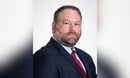
But Steven Peikin, co-director of the SEC Enforcement Division, said the industry should have known from previous enforcement cases as well as the fiduciary requirements for advisers that not disclosing 12b-1 fees was a violation.
"I'm a little bit perplexed by some of the criticism," Mr. Peikin said at the
Securities Enforcement Forum in Washington. "I don't feel like you need the SEC to tell you that as a fiduciary that's something you shouldn't be doing."
[Recommended video: Identifying adviser rollover opportunities]
Mr. Peikin used a nearby prop to illustrate his point. "If I find out my investment adviser is selling me this bottle of water for more than I had to pay for it because she was getting a return on that additional fee, I'd find a new investment adviser," he said.
He then clarified that the SEC's focus is on whether advisers tell their clients about the fees.
"The issue is the disclosure of that conflict of interest," he said.
In the share-class initiative, it was generally a broker affiliate of an advisory firm that was receiving the 12b-1 fees.
Last week, the SEC
released a set of frequently asked questions that outline adviser conflicts of interest related to compensation and how they can address them.
As part of the share-class initiative, the SEC provided incentives to self-report and has
reached settlements with 96 firms. Recently Peter Driscoll, director of the SEC Office of Compliance Inspections and Examinations, said the agency is still seeing
share-class problems on exams.