
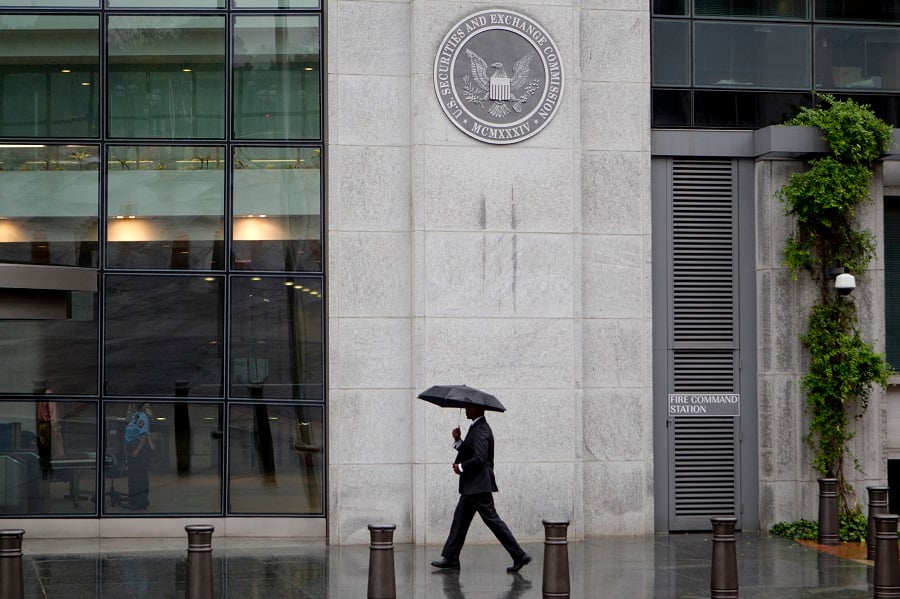
A Securities and Exchange Commission official said the agency must establish environmental, social and governance disclosure policy that is "innovative" and can keep up as the increasingly popular investing area evolves.
“An effective ESG disclosure system does not imply a rigid and soon-to-be outdated set of limited disclosures,’ John Coates, acting director of the SEC’s Division of Corporation Finance, said in a statement Thursday. “It means thoughtful engagement by trusted specialists seeking consensus among investors and companies about useful, reliable and comparable disclosures under standards flexible enough to remain relevant.”
Coates said the SEC has to be nimble in how it approaches ESG policy.
“Going forward, I believe SEC policy on ESG disclosures will need to be both adaptive and innovative,” said Coates, a Harvard law professor who is on leave from the school while he heads the SEC division. “We can and should continue to adapt existing rules and standards to the realities of climate risk, for example, and the fact that investors increasingly are asking for ESG information to help them make informed investment and voting decisions. We will also need to be open to and supportive of innovation — in both institutions and policies on the content, format and process for developing ESG disclosures.”
Over the last several weeks, the SEC has been intensely focused on ESG policy. On March 4, Acting Chair Allison Herren Lee announced the formation of an enforcement task force on climate and environmental, social and governance issues.
Lee also directed SEC staff to ramp up reviews of corporate climate disclosures, and the Division of Examinations elevated climate and ESG in its examination priorities.
In his Senate Banking Committee confirmation hearing earlier this month, the Biden administration’s nominee for SEC chair, Gary Gensler, indicated that ESG would be an important part of his agenda.
The launch of the task force prompted pushback from Republican SEC member Hester Peirce and her fellow Republican commissioner, Elad Roisman. In an appearance last week at an online Investment Adviser Association conference, Peirce said the entire commission must be involved in setting ESG policy.
It could be a heavy lift because of ESG complexities.
For instance, ESG touches almost every company in some manner but also in specific ways based on industry, geographic location and other factors, Coates said.
“As such, there is no one set of metrics that properly covers all ESG issues for all companies,” he said. “Moreover, the landscape is changing rapidly so issues that yesterday were only peripheral today are taking on greater importance. It is against this backdrop that I think about the regulation of ESG disclosures.”

Wells Fargo and UBS also add advisors from Morgan Stanley, Edward Jones, Merrill and Fidelity in a fresh round of wirehouse recruiting

How we got here – and what to do about it

AI trust gap: Americans want protection, not autonomy, in their finances

One in three of Goldman's 109 new partners comes from asset and wealth management, signaling the division's growing strategic weight.

Three firms secure experienced wealth management teams as advisor recruiting competition intensifies across the US.
Knighthead Life entered the market with a competitive MYGA. A strong launch earned advisor confidence and paved the way for FIAs.
As AI makes financial information more accessible than ever, Lana Hock explains why human judgment, trust, and empathy remain the qualities clients value most in a financial advisor

