
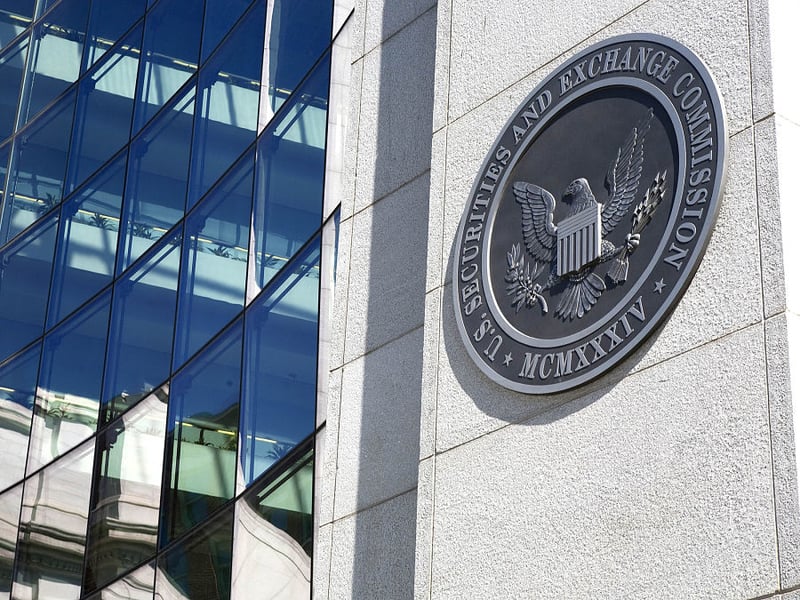
The SEC has handed down a fine of more than $2.2 million against TIAA for not adhering to Regulation Best Interest in its recommendations involving individual retirement accounts.
Following an investigation, the Securities and Exchange Commission found that the organization’s broker-dealer subsidiary, TIAA-CREF Individual & Institutional Services, failed to make key disclosures to retail customers it was managing money for.
According to the SEC, the broker-dealer failed to disclose that more cost-effective investment options were available to those customers through an optional brokerage window within the TIAA IRA.
This window – which included a broader selection of securities, including mutual funds, ETFs, stocks and bonds – offered the same mutual funds found in the broker-dealer’s core menu of mutual funds and other investments, but at a lower cost as a result of waived investment minimums.
In its decision, the SEC found that more than 94 percent of TIAA’s IRA customers opted solely for the core menu, resulting in nearly 6,000 retail customers paying over $900,000 in expenses they could have avoided by accessing the brokerage window option.
“Reg BI protects retail investors by requiring broker-dealers to act in the best interest of their customers when making recommendations, and today’s action demonstrates our commitment to ensuring compliance,” Thomas P. Smith, Jr., associate regional director in the SEC’s New York regional office, said in a statement.
TIAA-CREF Individual & Institutional Services agreed to a settlement that includes a cease-and-desist order against further violations, a censure, and the payment of disgorgement totaling $936,714. It has also been ordered to pay prejudgment interest of $103,424.91 and a civil penalty of $1.250 million.
The firm agreed to these terms without admitting or denying the SEC's findings.
Last November, the SEC ordered brokerage Laidlaw & Co. and two of its reps to pay a little more than $1 million for violating Reg BI through a churning scheme involving six clients.
In July, Finra permanently barred a brokerage from the industry for repeated Reg BI violations that led to nearly $4 million in commissions and trading costs for its customers.

Report on Climate Action 100+ signals risk for passive managers' 13G status heading into the 2027 proxy season.

Advisors say record balances aren't a retirement income plan and urge clients to benchmark their lives, not an index

Wealth enterprises are leaving revenue on the table - a new PureFacts and Ascentix partnership aims to help firms take it back.

What if one investment decision could create tax-saving opportunities across your entire portfolio? Chris Vizzi shares how the Stacking Strategy helps investors align tax planning, portfolio construction, and wealth preservation to maximize long-term outcomes while keeping more of what they earn.

Buyers spending on AI may treat less efficient sellers as overstaffed and price the cost of rightsizing into lower offers
Knighthead Life entered the market with a competitive MYGA. A strong launch earned advisor confidence and paved the way for FIAs.
As AI makes financial information more accessible than ever, Lana Hock explains why human judgment, trust, and empathy remain the qualities clients value most in a financial advisor

