
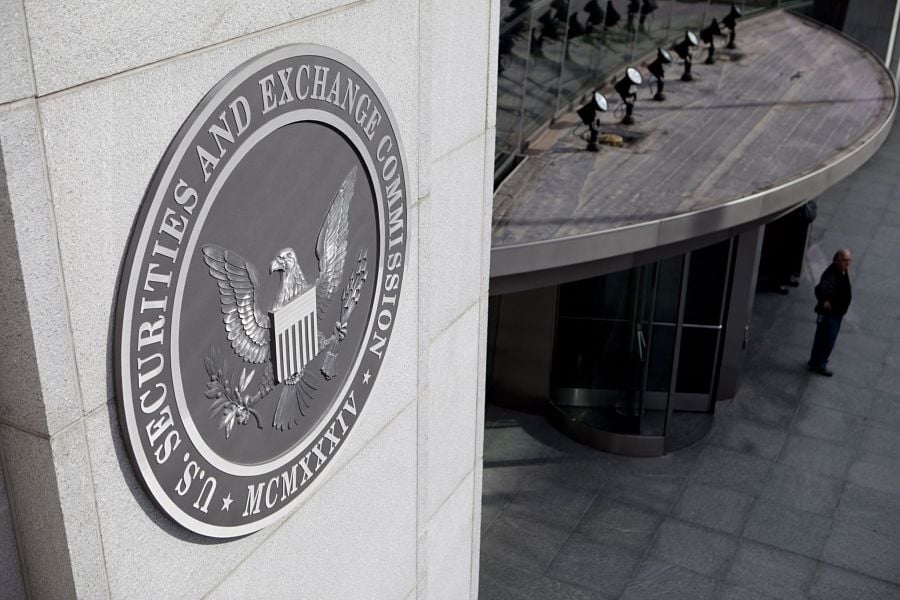
The SEC is once again at its full strength after the Senate confirmed two members on Thursday. But the new commissioners will need time to catch up with the agency's big agenda.
The Senate approved by voice vote Jaime Lizárraga, who was nominated to fill the seat of departing Democratic Commissioner Allison Herren Lee, and Mark Uyeda, who was nominated to fill the seat that was vacated by former Republican Commissioner Elad Roisman. The full Senate vote reflected the ease with which the two new SEC members made it through the Senate Banking Committee.
Their arrival comes at a time when the Securities and Exchange Commission is pursuing a robust agenda under Chairman Gary Gensler.
The agency’s work on oversight of environmental, social and governance investing, for instance, is reaching an initial milestone on Friday as the comment period closes on a proposal to mandate climate risk disclosures by public companies. The SEC also is considering additional ESG proposals and potential regulations pertaining to private funds, exchanges and alternative trading systems, cybersecurity and financial advisers’ digital engagement practices, among other topics.
In addition to tackling those issues, Lizárraga and Uyeda will be assembling their staffs and meeting with people who have a stake in the SEC’s work.
“It takes some time for new commissioners to settle in,” said Kurt Wolfe, counsel at Quinn Emanuel Urquhart & Sullivan. “All of that can slow down the process from a rulemaking standpoint.”
The new commissioners will enter the SEC with a good grasp of the work it does and how it interacts with lawmakers. Lizárraga currently serves as a senior adviser to House Speaker Nancy Pelosi. Uyeda, a career SEC attorney, has been on detail to the Senate Banking Committee, working on the Republican side of the panel.
But their roles as commissioners will give them a new perspective.
“They are aware of the issues, but it’s different when you’re casting the vote,” Wolfe said. “They’re stepping into hot-button, contentious issues.”
Their presence isn't likely to change the trajectory of SEC votes. The Democratic-majority panel under Chairman Gary Gensler has followed party lines to advance many rule proposals. Those votes are likely to be 3-2, with a five-member commission, as opposed to 3-1, when the only Republican commissioner was Hester Peirce.

Retiring RIA seller David Laidlaw alleges the Carnegie valued his stake on $11.7 million EBITA while pitching potential buyers on $21.3 million.

New tool gives RIAs and family offices AI help vetting private market deals, with some users reportedly halving review time.

Investors got projected returns dressed up as real ones, SEC says

Parents must still act to get the $1,000 federal seed and employer contributions, giving financial advisors a role in the rollout.

FINRA booted Rudy Anguiano from the industry for “conversion - the intentional and unauthorized taking of another person’s property.”
As AI makes financial information more accessible than ever, Lana Hock explains why human judgment, trust, and empathy remain the qualities clients value most in a financial advisor
Northern Trust’s Ken Lassner shows advisors how to convert volatility into after-tax portfolio gains

