
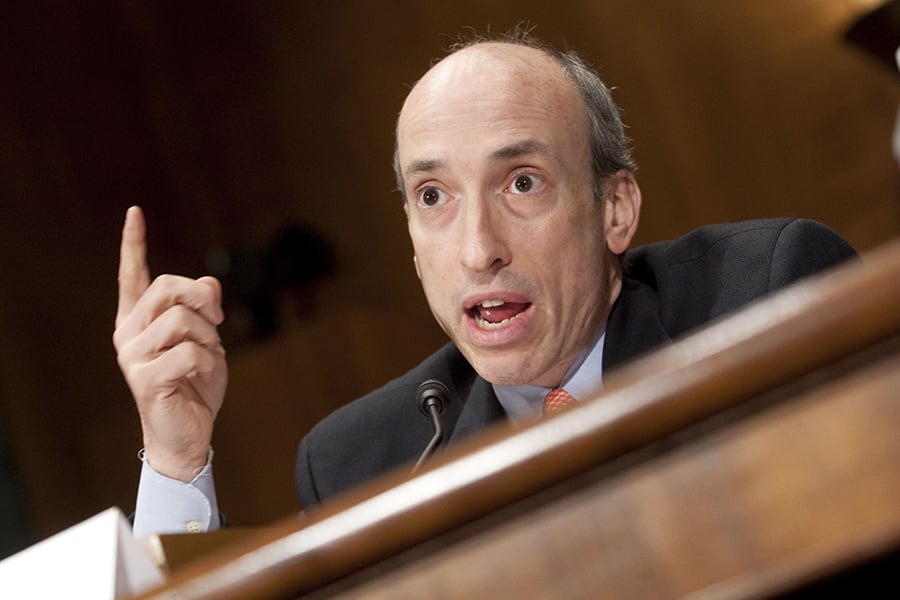
Securities and Exchange Commission Chair Gary Gensler is making it clear he’s skeptical the hundreds of investment funds that tout ESG credentials are as green or socially conscious as advertised.
On Tuesday, the Wall Street regulator posted a video on Twitter that highlights some of his top concerns.
Gensler pointed out that there’s no industry consensus on what environmental, social and governance investing means. He questioned whether firms are adhering to a 1940 law that requires fund names to match what they invest in. And he noted that unlike many high-yield bond funds, ESG offerings don’t publish debt ratings that back up their labels.
“When I think about these questions, I’m reminded of walking down the aisle of a grocery store and seeing a product like fat-free milk,” Gensler said. “In that case, you can see objective figures, like grams of fat, which are detailed on a nutrition label. Investors should be able to drill down and see the ingredients underlying these funds.”
The video is Gensler’s latest attempt to clamp down on so-called greenwashing, in which money managers improperly market funds as ESG. He reiterated that the SEC is working on a rule that would force firms to disclose the criteria and underlying data they rely on in labeling funds ESG.
[More: Are asset managers giving plain old funds a green tint?]

A Nationwide survey finds 47% of GLP-1 users have never discussed the drugs’ financial impact with an advisor, even as many dip into savings.

The hundreds of millions of dollars from a sale of Inspired Healthcare properties does not mean an immediate windfall for investors.

Its SEC filings said one thing - a congressional probe said another.

Sham agreements allegedly padded revenue by 345%.

"Most pre-retirees are uncomfortable making key retirement income decisions without an advisor's help," said Chris Bailey of Cerulli.
Knighthead Life entered the market with a competitive MYGA. A strong launch earned advisor confidence and paved the way for FIAs.
As AI makes financial information more accessible than ever, Lana Hock explains why human judgment, trust, and empathy remain the qualities clients value most in a financial advisor

