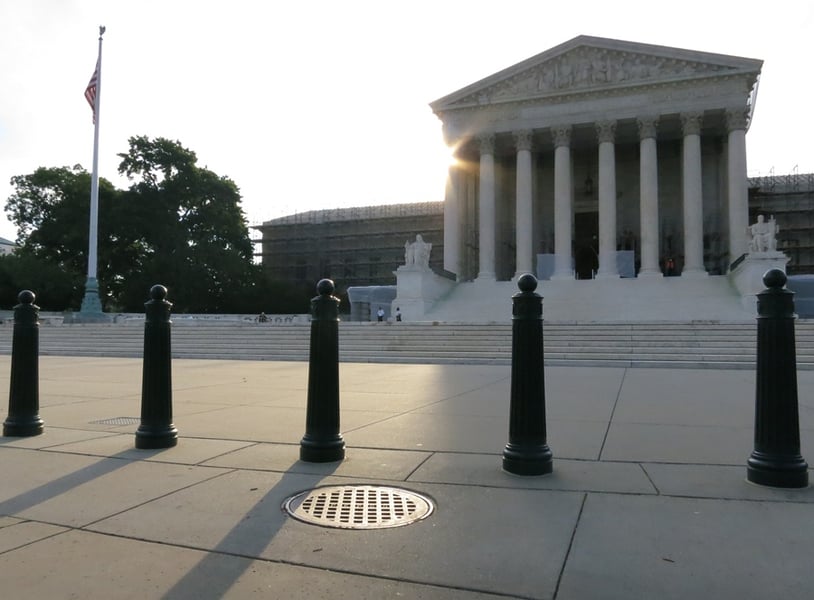
The Supreme Court is set to announce opinions in two cases — one on same-sex marriage and another on health care — that will impact the advice financial planners deliver to clients.
Social Security and other planning for gay couples would come much closer to that for heterosexual couples if the nation's highest court throws out same-sex marriage bans in Michigan and three other states.
It would effectively allow same-sex marriage across the nation and afford gay spouses the federal benefits that come with a recognized union, such as those related to estates, income and other taxes.
“We are hopeful that a majority of the
financial planning needs will be the same for same-sex couples as typical, straight couples, after the Supreme Court decision,” said Jennifer Hatch, president and managing partner with Christopher Street Financial, an advisory firm focused on the lesbian, gay, bisexual and transgender market.
But even if the gay marriage bans are thrown out, there are likely to remain a few outstanding issues, such as adoption rights, Ms. Hatch said.
The legalization of same-sex marriages has swept across the United States to all but 13 states in the two years since the Supreme Court largely proclaimed the Defense of Marriage Act unconstitutional.
(More: As more states recognize gay marriage, planning traps still await couples)
In a second case, the justices will rule whether individuals participating in the Affordable Care Act through federal exchanges are eligible for subsidies that the law says apply to those signing up for health care through state-level exchanges. Only 16 states have created their own exchanges, so residents in the other 34 states are buying benefits through the federal exchange created under the law, which is commonly called Obamacare.
Even though the administration of President Barack Obama said it always intended for anyone obtaining health care through an exchange to receive tax credits, and the Internal Revenue Services has ruled the tax subsidies are legal, a single sentence in the law describes the tax credits as being available to those who get their benefits through a state exchange.
COVERAGE LOSS?
About 6.3 million people would become uninsured if they lost the tax credits that help cover premiums for health care bought through the federal exchange, according to an analysis
by the Urban Institute.
But even the millions who buy insurance without the subsidies could be hit if the pool of those buying insurance through the exchange shrinks, choices decline and prices rise. Insurance premiums in the individual health insurance market could rise by an average of 47% according to a
RAND Institute report.
Some experts also believe
equities in the health care sector could be depressed, at least temporarily.
The health care case is King v. Burwell and the same-sex marriage case is Obergefell v. Hodges. Both are expected to be decided by late June or early July, when the Supreme Court adjourns until October.
The high court already made
big waves for retirement plan advisers last month when it issued a ruling in Tibble V. Edison International, a 401(k) excessive fee lawsuit.
The Supreme Court's order in that case will require retirement plan advisers to keep a close eye on their fund lineups and review their contracts with plan sponsors, among other details covered by the Employee Retirement Income Security Act of 1974.
Read more:
Tibble v. Edison 401(k) fee-case decision offers 3 lessons