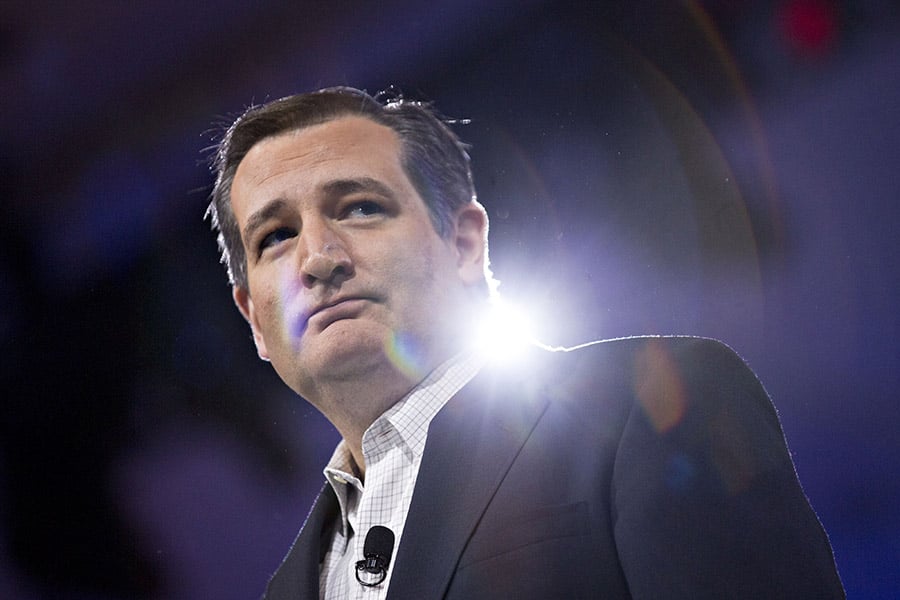
Sen. Ted Cruz, R-Texas, who is gaining momentum as a Republican alternative to Donald Trump for the party's presidential nomination, would likely be an anti-regulation ally to the financial industry and has offered a tax plan that could appeal to advisers.
“There is little doubt in my mind that the leading players in the financial services industry would prefer Cruz over Trump,” said Greg Valliere, chief global strategist for Horizon Investments. “Philosophically, Cruz is opposed to government regulation of the industry, and Trump is a vocal critic of the industry.”
(More: 10 ways presidential candidate Ted Cruz is gaining momentum)
Mr. Cruz topped Mr. Trump this week in the Utah primary and gained the endorsement of
former Florida Gov. Jeb Bush. With another state victory under his belt, Mr. Cruz now has won eight; no other Republican candidate besides Mr. Trump has won more than two states.
A strident foe of regulation, including the Dodd-Frank financial reform law, Mr. Cruz is projected to be a president who would not foist many new rules on Wall Street.
It's not clear where Mr. Cruz stands on the pending Labor Department rule that would raise investment advice standards for retirement accounts. His campaign did not respond to a request for comment.
But Mr. Cruz supports legislation that would require Congress to approve regulations that cost $100 million or more. The idea of an affirmative congressional vote on a rule is incorporated in measures that would halt the DOL regulation.
“I think it's a pretty safe assumption that Cruz opposes the fiduciary rule and that Trump has never heard of it,” Mr. Valliere said.
A previous email and call to Mr. Trump's campaign asking his position on the DOL rule were not returned.
TAX PLAN
On tax policy, Mr. Cruz has
offered a plan that is likely to appeal to investment advisers in at least one respect: It significantly downsizes the tax code. Mr. Cruz is promising a flat tax that would include a single 10% rate on individuals and 16% tax on net business sales, which some have called a value-added tax.
Under his plan, a family of four would not pay taxes on the first $36,000 of income. Mr. Cruz also proposes “universal savings accounts” that allow up to $25,000 of tax-deferred savings annually.
“No tax on the first $36,000 plus the new USA accounts potentially creates opportunities for lower-income individuals to participate in investment activity,” Marc Gerson, a member at Miller & Chevalier Chartered, wrote in an email. “It may be a new opportunity in the retail market, although perhaps not a particularly profitable one.”
Mr. Cruz faces a long road ahead before he can put his policy ideas into action. Mr. Trump remains the prohibitive favorite for the GOP nomination,
prevailing in 19 states — including Arizona this week — and holding a substantial lead in convention delegates. But his candidacy is being resisted by many in the party because of its angry and divisive tone.
And whoever ultimately gains the Republican nomination is expected to face a formidable challenge against the likely Democratic nominee, former Secretary of State Hillary Clinton.
“Either Trump or Cruz would be the clear underdog in November,” Mr. Valliere said.