
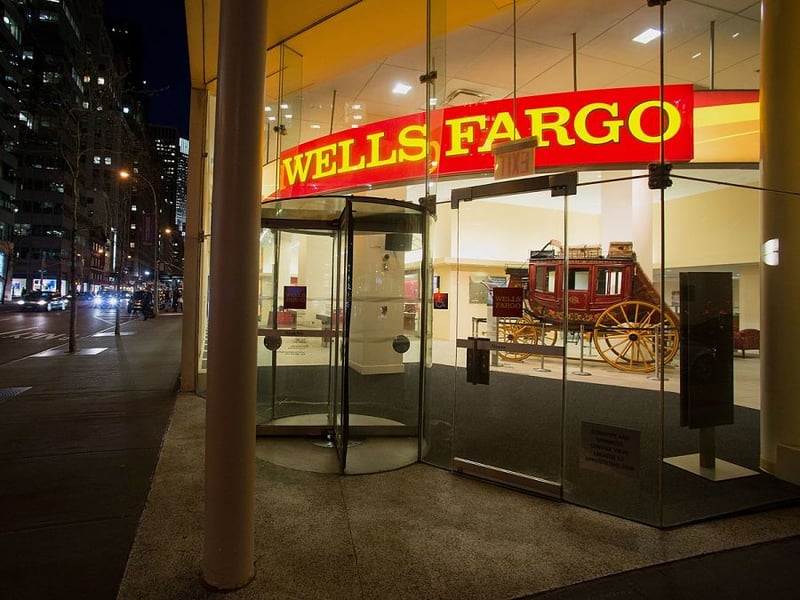
Wells Fargo's broker dealer has agreed to pay more than $3 million in monetary penalties over alleged failures to properly scrutinize short-term trading recommendations made by its representatives, which resulted in client losses and gains for them.
According to a settlement agreement with Finra, Wells Fargo Clearing Services, which does business as Wells Fargo Advisors, failed to properly supervise one of its registered representatives' short-term trading of syndicate preferred stocks, closed-end funds, and medium-term notes in the two-year period between January 2017 and December 2018.
The AWC letter published Thursday afternoon chronicled the case of one representative wo recommended over 100 short-term transactions involving preferred stocks, CEFs, and MTNs, many of which resulted in losses for clients who sold the positions within 180 days of purchase.WFCS flagged some of these unsuitable trades, but Finra said it didn't do enough to stop the representative from engaging in further unsuitable transactions in other securities.
"Despite warnings, the representative continued short-term trading in MTNs and the firm took no further action to restrict his trading activity for several additional months," Finra said. He stopped engaging in short-term MTN trades after another email from the firm, but continued recommending preferred stocks and CEFs on a short-term basis.
Finra's investigation found the errant rep's trading resulted in losses for retail customers while he enriched himself with sales concessions and commissions. Finra estimates the firm earned $578,023 in selling concessions from the syndicate purchases, and an additional $282,564 in sales commissions from the sales that followed.
The industry regulator also found at least 40 other representatives engaged in similar practices, recommending that customers sell syndicate products within six months of purchase, which caused client losses but generating profits for the firm. In total, Wells Fargo earned over $1.45 million in selling concessions and $316,000 in sales commissions from these transactions.
A critical flaw in Finra's eyes was the inadequacy of Wells Fargo’s automated alert system, which only flagged short-term trades occurring within 90 days. That created a blind spot, allowing more than 1,200 transactions involving sales of products held between 91 and 180 days to go unchecked.
"The firm failed to reasonably supervise its representative's recommendations," Finra said.
To rectify these shortcomings, Wells Fargo has implemented an enhanced trade review system and revised its supervisory procedures to better identify and monitor unsuitable short-term trading. The improvements are intended to prevent future misconduct and ensure better protection for customers.
"We take our supervisory responsibilities seriously, and we have enhanced our supervisory system to better serve our clients," a spokesperson for Wells Fargo said in a statement emailed to InvestmentNews. "We’re pleased to resolve this matter."
Without admitting or denying the findings, Wells Fargo agreed to pay $599,025 in restitution to affected customers, as well as a $400,000 fine and disgorgement of $2,031,972.10 plus interest.

Meanwhile, DPL Financial Partners adds two annuity executives and Prime Capital Financial hires a Mid-Atlantic retirement plan consultant

Andrew Komarow pleaded guilty Thursday in federal court in Hartford to defrauding three financial services companies of close to $3.3 million.

Elsewhere, Cetera picks up a $210 million Connecticut team from MML, while Wells Fargo FiNet adds a San Diego family practice from LPL

Celebrity endorsements, $500M in claimed assets, and a state regulator stepping in.

“We needed to become a more agile and efficient organization,” said American Express CEO Stephen Squeri.
Knighthead Life entered the market with a competitive MYGA. A strong launch earned advisor confidence and paved the way for FIAs.
As AI makes financial information more accessible than ever, Lana Hock explains why human judgment, trust, and empathy remain the qualities clients value most in a financial advisor

