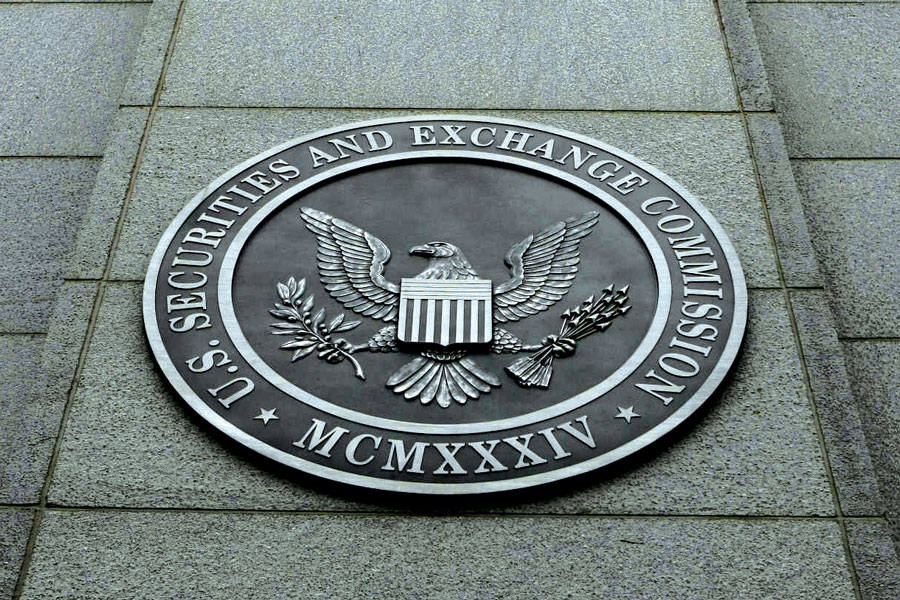
The Securities and Exchange Commission will meet Wednesday to vote on a final investment advice reform package of rules.
More than a year after
the original proposal was released, the agency is now ready to conclude its work on Regulation Best Interest (Reg BI), a client relationship summary known as Form CRS, and the regulator's interpretation of fiduciary requirements investment advisers must meet. In a new item added to the agenda, the commissioners will consider whether to publish an
interpretation of "solely incidental" language in the Investment Advisers Act that exempts brokers from having to register as advisers if they give advice that is solely incidental to a sales recommendation.
(Webcast: Dive inside the newly released SEC advice rule)
No one has fully embraced the proposals, except maybe SEC chairman Jay Clayton. Even SEC members who voted in favor of releasing the package for public comment
expressed reservations about parts of it. It generated more than 6,000 comments.
When the final package is unveiled, it is expected to look much like the proposal that was originally released in April 2018. But there could be key changes that will help determine whether it wins over critics or continues to receive mixed opinions. Here's what to watch for:
1. Will "best interest" be
explicitly defined? The chances are not likely, given the
SEC seems to prefer not to be pinned down. If it's too prescriptive, the agency says it will have less flexibility in interpreting it for enforcement purposes.
2. Will Reg BI explain how brokers should mitigate conflicts of interest? The mitigation requirement is one of the top selling points on Reg BI for Mr. Clayton when he claims it will raise the broker standard above suitability. But in the proposal, there was no detail.
3. Will Reg BI prohibit specific broker practices? This is a sticking point for investor advocates. They want to see language that addresses such broker conflicts as sales quotas for proprietary products, incentives for selling products with revenue-sharing payments, signing bonuses and bonuses for steering clients into particular kinds of accounts.
4. Will Reg BI address 401(k) rollovers? The
now-defunct DOL fiduciary rule was essentially created to protect retirement investors from harm when brokers recommended they roll their company retirement plans into individual retirement accounts.
5. How far will the SEC go in defining "solely incidental"? Adviser advocates argue the SEC has been too lenient in permitting brokers to provide advice without registering as investment advisers and being fiduciaries. Most brokers likely would prefer the status quo, which allows them to hold out as advisers in advertising and marketing material while continuing to be regulated as brokers.
6. Did Form CRS get a makeover? Although there is a significant divide between those supporting the SEC's proposal and those opposing it, there was no disagreement over Form CRS: Everyone hated it. Critics said the document was confusing rather than what it was supposed to be: a plain-language guide for investors trying to decide whether to hire a broker or an investment adviser. Even though it was only four pages, it was lampooned as being both dense and vague.
Investor testing showed it to be ineffective.
7. How does Reg BI treat financial professionals
dually registered as advisers and brokers? The proposal allowed hat-switching. If they were acting as brokers, they would be governed by Reg BI. If they were acting as advisers, they would have to adhere to a fiduciary duty. The problem is that clients wouldn't necessarily know when the adviser/broker is operating in each capacity. State-level fiduciary regulations have stated that when brokers act as advisers, they're advisers throughout the client relationship and must be fiduciaries. The brokerage industry is resisting an ongoing duty of care beyond that which Reg BI requires at the point of sale.
8. Will the SEC block state regulation? In a March comment letter, the Securities Industry and Financial Markets Association urged the SEC to include language in Reg BI that stated that the measure preempts state-level fiduciary regulations.
State regulators responded a few weeks later with a letter that said SIFMA had it wrong and that the SEC can't stop the states.
9. What is the effective date of Reg BI? When the SEC makes Reg BI effective and when it sets the implementation deadline will determine how vulnerable the rule is to being overturned by the next Congress, according to an analysis by the Cowen Washington Research Group.
It will be difficult for the SEC to please everyone.
InvestmentNews will be filing live dispatches from the SEC hearing Wednesday, and provide analysis of and reaction to the rules and what they mean for brokers and advisers in the days to come.