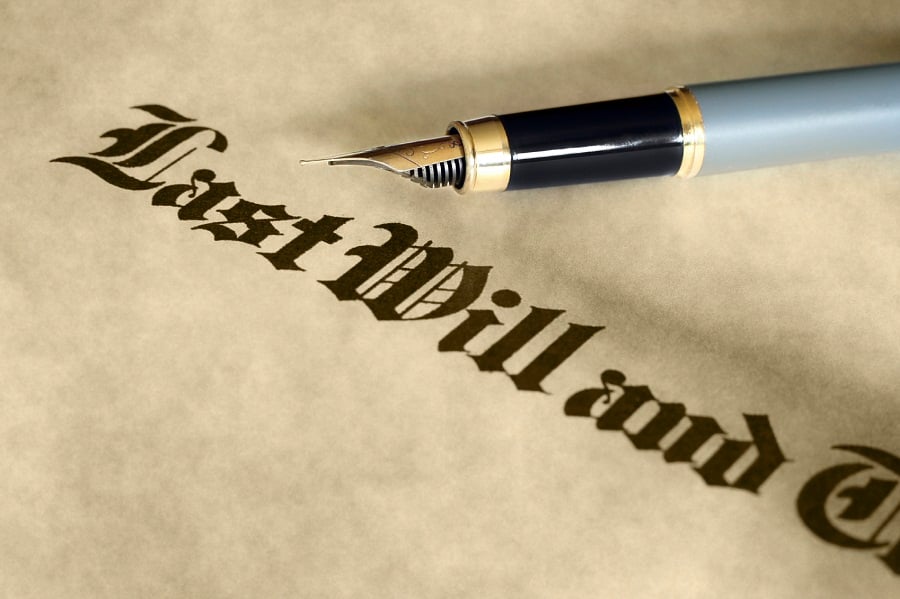
While they couldn't have been any more different as people, as news reports continue to trickle out about the estate of Jeffrey Epstein and that of Aretha Franklin, one thing is becoming clear: They both had unconventional wills.
That lack of convention doesn't pertain so much to the wills' contents, but rather to the circumstances around their drafting, which could prove instructive for financial advisers when dealing with client estates.
In Mr. Epstein's case, the issue is timing. The financier, who committed suicide in a Manhattan jail on Aug. 10 while awaiting trial on sex-trafficking charges, signed a will only two days before his death.
Mr. Epstein, who was 66, had a substantial estate, valued at nearly $578 million. He left his assets to a
trust, The 1953 Trust, according to his will.
"It is unusual to sign a will two days before you die," said Bruce Steiner, an attorney at Kleinberg, Kaplan Wolff & Cohen.
[Recommended video: Chasing the dream: Journey from athlete to adviser]
Signing a will so soon before death doesn't negate the document's legality — a will could be signed minutes before death and be perfectly sound if executed with the proper formalities.
However, Mr. Epstein's circumstances may bring questions around "testamentary capacity" into play, attorneys said. This refers to a person's legal and mental ability to make a valid will.
"If he was so depressed to have killed himself, was he in the proper state of mind to write a new will?" Martin Shenkman, founder of Shenkman Law, said of Mr. Epstein.
A court could invalidate terms of the will if this were ultimately found to be the case. However, the capacity standard is fairly easy to meet — Mr. Epstein would essentially have had to have known who he was, what he owned, and whom he wanted to provide for, said Mr. Steiner. That likely wouldn't be tough to prove, he added, since there were witnesses present when Mr. Epstein signed the will.
However, the short timing could ensnare Mr. Epstein's estate from the standpoint of fraudulent conveyance rules. States have these rules to prevent the transfer of assets to another person or company in an effort to shield the assets from creditors.
"If it wasn't for that, no one would be able to collect on anybody," Richard Behrendt, an
estate planning attorney, said of the conveyance rules.
Though the scope of Mr. Epstein's creditors is unknown, it is
likely that his alleged victims will file civil claims against his estate, and prosecutors may bring charges that result in criminal forfeiture actions.
Creditors have up to a year after a transfer is completed to file a claim against fraud. So, Mr. Epstein signing a will two days before his death increases the odds of creditors being successful.
In Aretha Franklin's case, the lack of convention pertains to the informality around the drafting a will. Initially it seemed The Queen of Soul, who was 76,
had died without a will. But three handwritten documents, dated between 2010 and 2014, were found in her Michigan home: one in a notebook found under her couch cushions.
The question is, do any of these handwritten documents count as Ms. Franklin's will? The answer has major implications for her estimated $80 million estate. Dying without a will would, according to Michigan law, mean her estate would be divided equally among her four sons.
"We don't know if any of those pieces of paper is, in fact, a will because it is unconventional," Mr. Steiner said. "Had they been conventional, it would have been easier. She had plenty of money and plenty of access to lawyers."
State laws differ over whether handwritten wills, also known as "holographic" wills, are acceptable. In Michigan they are; in New York, they're not. Michigan law requires the document to be signed, dated, and in the deceased's handwriting to be valid. Some states like New Jersey don't even require a handwritten will to be signed.
[Gallery: See which celebrities did not prepare a will]
In Ms. Franklin's case, some of the handwriting in the documents is borderline illegible and slightly ambiguous, attorneys said. There may also be questions around whether Ms. Franklin meant for the documents to ultimately serve as her will.
There have even been some cases in which yet more unconventional wills — such as digital documents drafted on an iPhone — have been scrutinized for their legitimacy, a circumstance that will likely occur more in the future.
"I think the trend is toward them," Mr. Steiner said. "Our society is generally trending away from formality in lots of things."