
Principal Financial Group says retirement account balances climbed sharply in the second quarter of 2026, with average balances for its clients’ accounts rising 9.6% quarter over quarter and 12.6% year over year.
It’s a rebound the firm's head of workplace savings says reflects the payoff of consistent, long-term saving behavior rather than reactive decision-making.
The Principal Financial Well-Being Index found that 69% of business owners and decision-makers at companies ranging from two to 10,000 employees report employees delaying retirement, with 71% of those employers pointing to rising costs of living and inflation as the primary cause.
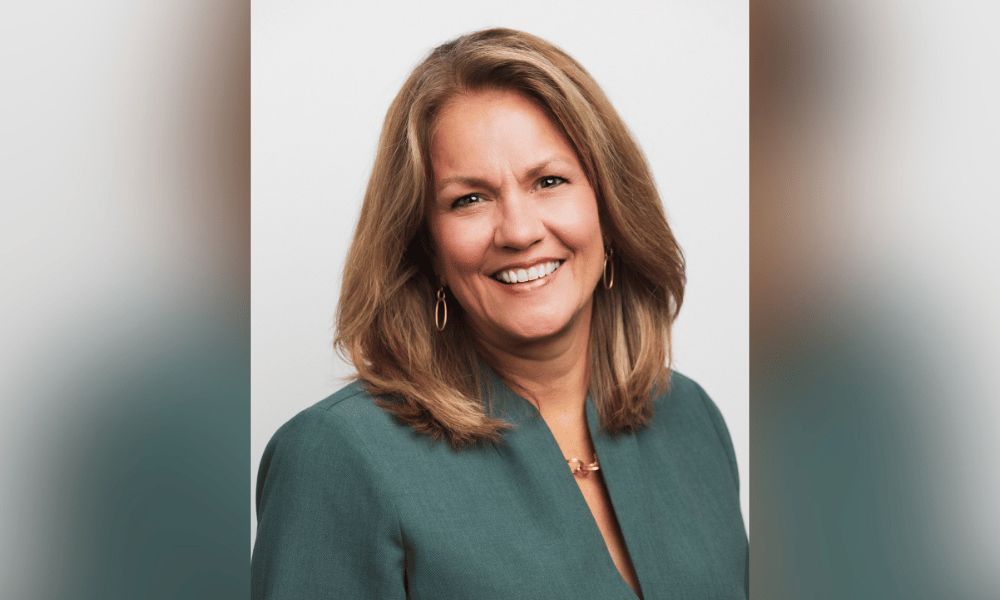
However, Teresa Hassara, SVP, Workplace Savings & Retirement Solutions at Principal Financial Group, told InvestmentNews that the data from the firm's 401(k) recordkeeping book, one of the largest in the country, tells a story of participants staying the course.
"What stands out to me is the value of consistent saving habits and long-term thinking," Hassara said. "Improved market performance during the quarter certainly contributed to those higher balances, but participant engagement remained encouraging as participation and deferral behavior remained positive. That suggests participants largely stayed committed to their retirement plans rather than reacting to short-term market movement."
Participant-weighted deferral rates increased 1.8% year over year, while plan-weighted participation rose 1.5% over the same period – modest but stable gains that Hassara said reinforce the case for steady plan design over reactive strategies.
One of the standout trends in the Q2 data is the continued acceleration of Roth 401(k) adoption.
Overall Roth usage reached 13.1% of participants at Principal, up 16.9% year over year. As of June 30, 2026, 89.4% of plans on the platform offer a Roth option – a figure that has risen 20.6% since June 30, 2021.
Millennials led adoption at 15.9%, followed by Gen X at 14.5%. Gen Z usage sat at 9.2% but continued to grow from a smaller base. Higher-income participants (those earning more than $150,000 annually) are driving much of the year-over-year growth across income bands.
Hassara said the data points to a shift in how participants are approaching retirement planning.
"We're continuing to see strong momentum in Roth 401(k) adoption across generations, which is encouraging because it suggests more participants are thinking holistically about their retirement strategy and the flexibility they'll want in the future," she said. "More participants may be thinking about tax diversification, the possibility that their tax situation could change over time, or the value of having both pre-tax and after-tax savings available in retirement."
Auto-enrollment adoption increased 5.1% year over year, and plans using both auto-enrollment and auto-escalation rose 9.1% over the same period.
"As automatic features are more widely adopted, advisors have the opportunity to broaden the conversation beyond enrollment alone," Hassara said. "The focus can increasingly shift to the participant's full retirement journey, including savings rates, investment choices, tax diversification through Roth, retirement income, and the resources participants need to navigate competing financial priorities."
The data also highlights meaningful generational differences worth tracking.
Gen Z and Millennials posted the strongest quarter-over-quarter account balance growth in Q2, up 14.9% and 13.0% respectively. Deferral rates rose across every generation, with the largest gains among Gen X (+3.3%), Gen Z (+3.1%), and Millennials (+2.7%).
"Younger workers are often balancing retirement saving with other important financial priorities, and that reality is reflected in higher rates of hardship withdrawals compared with Baby Boomers," Hassara said. "The opportunity is to recognize both sides of the story."
Despite the strong balance growth, the data shows some participants are still drawing on their retirement savings to manage near-term financial strain.
In Q2, 2.6% of participants took a 401(k) loan, and hardship withdrawal incidence increased 2.2% from Q1 2026. Hassara pointed to one nuance in those numbers: average hardship withdrawal amounts declined both quarter over quarter and year over year.
She also described the range of situations playing out across Principal's participant base – from younger workers just beginning to save, to mid-career participants managing competing priorities, to those nearing retirement – and said that effective advisory support means meeting participants where they are.
"The plans that will be most successful in the years ahead won't simply help people save more," she said. "They'll help participants make informed decisions throughout their financial journey."

Meanwhile, Cetera's streak of Commonwealth recruitment continues in Washington, and an LPL advisor hops over to Raymond James in Maine.

The Sussex County wealth firm, built around business-owner clients, extends the California-based aggregator's footprint in the East Coast.

The Kestra-owned RIA acquirer merges the planning firm into KDI Wealth Management, creating a majority woman-led advisor team

Eight in 10 pre-retirees say the US retirement system wasn't built for them and most still haven't planned how to make their money last.

Just over 10% of advisors' wealth clients come from defined contribution plans, as capacity, data and technology gaps block the bridge to wealth
Knighthead Life entered the market with a competitive MYGA. A strong launch earned advisor confidence and paved the way for FIAs.
As AI makes financial information more accessible than ever, Lana Hock explains why human judgment, trust, and empathy remain the qualities clients value most in a financial advisor

