
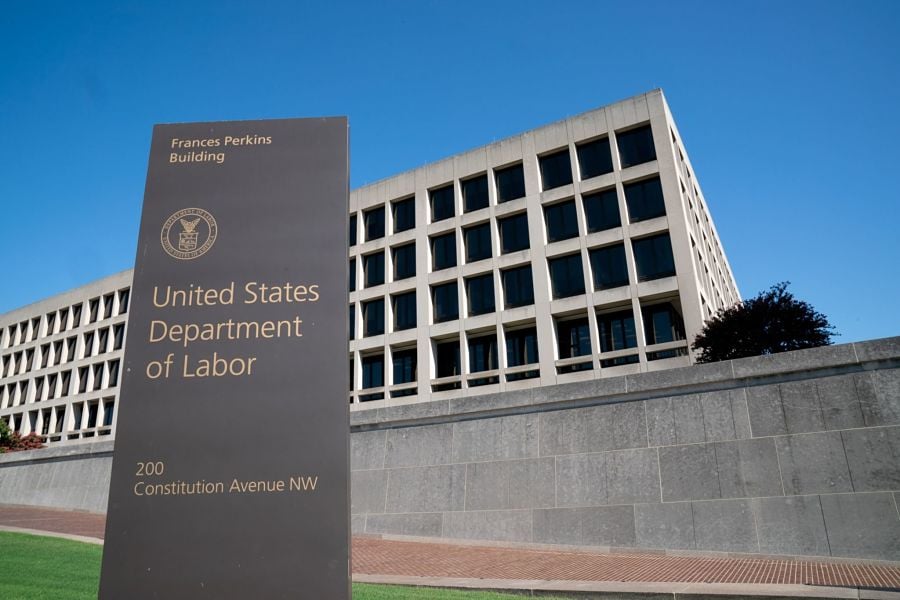
RIAs and broker-dealers now have a sense of finality from the DOL and are preparing to comply with the regulator’s fiduciary rule.
Last week, the Department of Labor announced that it would extend its nonenforcement policy by a little more than a month, through Jan. 31. Until Feb. 1, advisers can continue to use the regulator’s Prohibited Transaction Exemption 2020-02 as long as they are complying with its impartial conduct standards. Additionally, the documentation and disclosure requirements for rollover recommendations won’t go into effect until July 1.
The delay until February, while short, gives companies considerable breathing room.
“First, by extending the policy into next year, it means that financial institutions (broker-dealers, investment advisers, insurance companies and banks and trust companies) will not have to do the annual retrospective review for 2021,” Fred Reish, partner at Faegre Drinker Biddle & Reath, said in an email. “Second, it will allow financial institutions to send out their 2020-02 disclosures with their Dec. 31 statements. Both of those are very practical and helpful.”
The delay in the disclosures to retirement customers, which require advisers to show the reasons why they recommended a rollover and how that is in the client’s best interest, was necessary for practical reasons, Reish said. “[F]inancial institutions were having difficulty developing the information and processes for doing that.”
What firms should be considering is that the delay only applies to DOL and IRS enforcement, he noted, and not, for example, private litigation that could be brought by retirement plan participants.
Further, the impartial conduct standards necessary for the exemption, which include a best-interest standard, shouldn't be ignored. “That requirement is not extended,” Reish said.
Financial services firms, particularly larger ones with more resources, have been planning their compliance with the DOL’s new requirements for months. Edward Jones, for example, had been planning for different scenarios for the rules going into effect, John Davis, principal of retirement products at the firm, said during a discussion at the recent RPA Convergence Broker-Dealer Roundtable and Think Tank.
“We’re prepared to [provide disclosures] because it doesn’t really change how we service clients,” Davis said. The company had been waiting to provide DOL-compliant disclosures until the deadline given the uncertainty in the regulator’s timing and whether it would potentially change the requirements, if the previously unannounced extension had spanned many months, he said.
In a statement provided by a company spokesman, Davis said that “Edward Jones has been well prepared to comply with PTE 2020-02 since it became effective in February and remains ready to meet the DOL's enforcement timeline.”
Companies that claim to provide “education only” for rollover recommendations will likely find themselves in the DOL’s crosshairs, several attendees at the RPA Convergence event noted.
Among about 80 different firms that the Pension Resource Institute works with, none had been banking on a delay from the DOL, even while some were more prepared than others, CEO Jason Roberts said.
“It’s a minor delay,” he said. “We didn’t see anybody taking their foot off the gas.”
What’s important to note is that the DOL’s exemption applies to compensation stemming from advice about various types of plans, such as 401(k)s, individual retirement accounts and health savings accounts, Roberts said. “It’s bigger than rollovers.”
Of the two areas that are delayed until July 1, firms should plan to update their internal documentation requirements as soon as possible, he said.
The client-disclosure requirement is the component that poses the most practical risk for advisers, Roberts noted. “It’s going to get Monday-morning quarterbacked [by clients] every time the market takes a dive.”
The delay in that component “is really just one piece — and it’s a big piece — but it’s the only piece that you get a reprieve all the way until July,” he said. “The firms that understand that are not having a touchdown dance right now, because of this delay.”

The financial advice industry has been facing inquiries into its cash sweep programs for years now.

Investor money allegedly went to strip clubs, exotic cars, and landscaping

Procyon adds $415 million in assets under management in New Jersey while Savant picks up a $213 million Southern California planning firm

With a growing number of real estate-rich Baby Boomers aging into retirement, some advisors may be failing to consider all the options available for those clients' assets.

Cornerstone Advisors study reveals compliance bottlenecks stall campaigns weeks after customer opportunities close.
As AI makes financial information more accessible than ever, Lana Hock explains why human judgment, trust, and empathy remain the qualities clients value most in a financial advisor
Northern Trust’s Ken Lassner shows advisors how to convert volatility into after-tax portfolio gains

