The Obama administration has been hit with a barrage of letters from Capitol Hill since the president voiced support of a pending Department of Labor rule that would raise investment-advice standards for brokers handling retirement accounts.
What's missing from the documents designed to slow down the rulemaking process? Democratic signatures.
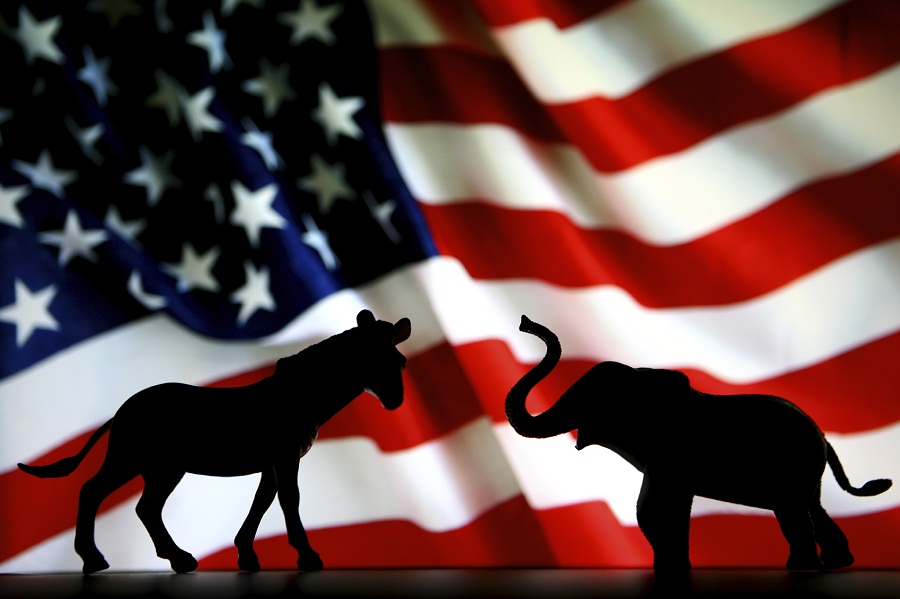
Unlike concerns expressed prior to Mr. Obama's Feb. 23 speech at AARP, the push back in the last couple of weeks has been exclusively from Republicans.
“The politics have shifted a little,” said Jason Rosenstock, a partner at the consulting firm Thorn Run Partners. “Democrats are going to wait to see what the rule says before they weigh in or decide to weigh in.”
In recent years, as DOL has worked on re-proposing the rule that was initially offered in 2010 but then withdrawn amid fierce industry protest, Democrats have signed letters to the agency warning of the unintended consequences of a rule designed to protect workers and retirees from conflicted investment advice as they build their nest eggs.
Mr. Obama's push is one of the primary factors
holding Democrats together.
“That's been the notable change this time around,” said Barbara Roper, director of investor protection at the Consumer Federation of America. “Democrats have to think more seriously about whether they want to get out publicly in opposition, particularly before the rule has been put out for public comment.”
The rule would extend the definition of “fiduciary” to more financial advisers of 401(k) and individual retirement accounts, requiring them to act in the best interests of their clients. Opponents argue it would limit compensation options for brokers (though the Labor Department has said it will not prohibit commissions and revenue sharing) and raise their regulatory and liability costs, driving them out of the advice market for investors with modest assets.
The rule was sent to the Office of Management and Budget for review on Feb. 25. After the agency has vetted the proposal and signed off, a process that likely will take at least several weeks, it will be released for comment by DOL.
In the meantime, Republicans are trying to slow down — or even stop — the rule.
Last week, Sen. John Boozman, R-Ark., and Rep. Ander Crenshaw, R-Fla., two lawmakers leading financial services appropriations subcommittees, wrote to OMB saying the Securities and Exchange Commission should act first on the fiduciary duty rule for retail investment advice it is considering before DOL re-proposes its rule.
Such a delay could kill the DOL rule because the SEC is not close to acting on the authority, given to it almost five years ago by the Dodd-Frank financial reform law, to promulgate a fiduciary-duty regulation.
Also last week, Sen. Roy Blunt, R-Mo., and seven Republican colleagues
sent a letter to OMB saying the Labor Department had not demonstrated the need for its fiduciary-duty rule and, even if it had, the SEC should go first.
Also on March 4, House Education and Workforce Committee Chairman John Kline, R-Minn., and Rep. Phil Roe, R-La.,
sent a letter to DOL asking the agency to turn over all documents that show the agency has been coordinating with the SEC on its rule.
Another factor keeping Democrats off those missives is that Sen. Elizabeth Warren, D-Mass., has jumped into the fiduciary-duty effort with both feet. She was one of several Democrats who participated in last month's event at AARP.
Over the last several months, Ms. Warren has successfully galvanized House and Senate Democrats on a variety of issues, especially those concerning Wall Street.
“She weighs heavily in all political decisions that Democrats have to make,” Mr. Rosenstock said. “[Fiduciary duty] is no exception to that calculus.”
Once the DOL rule is released publicly, Democrats will start coming out of the woodwork, said Alice Joe, managing director of the U.S. Chamber of Commerce Center for Capital Markets Competitiveness.
“I sense this is still a bipartisan issue,” Ms. Joe said. “Given the potential implications of this rule, there's going to be concern on both sides.”
One indication of the unease may come up in Capitol Hill hearings this month on the DOL budget that will feature Secretary Thomas Perez.
“I'm sure members are going to be asking him pointed questions,” Ms. Joe said.