
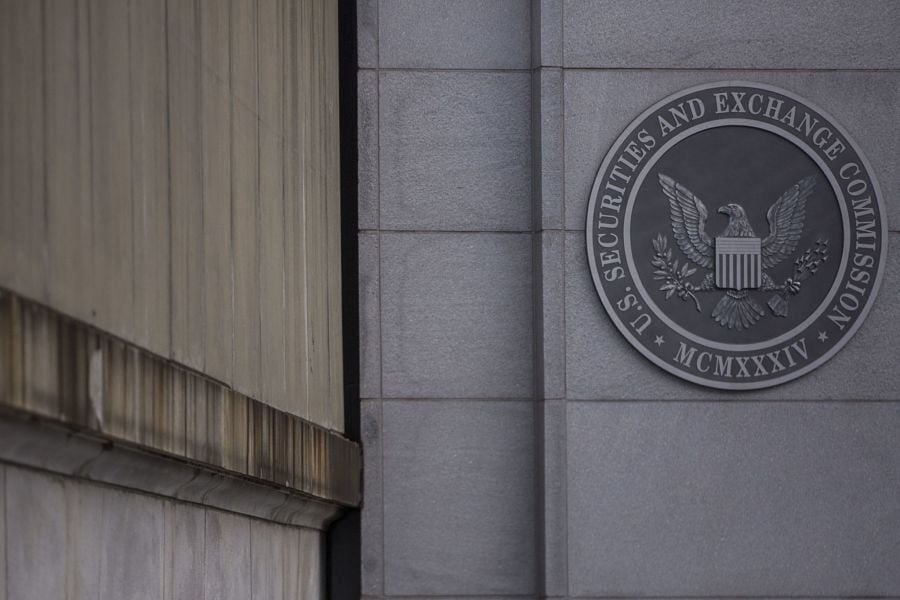
Key provisions in an SEC proposal designed to bolster the resilience of mutual funds during times of high demand for withdrawals are drawing strong opposition from the financial industry and investor advocates.
The Securities and Exchange Commission released a proposal in November that would require open-end funds to reform their liquidity risk management practices so that they can better withstand market stress.
Mutual funds would have to implement so-called swing pricing, in which their net asset value changes based on the buying and selling of fund shares, under the proposal. Funds also would have to institute a “hard close” for purchase orders so that the current-day price is only available if the order is received before a fund calculates its NAV, which is generally assumed to occur at 4 p.m. ET.
The changes respond to moments in the market where money gushes out of mutual funds, such as in March 2020 at the onset of the coronavirus pandemic. They would apply to any open-ended fund except money-market funds and exchange-traded funds, the SEC said in the proposal.
In comment letters that were due earlier this week, Wall Street firms and trade associations warned the proposal would radically overhaul the way mutual funds work and cause potentially catastrophic consequences.
Rick Wurster, president of The Charles Schwab Corp., predicted a “significant decline in mutual fund usage by retail investors” and asserted that a hard close would result in virtually all retirement plan participants receiving next-day pricing rather than same-day pricing for their shares.
“[T]he liquidity risk management reforms in the current proposal, while cloaked in a desire to protect shareholders, are so prescriptive and place so many restrictions on the management of funds that they are likely to make mutual funds an unattractive investment option,” Wurster wrote in a Feb. 14 comment letter.
Retail investors would be harmed by the reforms, said Eric Pan, CEO of the Investment Company Institute, which represents mutual funds.
“We are quite concerned that adoption of this proposal would not only fundamentally alter the management and operation of open-end funds and pricing of mutual funds but also how investors purchase and sell mutual funds,” Pan wrote in a Feb. 14 comment letter. “American retail investors could no longer be able to access certain funds and strategies that have successfully served their financial needs for decades.”
The head of one of the biggest industry trade associations called on the SEC to scrap the proposal.
“In light of our concerns, we strongly urge the Commission to withdraw or formally stay this proposal, pending more thorough and thoughtful engagement with the industry to assess the costs, benefits and potential downstream consequences to other industry participants,” Kenneth E. Bentsen Jr., CEO of the Securities Industry and Financial Markets Association, wrote in a Feb. 14 comment letter.
It isn’t just the financial industry that has serious reservations about swing pricing and hard closes. The Consumer Federation of America also wants the SEC to withdraw those parts of the proposal.
“[W]e urge the Commission to dispense with the hard close implementation of swing pricing and forego any approach that causes retail investors, particularly those who are saving for a secure and dignified retirement, to disproportionately shoulder any costs and delays associated with liquidity risk management,” Micah Hauptman, director of investor protection at CFA, wrote in a Feb. 14 comment letter.
When the proposal was released, SEC Chairman Gary Gensler endorsed the hard-close approach as a way to reduce widespread market failure.
“I think this would lower some systemic risk,” he said at an SEC open meeting on Nov. 2. “I would note that there are some funds that currently use a so-called ‘hard close.’ Further, such a hard close could facilitate swing pricing if we were to adopt that aspect of our proposal.”
The size and scope of Gensler’s rulemaking agenda have drawn widespread and sharp criticism from the financial industry and lawmakers. It’s premature to say whether opponents of the mutual fund reform proposal will try to stop it through a lawsuit.
“We need to see the final rule, but all options remain on the table,” said ICI spokesperson Stephen Bradford.
The SEC will review comment letters and may revise the proposal before issuing a final regulation. The timeline is unclear.

Chuck Roberts and Stifel have been facing scrutiny due to sales of structured products and structured notes.

What will financial advice look like 20 years from now? Evan Vladem explores how AI may transform wealth management while reinforcing the enduring value of human guidance, trust, and empathy.

The Boston deal is set to push the PE-backed consolidator past $187 billion amid a broad RIA M&A slowdown and a potential shift in its ownership.

Advisors with clients who own second homes in New York City face fresh uncertainty as the city seeks a stay and plans an appeal.

Meanwhile, a deal in the Midwest gives NorthRock Partners a new office in Wisconsin, while two teams join OnePoint BFG in Georgia and Atlanta.
As AI makes financial information more accessible than ever, Lana Hock explains why human judgment, trust, and empathy remain the qualities clients value most in a financial advisor
Northern Trust’s Ken Lassner shows advisors how to convert volatility into after-tax portfolio gains

