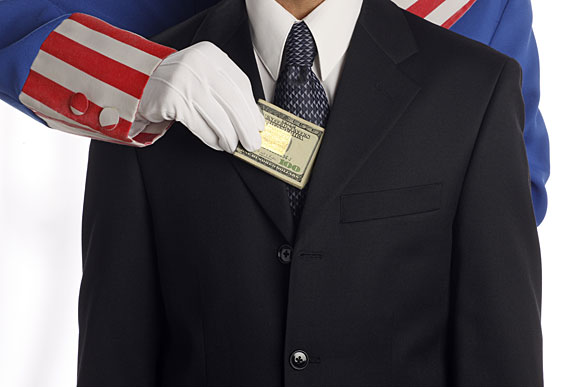
States join federal government in looking to affluent to help trim budget shortfalls
It isn't just Uncle Sam looking to collect more from the nation's wealthy households.
At least two states are getting in on the act.
Maryland Gov. Martin O'Malley, a Democrat, proposed this week to increase tax revenue from high wage earners as part of a package of tax increases aimed at helping trim a $1 billion budget shortfall.
The plan, which wouldn't change current income tax rates, would earn the state $182 million a year by capping deductions and phasing out exemptions that high wage earners could claim. Under the budget proposal, income tax deductions would be capped at 90% for those who earn more than $100,000 a year and 80% for people who earn $200,000 or more.
Tax exemptions would be eliminated for couples who earn more than $175,000 a year and singles who earn more than $125,000, while the current $2,400 exemption would fall to $1,200 for couples who earn between $150,000 and $175,000 and for singles who earn between $100,000 and $125,000.
In California, Gov. Jerry Brown, a Democrat, said that his administration is backing a proposed ballot measure that would raise income taxes on those who earn more than $250,000.
The state moves come as U.S. lawmakers discuss federal tax reforms aimed at trimming the national deficit, including a proposal to raise taxes on those who earn more than $1 million, known as the “Buffett Rule.” Billionaire Warren E. Buffett has complained that the wealthiest Americans typically pay a smaller share of income in federal taxes than the middle class.
Maryland financial advisers said that many of their clients would be affected if the general assembly approves the governor's proposal.
Ed Landis, principal and financial consultant at Landis Financial Services in Annapolis, said that it is a smart move politically to target a limited number of voters with an increase, as opposed to other revenue-generating ideas being discussed that would affect everyone in the state.
“It will be less invasive than if they raise the sales tax or the gasoline tax,” he said.
For his part, Mr. O'Malley said that he doesn't like asking for this tax increase.
“These are difficult things that we have to ask in difficult times,” he said at a budget briefing in Annapolis.