
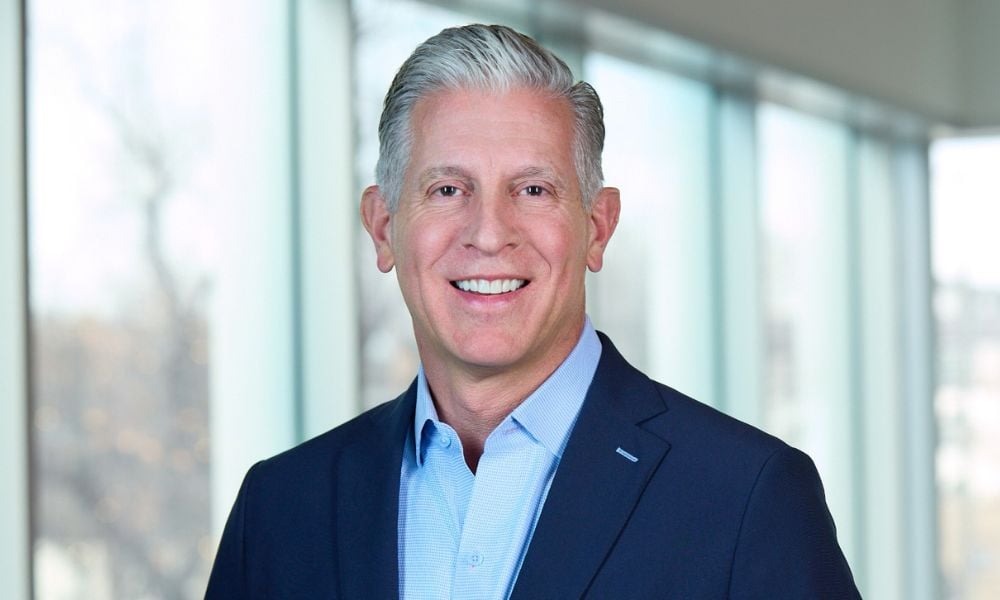
Amid questions, criticisms, and concerns surrounding the accelerating push to put private market investments within retail investors' reach, particularly in 401(k) plans, the chief executive officer of one Colorado-based asset management firm is predicting that the movement will create an inevitable four-way-win.
"The democratization of this asset class that previously hasn't been available for retail investors is inevitable," Michael Bell, CEO of Meketa Capital, said in a recent interview with InvestmentNews. "It's a good thing for plans, plan participants, plan sponsors, and asset managers."
Meketa Capital is a subsidiary of Meketa Investment Group, a firm that provides investment solutions for the institutional marketplace. Meketa Capital is focused on delivering interval funds – including Meketa's flagship private equity fund and a private infrastructure interval fund, launched in January 2024.
"[Private markets have] been opening up to financial advisors outside of retirement plans over the last four or five years ... advisors have spent the last several years educating themselves," Bell says. "They've pivoted over the last 18 months or so from an education perspective to incorporating those assets into their [clients'] investment profile."
Last month, Democratic Senator Elizabeth Warren made headlines with an open letter to recordkeeping giant Empower, asking the retirement plan service provider to explain how it intends to protect 401(k) plan participants from the risks associated with investing in private markets. Empower had announced in May that it plans to introduce private market investments to its retirement plans, tapping a selection of well-known names including Apollo, Franklin Templeton, Goldman, Sachs, Neuberger Berman, and PIMCO.
Empower CEO Ed Murphy attempted to address Warren's concerns earlier this month, citing the company's own research showing overwhelming demand for private market access among retirement plan participants. That didn't satisfy Warren, who insisted that Empower failed to make its case.
"Ultimately, you did not explain why providing retirees with the option to invest their hard-earned life-savings in risky, expensive private markets benefits anyone other than private funds," Warren's July 11 letter to Empower said in part.
Pushing back on the notion of "risk" in private investments, Bell maintained that private market investments have historically shown a more favorable risk-return profile historically than many publicly listed assets. Because of that, he argued, institutional investors have consciously chosen to allocate substantial portions of their portfolios to private market assets.
"I think the risk [aspect of private market investments] maybe being overplayed," Bell says. "Most sophisticated investors look at this holistically, and over the last three decades, they have come to the conclusion that these are very good asset classes to invest in."
While private investments have traditionally come with hefty fees – with some private fund fees costing hundreds of basis points, compared to index funds and ETFs that may cost investors a fraction of a percentage point – Bell argues the gross returns from private equity tend to more than justify that added cost.
"What should be the measuring stick? Should it be fees only, or should it be net returns?" Bell says. "I think somebody that's only focused on fees is not looking at all the aspects of the asset class .. and trying to paint it in a very negative light. And that's just not how you do it."
A survey earlier this year by the NAPA Advisor Research Institute, a research arm of the National Association of Plan Advisors (NAPA), found broad agreement among advisors on the benefits of private market investments, including diversification (cited by 67% of advisors as important), the potential for increased investment returns (50%), and the potential to reduce volatility (64%).
However, advisors were also hesitant to throw their full support behind private market investments in DC plans. Among other factors, 64% of advisors NARI surveyed were put off by the associated legal and fiduciary risks, and 52% harbored concerns about liquidity.
Still, Bell believes that as more research and intelligence emerges around private investment products, advisors and plan fiduciaries will get more comfortable with the idea of incorporating private investments into their retirement offerings.
"I think advisors need to start with a very robust due diligence process. ... It encompasses the fee profile, how the specific manager you're investing in has generated their returns, and other factors," he says. "Five years ago, there was not that much information, but some of the biggest providers in the industry now have databases to help advisors screen certain managers. And I think as this market continues to mature, more information will come out, and it's our responsibility as an industry to make sure everyone's properly educated."
A potential forthcoming executive order from President Donald Trump could provide even more peace of mind to plan fiduciaries. While it's unclear what asset classes the order would speak to specifically, it reportedly would direct the Department of Labor and the Securities and Exchange Commission to issue guidance on how employers and plan administrators can incorporate private investments in 401(k) plans.
The order may also include a safe harbor provision to help protect companies offering private market investments in 401(k) menus from ERISA litigation. ERISA lawsuits have been a recurring pain point in the retirement industry, with several high-profile companies including UnitedHealth, General Electric, and New York Life agreeing to multimillion-dollar settlements over the past few years.
For its part, Empower has said it would put guardrails in place to minimize the potential risks to plan participants. Among other safeguards, the company said it would limit its private equity offerings to plan participants within managed accounts, and those private equity investments would be bundled with public securities in a collective investment trust, limiting potential concentration risks.
"Empower's a world-class organization. They've been in this business for a long time ... For them to put these guardrails in place, I don't think it would be a heavy lift whatsoever," Bell says. "I think it would provide added comfort for fiduciaries or plan sponsors."

Salespeople at the firm often went beyond the matching algorithm to recommend network advisors on its Zoe Wealth platform, according to the regulator.

The Protect College Sports Act would cap school payments and codify NIL rights, with implications for advisors guiding young athletes.

"I know the number that I want to be able to retire on, and now I just want out," says Wilmington Trust's Marguerite Weese, describing a common refrain among business-owner clients.

Bessemer and Brown Brothers Harriman veteran Robert Ludricks III and private markets specialist Olof Akesson join the ultra-high-net-worth push on the East Coast.

765 investors were promised 260% annual returns on truck leases
As AI makes financial information more accessible than ever, Lana Hock explains why human judgment, trust, and empathy remain the qualities clients value most in a financial advisor
Northern Trust’s Ken Lassner shows advisors how to convert volatility into after-tax portfolio gains

