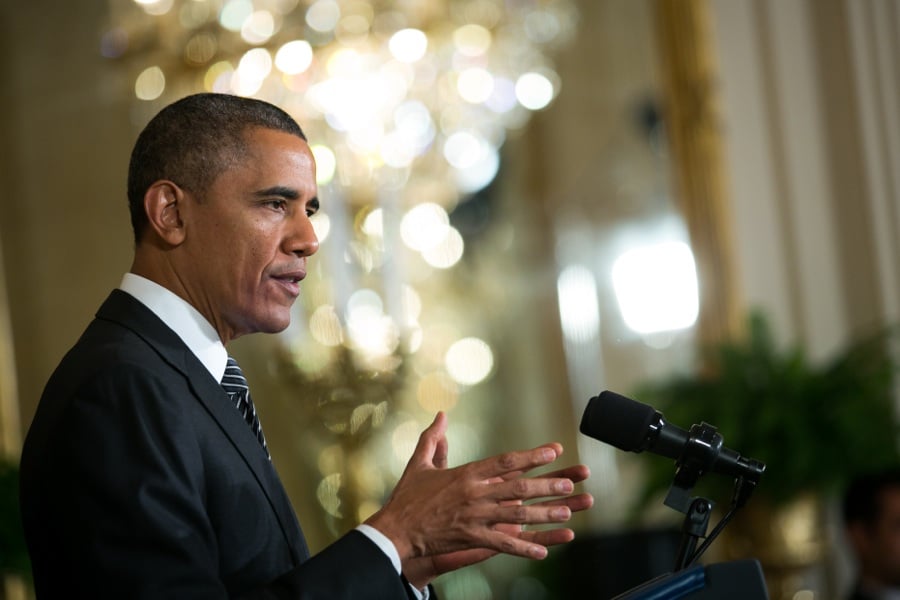
Almost a year ago, President Barack Obama outlined a modest but important program designed to encourage workers to save for retirement, especially if they don't have a 401(k)-type plan through their employer. In the 2014 State of the Union, he described the “MyRA” — rhymes with IRA, stands for My Retirement Account — an account that would use simple, safe investments and follow workers from job to job. Mr. Obama said he wanted it up and running by the end of 2014.
The Treasury met the deadline, if just barely. It launched a small pilot project in mid-December. There was little publicity, and the agency won't say how many employers are participating, or exactly when MyRAs will become more widely available later this year.
At least one government agency is on board: The Office of Personnel Management is opening MyRAs up to part-time and seasonal employees who aren't eligible for the Federal Employees Retirement System. Private employers who want to offer MyRAs to workers are welcome to volunteer, a Treasury spokesman says, but the department isn't actively recruiting new participants.
(More: Comerica picked to help manage Obama's retirement savings program)
It's going to take a lot of encouragement to get employers to adopt the MyRA and for workers to use it. By design, these are “starter” accounts aimed at workers that lack access to a retirement plan at work and haven't availed themselves of an IRA. That includes a lot of workers in lower-wage jobs — think Foot Locker salespeople, or restaurant workers — and it's hard to save a lot of money if you don't make a lot of money.
On the employer side, the companies that aren't already offering a retirement plan may be reluctant to add MyRAs unless the process is seamless. The Treasury is using the direct deposit system, which helps, and workers can put up to $5,500 per year in post-tax money into a MyRA. For now, the only way to do that is through payroll deduction, but the Treasury expects to allow additional ways to make contributions when the pilot ends.
For workers ready to start saving, MyRAs have some attractive features. MyRA accounts are designed to follow workers from job to job, which means that people who work more than one job or who change jobs a lot don't have to deal with the hassle of, for example, rolling over an employer-sponsored 401(k). Savers can withdraw their MyRA contributions at any time without penalty, so as with Roth IRAs, MyRAs can double as emergency funds for cash-strapped families.
And there are no investment choices to make. All money goes into government bonds; they don't pay much right now, but they are no-fee, no-risk investments, which is not bad for beginners. Once a MyRA balance hits $15,000, it must be rolled into a private-sector
Roth IRA, in which savers would have more investment choices.
Getting people at all income levels to save is hard. MyRAs can't be a silver bullet. People who lack 401(k)s — half of all private-sector workers — can already open IRAs with private investment firms, though many don't. Maybe they can't spare the cash, don't know how, or simply don't want to deal with paperwork. Even many employees with 401(k) plans need to be automatically enrolled because they don't bother to sign up.
This gives rise to more aggressive ways to get low-income workers saving. An Illinois law signed on Jan. 5 will
require companies with 25 or more employees to put 3% of worker salaries into a Roth IRA unless they already offer some kind of retirement plan. While workers can opt out of the program, which is called “Secure Choice,” state lawmakers are betting that most will not.