Andrew Friedman, a former lawyer turned analyst/consultant on tax and political issues, today painted a bleak picture about the chances for constructive action from Washington over the next year and a half. He also offered a somber assessment of what clients under the age of 55 can expect in coming years.
The one issue that Mr. Friedman said may bring Democrats and Republicans together in the lead up to the election is the deficit — and the need to reduce it. The U.S. is the one major economy with a large public deficit that does not have a plan for dealing with it. The International Monetary Fund recently gave the U.S. a dressing down for lack of a plan, and S&P downgraded its outlook for the country's AAA credit rating.
“External events will finally force Congress to deal with these problems,” predicted Mr. Friedman, who manages a
website that features commentary and analysis of tax issues, fiscal policies and legislation. Chief among those external events is the prospect of China slowing down its purchases of U.S. Treasuries and a potential downgrade of the government's credit rating. Either event could dramatically increase the cost of financing the government.
With the U.S. deficit projected at $1.6 trillion for fiscal 2011, everything has to be on the table — domestic discretionary spending, defense spending, entitlements and tax reform. “We need a pound of flesh from retired people and a pound of flesh from working people,” said Mr. Friedman.
Cuts to domestic discretionary spending are the easiest to accomplish, though the last-minute budget deal this year show they are hard enough to achieve in partisan Washington. However, given that domestic programs represent just 13% of the budget, spending reductions there will have the least impact on the government's overall fiscal situation. Defense spending (24% of budget) is likely to fall as the withdrawal of troops from Iraq and Afghanistan proceeds, but there too, the prospects for significant savings are limited.
The unavoidable fact is that the entitlement programs of Medicare, Medicaid and
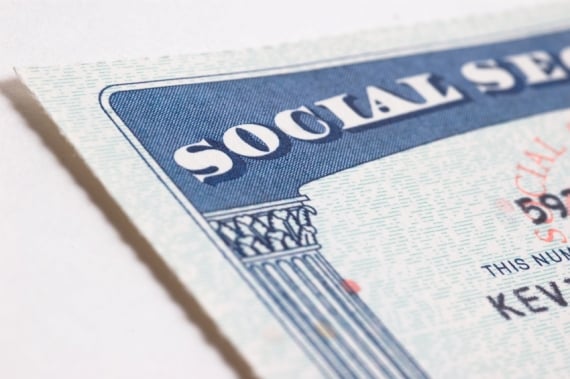
Social Security, which now comprise 58% of the federal budget, will have to come under the knife. Long considered the third rail of American politics, changes to the rules on
Social Security benefits will have to made, said Mr. Friedman. “If your clients are 55 or older, they'll get all their benefits. If they're under 55, they may not.”
He suggested three tactics for shoring up the system are likely to be used: getting rid of the $100,000 cap on earnings subject to the
Social Security tax; increasing the retirement age to qualify for benefits, and means testing for recipients (with individuals having over a certain amount of retirement income not receiving the benefits).
The issue of rising health care costs has yet to be addressed, and the debate is now centered on legal challenges to the Obama health care plan. There have been five cases challenging the constitutionality of the individual mandate for consumers to buy health care insurance if their employer does not provide it have been heard. Three of the judges ruled the mandate was constitutional, two that it was not. In a case in the Florida federal courts brought by 26 states, Judge Roger Vinson ruled that not only was the mandate unconstitutional, but the entire law was too. The issue will likely be decided by the Supreme Court in May or June 2012.
Tax reform is sure to be the most contentious pre-election issue. President Obama has said he will not raise taxes on families making less than $250,000. The Republicans have said they will not agree to higher taxes on anyone. Both have argued that simplifying the tax code through eliminating deductions and credits could be a significant source of revenue. But the politics will be nasty. “Tax simplification is complicated stuff,” said Mr. Friedman.
The most pressing tax issue is what to do about the Bush tax cuts that were extended for two years in the budget deal last year. The extension adds an estimated $400 billion to the deficit this year because of lost revenues and another $400 billion next year. “It's the ultimate example of kicking the can down the road,” said Mr. Friedman. And the stakes are only going to be higher in 2012. “Congress couldn't figure out how to deal with the expiration of the tax cuts in 2010. How are they going to do it in an election year? It's not a good way to run a country.”
The same fiscal pressures on the federal government are plaguing the states as well. Mr. Friedman sees some encouraging initiatives to rein in public employee pensions and benefit formulas in traditionally liberal states like New York and Massachusetts. He also sees no chance of states defaulting on their obligations, with the federal government likely guaranteeing state debts if it ever came to that.
“Would we really bail out
AIG and let California sink into the ocean?” asked Mr. Friedman.
Probably not, but you never know in partisan Washington.