
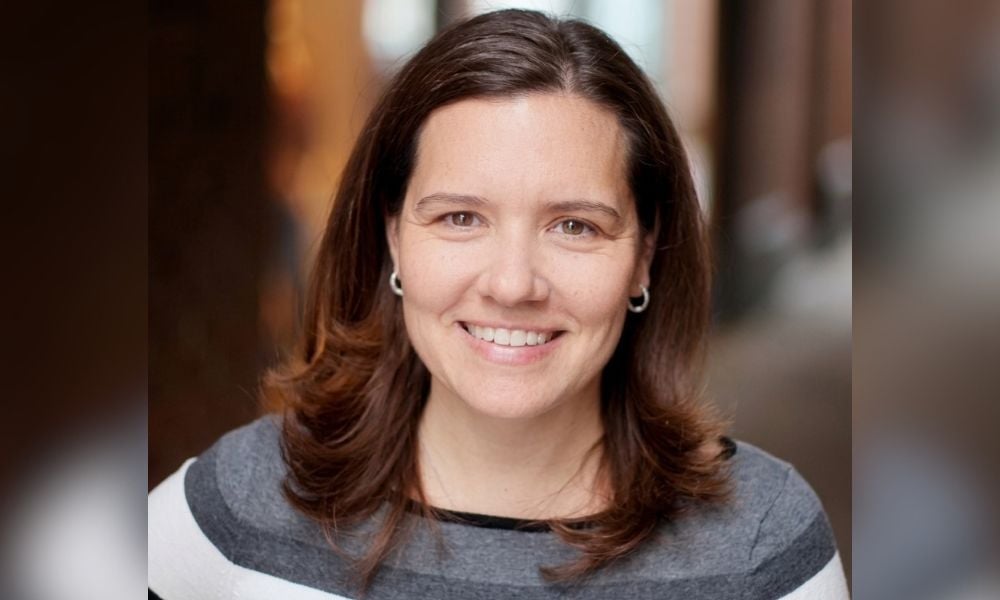
Americans are dreaming big about retirement but doing little to prepare for it and it is the problem Nancy DeRusso, Guardian's recently appointed Head of Client Solutions, wants the financial advice industry to solve.
Guardian Life Insurance's 2026 Mind, Body, and Wallet report, released in May 2026, found that Americans reported the lowest overall well-being and financial health levels in the 15 years Guardian has tracked these metrics. Financial wellness remains the weakest pillar, with just three in 10 Americans reporting excellent or very good financial health, and only 13% feeling exactly on track to save enough for the lifestyle they want in retirement.
DeRusso, spent more than two decades at Goldman Sachs Ayco before joining Guardian in 2026 and spoke with InvestmentNews about the ‘longevity gap’ facing Americans.
"The longevity gap is the divergence between people's expectation that they will live long healthy lives, and what they are actually doing to prepare for it," she said. "Our research shows that most adults imagine their older years as an active, engaged life stage and not a period of withdrawal. Despite this, many aren't laying the groundwork for a long and healthy life – just one-third say they are getting enough exercise or do a good job of taking care of their mental health, and two-thirds say they are doing a poor job of living within their means."
For DeRusso, the data points to a clear opportunity. "For financial advisors, this is an opportunity to make sure their clients are taking the right steps today to feel financially confident and fund a long retirement."
DeRusso says the disconnect between optimism and actual preparedness was the report’s central finding, particularly among younger Americans.
"There is a significant disconnect between optimism and preparedness. Americans envision a long, active, and fulfilling retirement, yet also self-report the lowest overall well-being in 15 years," she said. "Younger adults, including Gen Z, face particular challenges and self-report lower financial well-being scores than other generations.”
However, she added that the good news is that young people have the most opportunity to improve their financial confidence and long-term retirement readiness.
“With time on their side, they can begin to establish good financial habits, such as building emergency reserves, saving consistently, investing for long-term growth, and participating in workplace retirement plans," she said.
Advisors seeking to understand how to estimate and plan around a client's longevity can start by helping younger clients build that strategic foundation early.
Guardian’s research found that 41% of respondents worry their retirement savings won't last as long as needed, but DeRusso says advisors have a much broader toolkit than most clients realize. She also challenges advisors to think differently about how retirement spending actually unfolds.
"We sometimes think of retirement expenses as gradually increasing year after year with inflation, but largely being consistent,” she said. “In reality, consumer behavior suggests that retirement expenses are more U-shaped, where we start off in the 'every day is Saturday' phase, settle into a new normal, and then see a spike in the later years due to end-of-life costs."
That more accurate picture, she says, should change how advisors approach distributions. "With a more realistic understanding of retirement expenses, financial advisors can help clients think about how to spend those assets and be as intentional about distribution as they are about savings."
DeRusso sees as a blind spot in most client relationships: the health conversation.
"It can be hard for advisors to talk about the health aspects of aging with clients. Our report found that only 40% of Americans say they do a good job keeping up with routine doctor visits, only 31% get enough exercise, and just 27% eat a healthy diet. While advisors are not doctors, the finances of aging and health are real," she said.
"If clients expect a long and active retirement, advisors should help them think through how their health may affect future cash flow, housing decisions, caregiving needs, and health care expenses,” DeRusso said. “For example, do they want to age in place or move into a retirement community? How are they accounting for long-term care and insurance costs? Are we funding a lifestyle that includes staying active and fit?"
She adds that health can shift quickly, and advisors need to plan for that possibility too. "A client's health status can also change quickly and unexpectedly. While the goal is always a long and healthy lifetime, conversations should also involve what happens if someone's health deteriorates and how that could impact planned retirement spending."
Her prescription for how the financial advice industry can build longevity planning into the advisor-client relationship is to ask the uncomfortable question.
"Don't be afraid to discuss clients living longer than average. Ask them, 'what happens if you live longer than everyone in your family that's come before you?' Have you thought about what those additional years might look like, including your financial needs, health considerations, and the lifestyle you hope to maintain? That type of guidance can make all the difference to a successful retirement,” she said.

TIAA survey finds 53% of Americans worry about running out of money, as AI and medical advances scramble retirement income planning.

Two wirehouse veterans choose advisor-owned model as independents target ultra-high-net-worth clients beyond portfolio management.

Goldman Sachs retirement survey finds 83% want guaranteed income, while the annuities providing that income increasingly hold private credit.

The AI meeting assistant's Advisor Intelligence plugin turns client conversation data into annual reviews, tax scans and attrition alerts.

Chuck Roberts and Stifel have been facing scrutiny due to sales of structured products and structured notes.
As AI makes financial information more accessible than ever, Lana Hock explains why human judgment, trust, and empathy remain the qualities clients value most in a financial advisor
Northern Trust’s Ken Lassner shows advisors how to convert volatility into after-tax portfolio gains

