
Retirement planning can’t rely on averages anymore—because no one lives an average life. Longevity has become a moving target, and the real risk isn’t just outliving your money—it’s not knowing how long you’ll need it.
The life expectancy gap between rich and poor Americans has more than doubled since 1920—now exceeding 12 years for men and 10 for women, according to Brookings. Retirement timelines are increasingly unequal, shaped by income, geography, and even drugs like GLP-1s.
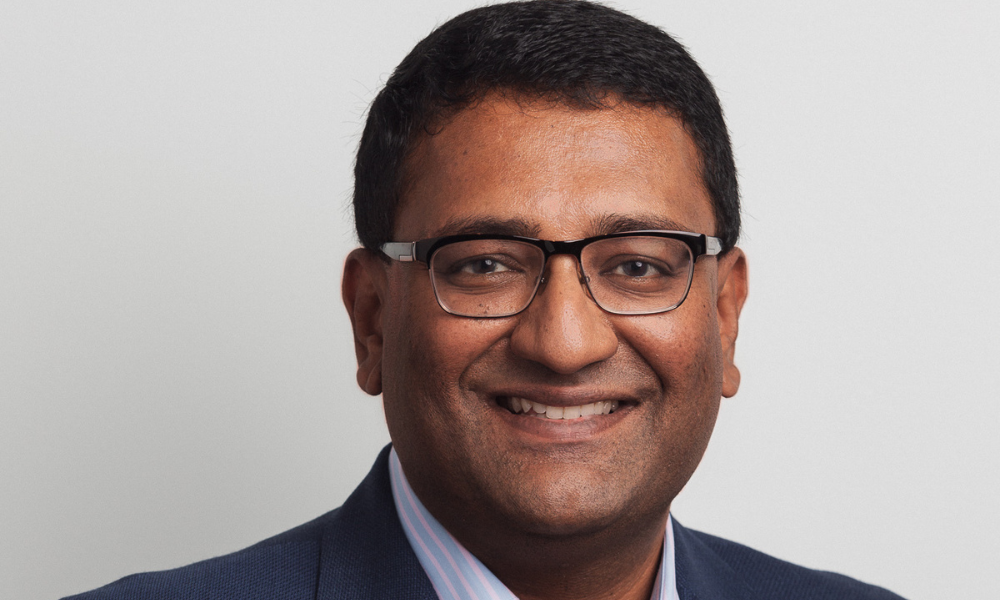
Sri Reddy, Senior Vice President of Retirement & Income Solutions at Principal Financial Group, has spent 25 years navigating these shifting realities. He’s pushing the industry to meet people where they are—emotionally, behaviorally, and financially—by building systems that guide them automatically, even if they never ask for help.
“Longevity isn't guaranteed. And it isn't uniform,” Reddy says. Variability in life expectancy—driven by work, education, and location—creates deep uncertainty. “Are you in a position to actually enjoy the fruits of your labor to spend the money?”
That unpredictability stands in sharp contrast to past generations, he adds, when defined-benefit pensions made retirement more stable. “Now, we have to think about it differently.”
For Reddy, the focus is on early, guided decision-making. “We have to think about tools and solutions that are available in the plan while you're saving,” he says, pointing to target date funds, managed accounts, and default investment options.
“It's making sure you're aware of how much to save, how much you should be increasing your contribution, and how you're allocated.”
Principal is doubling down on access to financial advice. “We think a lot more people probably need it than get it today or ask for it,” he says.
The firm is building systems that work even when people take no action. “If you do nothing, you get defaulted. And if you still do nothing, you're still appropriately invested and rebalanced along the way.”
Principal has also added income tools inside plans. “We partnered with several organizations that have created retirement income innovations, but we've also had our own Principal Pension Builder solution, which is a deferred, immediate annuity.”
It’s a long-term strategy that must adapt as preferences evolve. “How people interact, save, and compartmentalize will force us to continually refresh,” Reddy says.
Market volatility adds another layer. Emotions often drive poor financial choices, especially in retirement. “The number one value of working with an advisor is someone that you can balance your fears off of when you're most vulnerable,” he says.
While the headlines feel louder, the fundamentals haven’t changed much. “As the Dow and NASDAQ have gotten bigger, point movements are higher, but as a percentage, they’re not that different.”
Still, retirees drawing income during downturns face real risk. Reddy recommends a layered strategy: identify discretionary and non-discretionary needs, keep a rainy-day reserve, or use an annuity to cover essentials.
He also sees inertia as a tool. “The number one force that drives human beings is inertia,” Reddy says. “Creating choice architecture takes this powerful force and uses it to help them.”
Auto-enrollment and auto-escalation help nudge people in the right direction. “The opt-out rates are low overall, about 6%, and virtually the same across most default percentages,” he says.
Rebalancing is just as essential—and often overlooked. “Most people assume something like that may be happening. And we know it doesn't.”
Looking ahead, Reddy sees potential in AI. “This industry’s been talking about mass customization. With AI, it's giving us two or three interesting opportunities we didn’t have three years ago,” he says, citing data aggregation, natural language tools, and personalized insights. “The personalization, individualization—will be very real.”
He’s cautious not to overstate it. “Let me be very clear—for all of us and the planet—AI is just getting started. We’re in nascent stages.”
His sharpest insight comes from his own surprise: GLP-1 drugs. Originally developed for diabetes, now used for weight loss, they’re adding years to life expectancy. “They’re adding between two and six years. That’s a great thing—but it’s a really challenging problem.”
Retirement is no longer a one-size-fits-all formula. It’s a moving puzzle. For Reddy, the goal is simple: meet people where they are—even if they don’t yet know where they’re going.

These challenges are “changing the economics we see retirement savers face,” said Christopher Ceder of Goldman Sachs Asset Management

Richardson firm joins as Kestra builds out its platform with new leadership, technology, and expanded planning tools.

Retiring RIA seller David Laidlaw alleges the Carnegie valued his stake on $11.7 million EBITA while pitching potential buyers on $21.3 million.

New tool gives RIAs and family offices AI help vetting private market deals, with some users reportedly halving review time.

Investors got projected returns dressed up as real ones, SEC says
As AI makes financial information more accessible than ever, Lana Hock explains why human judgment, trust, and empathy remain the qualities clients value most in a financial advisor
Northern Trust’s Ken Lassner shows advisors how to convert volatility into after-tax portfolio gains

