
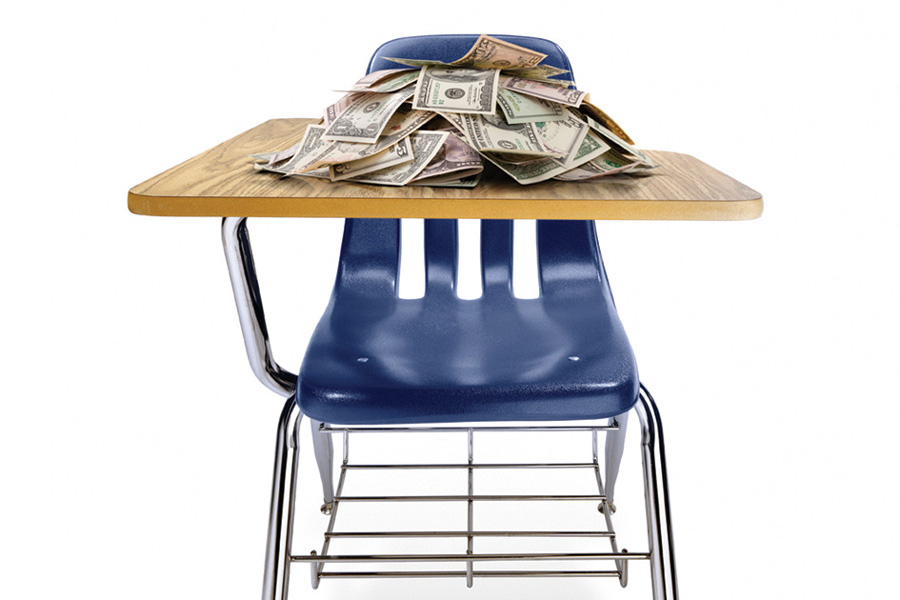
President Joe Biden’s administration announced that more than 150,000 borrowers will receive $1.2 billion in student loan forgiveness under a program unveiled in January that seeks to provide relief for Americans who had been making payments for at least a decade.
The move, which benefits those enrolled in the government’s Saving on a Valuable Education, or SAVE, plan, wipes out loans for those who borrowed less than $12,000 for their higher education. Other income-driven repayment plans also forgive balances, but only after 20 or 25 years of repayment.
“With today’s announcement, we are once again sending a clear message to borrowers who had low balances: If you’ve been paying for a decade, you’ve done your part, and you deserve relief,” Education Secretary Miguel Cardona said in a statement.
The latest round pushes the total relief approved by the Biden administration to nearly $138 billion, benefiting 3.9 million borrowers. That number could grow as more people become eligible for forgiveness under the SAVE program, which has 6.9 million people enrolled. Administration officials have declined to estimate how many borrowers will eventually see loans forgiven under the program.
Yet the efforts fall short of the president’s proposal for more sweeping student loan cancellation — as much as $20,000 in relief per borrower - that was struck down last year by the Supreme Court. That forgiveness plan was estimated to cost $400 billion.
That disconnect may have eroded support for Biden, particularly among young voters who have also voiced frustration over his administration’s handling of issues including the war between Israel and Hamas militants in the Gaza Strip.
A plurality of Gen-Z voters – 43% — said Biden was doing too little to address student loans, according to a Bloomberg News /Morning Consult poll of swing-state voters released in December. Yet 46% of swing-state voters overall said they supported the administration’s student loan forgiveness programs, showing divides over the issue.
The Education Department may further expand loan forgiveness in the coming months, with Cardona telling reporters last week that it was pursuing new rules that could help additional borrowers.
While the administration has not yet revealed specifics of those new proposals, they’re expected to help borrowers facing financial hardship or substantial accrued interest, as well as those with older loans or who went to for-profit college programs with a history of providing little value.
Still, the White House wants to capitalize on the actions Biden has already taken. Borrowers who had their debt forgiven will receive an email from the president letting them know.

Cullen marks the fourth firm the New York-based RIA aggregator has bought in 2026 as deal volume heads for a record year.

The quality of AI ROI measurement depends on pre-deployment decisions around business outcomes, leadership alignment, and establishing trusted information, among other factors.

A state-by-state analysis of retail investor behavior reveals AI-powered research tools are reshaping how clients approach investment decisions.

LPL picks up $1.1B from Wells Fargo's independent channel as the wirehouse gains a $410M family team from UBS.

Most Americans want to age at home but few have a financial plan to pay for it, according to new research.
Knighthead Life entered the market with a competitive MYGA. A strong launch earned advisor confidence and paved the way for FIAs.
As AI makes financial information more accessible than ever, Lana Hock explains why human judgment, trust, and empathy remain the qualities clients value most in a financial advisor

