Get ready for QE3.
According to Rick Rieder, chief investment officer of fundamental fixed income for
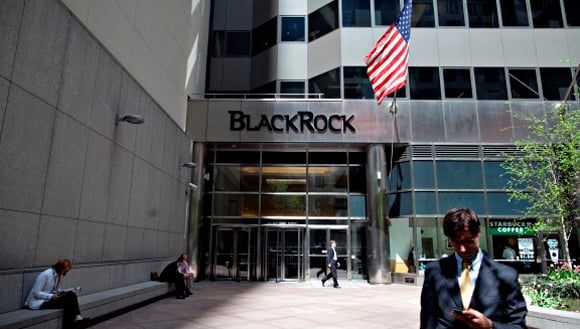
BlackRock Inc., it's only a matter of time before Benjamin Bernanke and the
Federal Reserve begin another round of buying short-tenor U.S. Treasury bonds to keep short-term interest rates low — and hopefully prop up the anemic economy. The central bank also will continue to implement Operation Twist, buying long bonds to tamp down longer-term rates, to which mortgages are pegged.
“I'm absolutely convinced we're going to see a QE3,” said Mr. Rieder, who spoke at Charles Schwab & Co. Inc.'s Impact 2011 conference this week. Until politicians work out a fiscal plan that deals with entitlements and begins to deleverage the U.S. economy, the
Federal Reserve will continue to pump money into the economy to avoid a
recession and push investors into riskier, higher-yielding investments. "It's not a solution," he said, "but it's a bridge to structural change."
It's hard to argue that the U.S. doesn't need more pump priming. According to Mr. Rieder's calculations, since the Fed first started its QE program, equities have had an average annual return of 2.11% during periods when the central bank was buying Treasuries. They've had a -51% return in periods without quantitative easing.
“Interest rates are going to be low until at least mid-2013 and probably longer,” he said. “We'll continue to have the most aggressive Fed in history.”
The reason is weak economic growth. Mr. Rieder thinks economists continue to overestimate growth going forward. Unemployment will remain high and the labor market sluggish for various structural reasons, including unfavorable demographics, productivity versus labor factors, and training and educational deficiencies. Mr. Bernanke, however, will continue to try to stave off
recession.
The implications for the fixed-income market are that it will be years before rates begin to rise substantially, and it will remain a challenge to find yield.
“There is no bond bubble. The front end of the yield curve will be zero,” Mr. Rieder said. “Treasuries are cheap, and that's hard to say,” he said.
RELATED ITEM Bonds beat stocks over thirty years for first time since Civil War
They may be cheap, but they're also providing next to no income for investors. Mr. Rieder currently recommends oversold bonds of banks and financial companies that are reducing leverage and increasing capital in a more regulated environment. He said the most attractive fixed-income investment is currently high-yield bonds, given the healthy corporate sector. Current spreads on high-yield debt imply an 11.67% default rate on the bonds, while actual defaults are running at about 1%.
“We think this asset class shines,” Mr. Rieder said. Nevertheless, he is buying higher-quality junk in case the economy falters more than he expects.
Other investments he favors include long-term municipal bonds, long-end investment-grade credits, some segments of the commercial-mortgage-backed-securities market and emerging-markets debt, though he is proceeding cautiously there.
The key to stabilizing the markets and reducing volatility is Europe, and Mr. Rieder believes that the eurozone is much closer to resolving its sovereign-debt and banking-industry issues than they were three months ago. The rolling over of $200 billion in Italian debt next year is the key. But with 10-year rates currently at 6.1% — up from 5% a month ago — he believes that Italy will not be able to execute the rollover.
Mr. Rieder nevertheless expects the eurozone to resolve its issues and empower the European Central bank to play the same backstop role for sovereign debt in Europe as the Fed is doing here in the United States. More than likely, he said, the mere threat of an unlimited appetite to buy debt would solve the problem without actually having to do it.
He is very cautiously buying some Italian debt in expectation of a solution. “We'd buy Italian bonds all day if the refinancing issue was settled.”