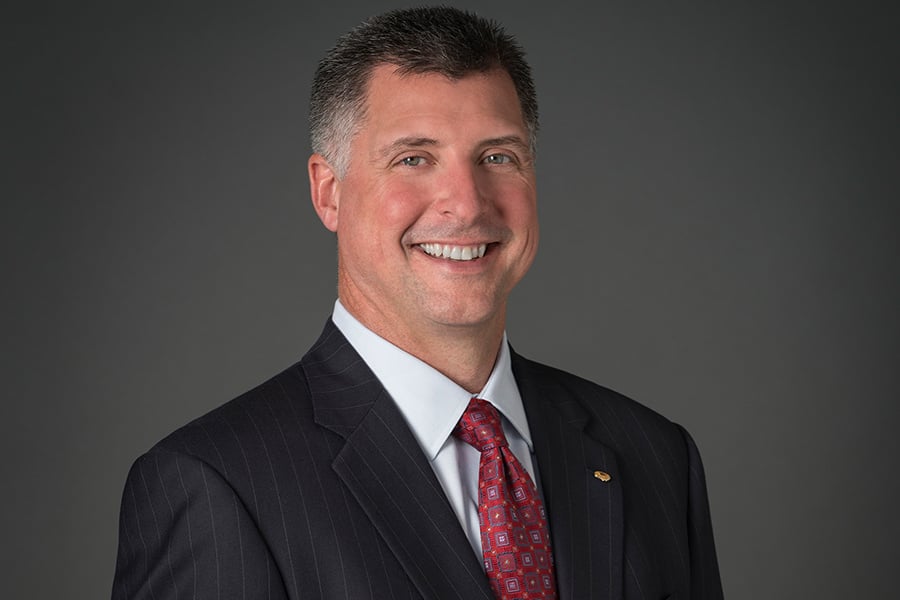
First Command Financial Services, a $29 billion hybrid firm with 500 advisers, is transitioning its executive-level leadership, with a new CEO starting Jan. 1.
Mark Steffe, 50, the current president and chief operating officer, will take over as chief executive in January, replacing current CEO Scott Spiker, who joined First Command in 2007 following a leadership overhaul at the company.
Mr. Spiker, 64, will serve as executive chairman of First Command through the end of 2020, then assume the role of non-executive chairman of the board.
Mr. Steffe, who joined First Command in 2010, became president two years ago and added the title of COO last year.
Mr. Steffe will retain his role as president, but he will be succeeded as COO by Amy Doherty, who recently joined First Command from AARP, where she served as chief information officer.
"This was a personal choice of Scott's to step down, and we've been working on the transition for the last three years," Mr. Steffe said.
In a
statement, Mr. Spiker said: "Since joining First Command in 2007, one of my greatest satisfactions has been the cultivation of new leaders who are equipped to carry forward our mission. Mark Steffe is one of those leaders and is the ideal person to bring the company to the highest levels of success in serving our mission, clients, advisers and their support staff, and employees well into the future."
First Command is based in Fort Worth, Texas, and has 180 offices around the world, most of which are located near U.S. military bases.
First Command advisers operate as independent contractors and typically charge a combination of fees and commissions.
While First Command doesn't work exclusively with members of the military and their families, that segment represents about 70% of the client base, Mr. Steffe said.
In addition, about 80% of the First Command advisers are either veterans or spouses of members of the military.
"We would not say to a new adviser, 'You're only allowed to service military families,' but we would tell them about our primary focus on serving the military, so the vast majority of our resources are designed for that purpose," Mr. Steffe said. "If an adviser is most interested in just chasing wealthy clients, they will feel a disconnect here because that's not our primary market."
As leadership changes and succession strategies go, this one is being viewed as smooth and successful by industry recruiters.
"Give them credit for having an organic succession plan in place, because this is the way succession planning is supposed to happen," said recruiter Danny Sarch.
Mindy Diamond, president of the recruiting firm Diamond Consultants, said some of the positives of new leadership at the top involve "fresh ideas and the hope for a positive impact on growth."
The flip side, she added, can sometimes mean increased turnover among the ranks.
"I think it's fair to say that any time there is a leadership change, it creates the possibility that some advisers will be unhappy with it," she said. "And that can always have an impact on attrition."